The collection of reviews presents a mixed but distinct pattern: many families praise frontline staff and clinical therapists for attentive, respectful care and effective rehabilitation, while other entries raise operational and safety-related concerns. Praise centers on the caregiving team’s interpersonal approach, approachable nursing staff, and the availability of skilled occupational and physical therapy that supported recovery for some residents. Multiple accounts also highlight supportive hospice and end-of-life services, emotional support for families, and a range of dining options including customizable or higher-end meal choices.
Care quality and staffing emerge as polarizing topics. On the positive side, reviewers describe dignified resident interactions, privacy preservation, and meaningful clinical oversight. Conversely, there are consistent indications of uneven staffing and responsiveness, delays in documentation and care transitions, and concerns about how behavioral symptoms are managed. Several reviews raise questions about medication-management practices, specifically around the prescribing and use of sedative-class medications, as well as the clarity and transparency of restraint and behavioral-management protocols. These are operational-level issues that can affect continuity of care and family confidence.
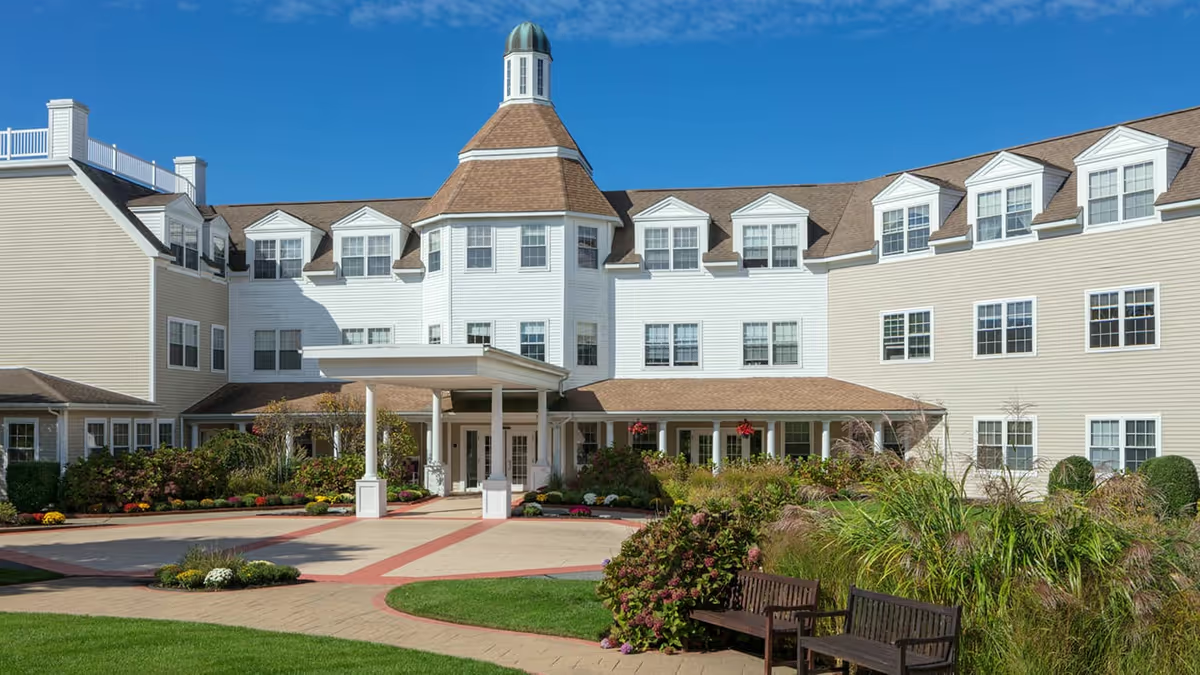
Dining, activities, and therapy are frequently cited strengths. Families reported enjoyable meals, individualized menu options, and active programming that supports social engagement. Therapy services—particularly PT and OT—received favorable comments for practical rehabilitation results. However, facility amenities and physical plant conditions are inconsistent in accounts: some describe clean, bright communal areas and adequate rooms, while others report sanitation concerns, odor issues, and an aging building with limited outdoor courtyard or exercise space. Overcrowding or small room sizes and occasional lapses in front-desk or administrative coverage were also noted.
Management and organizational themes include mixed impressions of leadership responsiveness and communication. Positive experiences with caring staff coexist with reports of defensive or aggressive management responses, obstacles to timely transfers, and at least a few serious allegations that have prompted concern about regulatory matters. Given the contrast in experiences, prospective residents and families should consider an in-person visit focusing on staffing patterns during different shifts, current documentation and transfer procedures, medication and restraint policies, cleanliness audits, and the condition of outdoor and therapy spaces. Checking recent inspection reports and asking facility leadership for clarification on the noted operational issues can help contextualize the disparate accounts.