Blaire House of Worcester elicits a mixed but distinct set of impressions. Positive feedback centers on clinical coverage and dementia-specific support: the facility maintains 24/7 nursing coverage, frequent nurse-practitioner and on-site physician involvement, and a dedicated Alzheimer’s/dementia unit. Families and referrals often highlight long-tenured caregivers who provide compassionate, dignity-preserving care, including attention to end-of-life needs. The site also reports rehabilitation services (PT/OT) and the capability to manage complex psychotropic medication regimens, which are important for higher-acuity residents.
Activities and social programming are consistently cited as strengths. The facility offers an active common area, scheduled arts-and-crafts, music and singing programs, and a predictable daily activities rhythm with special events. Kitchen and dining staff are described as friendly, meals are said to appear appetizing, and there is an outdoor patio for residents. Admissions are noted to be straightforward with frequent bed availability and some assistance provided for MassHealth and benefits navigation.
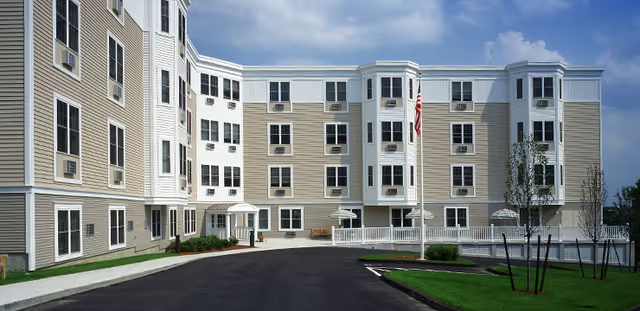
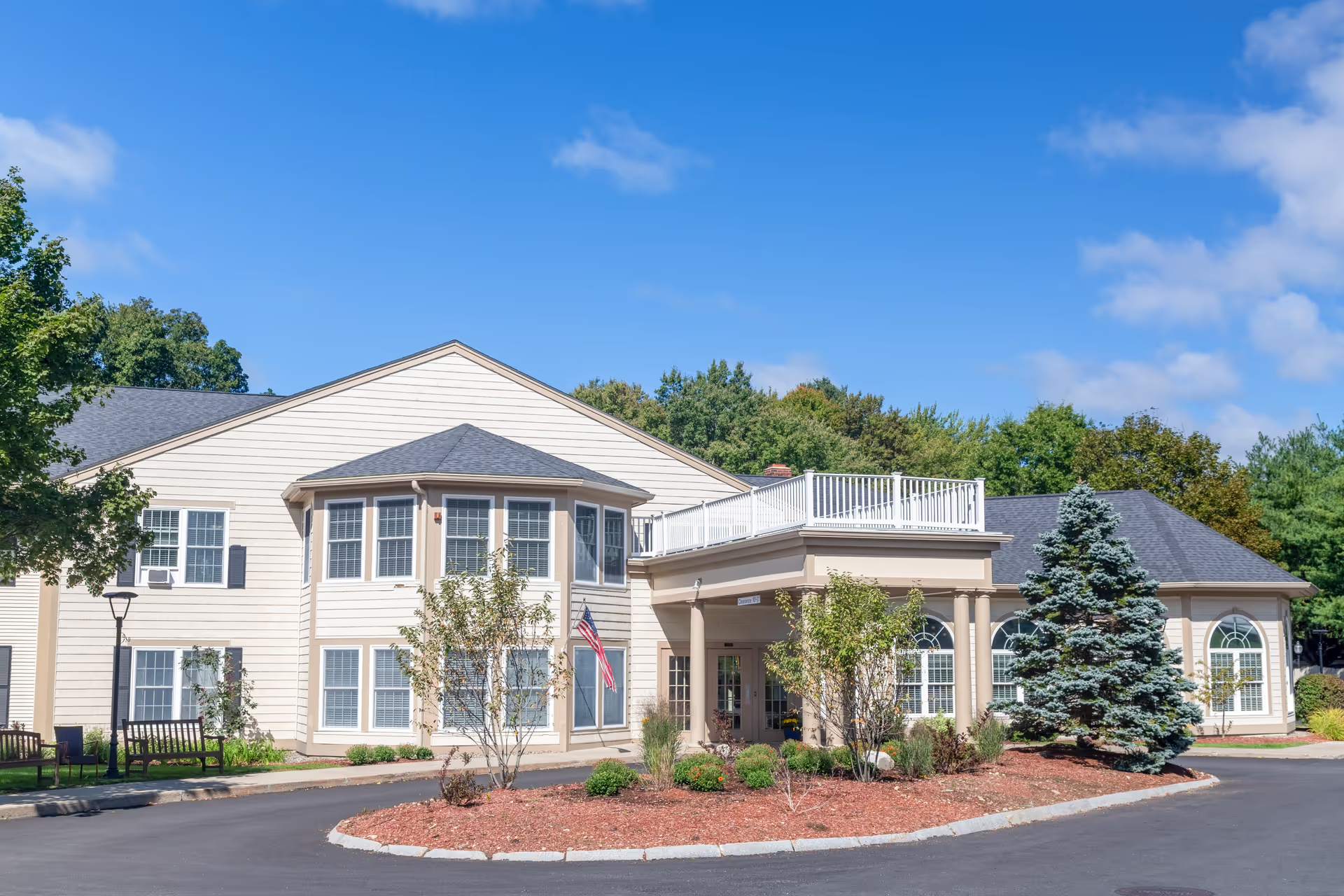
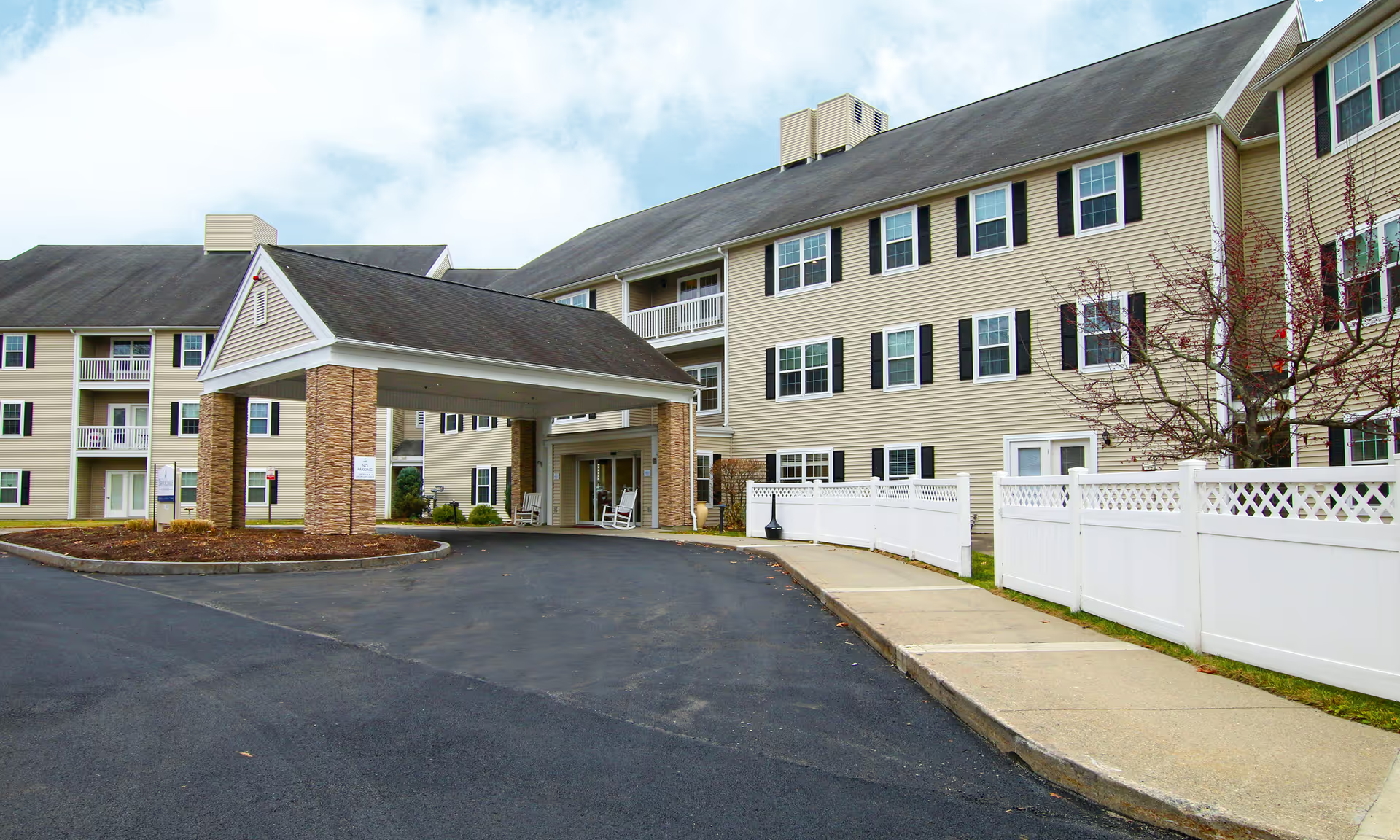
Operational and facility-level concerns recur across accounts. Staffing levels and supervisory coverage are described as inadequate at times, creating gaps in responsiveness and oversight. Several comments point to issues with staff conduct or communication tone and, in a subset of comments, language-proficiency barriers that can complicate family communication. The physical plant is described as older and undergoing partial renovation; reviewers cite deferred maintenance, dated rooms (including multi-bed/triple rooms with shared or external bathroom arrangements), and in-room technology and phone problems. There are also references to pest-control and sanitation concerns in particular areas, as well as crowded dining spaces and variability in the dining experience.
Management and administrative patterns are uneven in reviewers’ accounts. Positive notes include helpfulness with benefit enrollment and a generally accessible admissions process. Conversely, there are recurring concerns about management transparency, billing and charge clarity, and inconsistent follow-through on family-raised issues. Taken together, the reviews suggest a facility with clear clinical and programming strengths—especially for dementia care—and committed front-line staff, but one that is challenged by staffing constraints, aging infrastructure, episodic sanitation and pest-control issues, and uneven administrative oversight.
For prospective residents and families: an in-person visit is advisable to observe staffing levels during peak periods, inspect room and common-area cleanliness, review recent infection-control and pest-control measures, confirm bathroom and room configurations, and discuss medication-management and billing policies with leadership. Ask for current staffing ratios, recent inspection or remediation records, and examples of how management addresses family concerns to get a clearer view of day-to-day operations versus the facility’s clinical and programmatic strengths.