Overall impression: Reviews indicate a polarized picture of Golden Life Assisted Living. Many comments emphasize strong, compassionate caregiving—particularly for residents with dementia and for end-of-life needs—while other comments raise operational concerns related to upkeep, programming, and management responsiveness. Prospective residents and families will find evidence of both consistent bedside strengths and gaps in facility-level services.
Care quality and staff: The dominant positive theme is the direct care team. Several reviews single out specific caregivers (notably an individual named Rose) and describe staff as caring, hardworking, and attuned to resident needs. Reviewers describe a dementia-friendly approach and timely clinical support, including visiting doctors and staff capable of handling higher-acuity needs. End-of-life care was specifically praised in a number of accounts, and many families characterize interactions as warm and family-like.
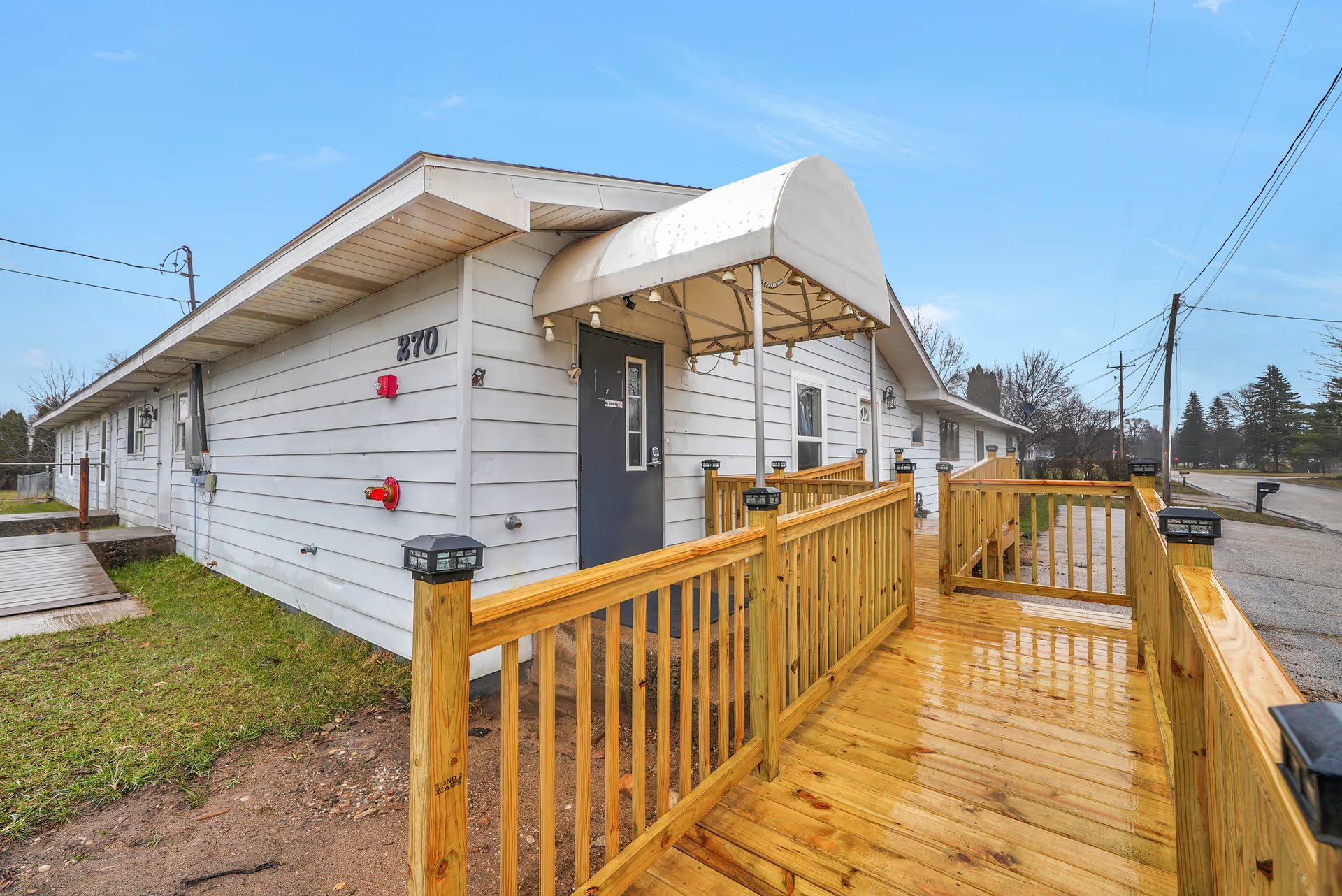
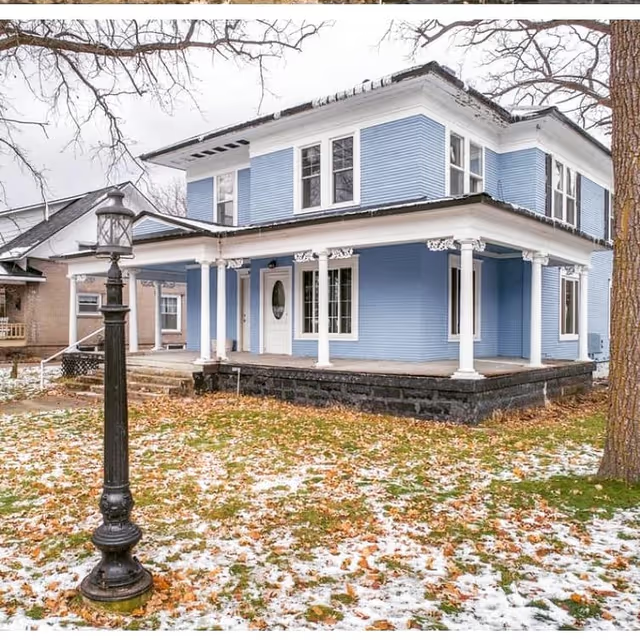
Dining and facilities: Comments about the physical environment are generally positive on cleanliness and a home-like feel. Meals are frequently described as prepared from fresh ingredients and made from scratch. There is outdoor space for residents and room sizes for two-person occupancy are described as adequate. However, other reviewers cite ongoing maintenance and upkeep gaps; those concerns suggest variability in facility condition that may affect common areas or routine repairs.
Activities and social programming: Programming is an area of notable inconsistency. Some reviewers describe a lack of organized activities, limited outings, and residents spending long periods idle in communal spaces. Other accounts do not reference programming challenges, creating a mixed picture. If engagement options are a priority, families should verify current activity schedules and staffing for programming during a tour.
Management, communication, and culture: Management perceptions are mixed. While some reviewers describe caring and involved management, others characterize owner or managerial interactions as discourteous and express dissatisfaction with responsiveness and communication. Reviewers also raised concerns about review transparency and handling of online feedback. These items point to variable leadership and communication processes rather than a single, uniform experience.
Notable patterns and recommendations: The reviews converge on a pattern of strong frontline caregiving and a comfortable, dementia-capable environment, contrasted with operational weaknesses in maintenance, programming, and management consistency. This produces a trust-in-staff but caveat-employment impression: staff performance is a strength, while facility-level systems are uneven. Prospective families should consider on-site visits to assess current maintenance, activity calendars, private-room availability, and communication protocols; ask about staff continuity, oversight, and the frequency of visiting clinical services to confirm that the observed strengths are consistent with their expectations.