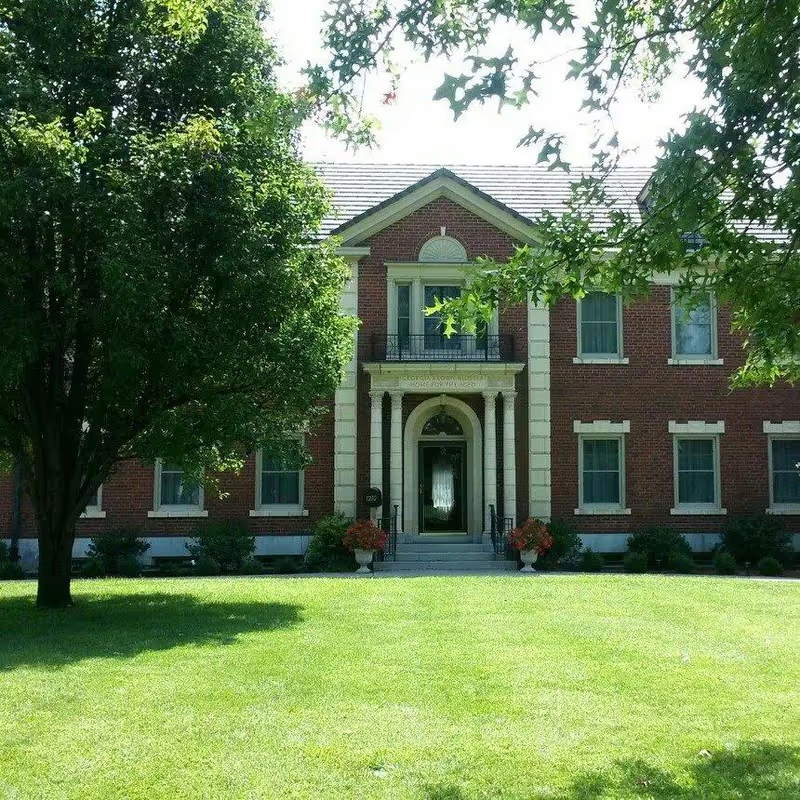
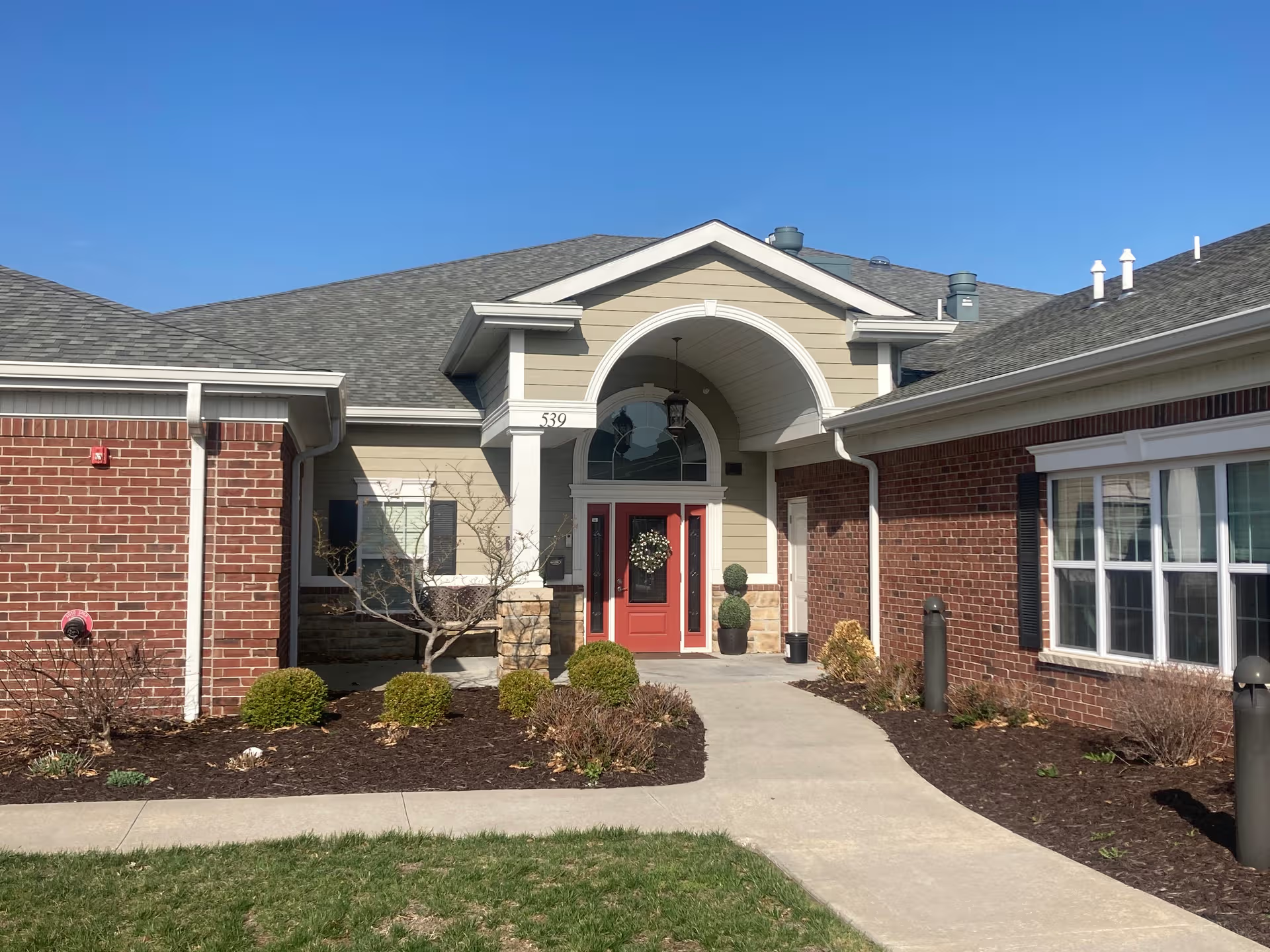
Carroll House elicits a notably mixed set of impressions. Positive commentary emphasizes the facility’s environment and interpersonal strengths: families praise a well-maintained, attractive setting with flowered landscaping and a gazebo that supports outdoor enjoyment, and they describe staff who are dedicated and resident-focused. These elements combine to create a favorable first impression for many visitors and lead to frequent recommendations from families.
Care quality appears variable. On the positive side, reviewers describe attentive caregiving and residents who appear well cared for. However, a subset of reviewers raised concerns about clinical practice consistency, specifically referencing instances where expected nursing procedures were not followed. Taken together, these comments suggest that while compassionate care is present, there may be variability in clinical reliability that prospective families should probe further during a visit.
Staffing and interpersonal dynamics are another mixed area. Many reviews highlight staff dedication and positive staff–resident interactions, but others point to conduct and professionalism concerns. These observations indicate potential inconsistency in staff behavior or training. Prospective families may want to ask about staff training, supervision, conflict-resolution policies, and examples of how conduct issues are addressed.
Management and oversight emerge as a notable pattern. Several reviewers indicated perceived limitations in leadership responsiveness, including the administrator and director of nursing, when concerns were raised. This suggests possible gaps in complaint resolution, follow-through, or clinical oversight. Other operational areas such as dining and specific activity programming were not extensively described in the provided summaries, so no clear conclusion can be drawn for those services.
In summary, Carroll House offers a pleasant physical environment and many caring staff members, but there are actionable areas to investigate: consistency of clinical procedures, staff professionalism standards, and leadership follow-through on concerns. Families touring the facility should observe care interactions, review clinical oversight practices, ask about incident-response procedures and staff training, and speak with current residents or families to understand both the strengths and the variability described in these summaries.