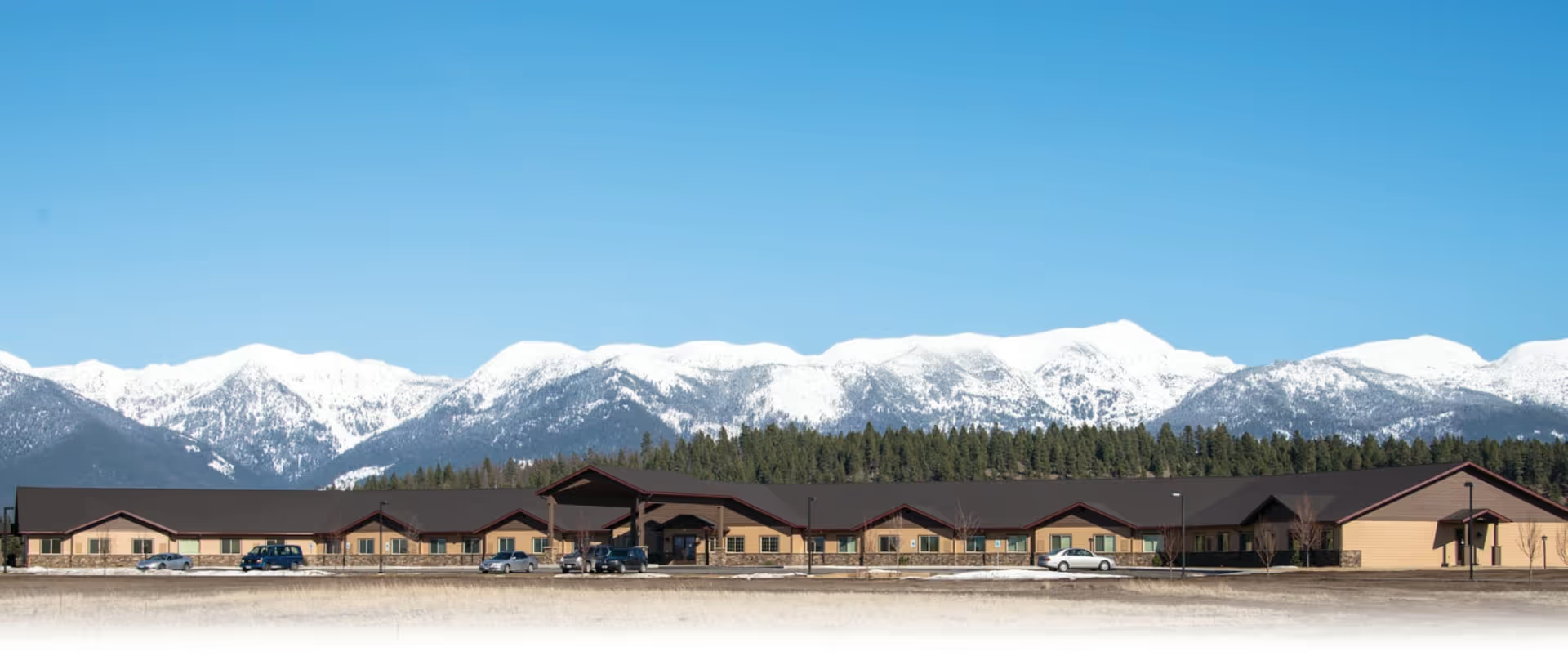
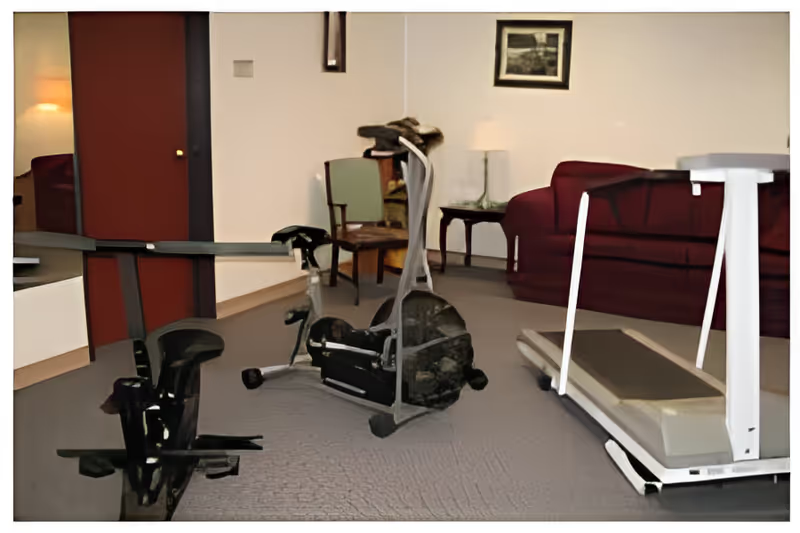
The review set for Mountain View Health and Rehabilitation is highly polarized, with distinct clusters of positive and negative experiences. Many accounts emphasize strong interpersonal care — staff described as compassionate, attentive, and personally engaged, with particular praise for the therapy/rehabilitation teams and admissions/front-desk personnel. Several families credit the facility with successful rehab outcomes, individualized care plans, and staff who learn residents’ names and preferences. These positive notes suggest the facility has core strengths in frontline caregiving and therapeutic services when staffing and processes align.
Conversely, a consistent pattern of operational weaknesses emerges across critical accounts. Staffing inconsistency appears central: reviewers describe delays in responding to call systems, prolonged waits for assistance, and perceived understaffing on nights and weekends. Those delays are connected to broader concerns about clinical oversight — notably gaps in post-fall assessment and follow-up, inconsistent medication/clinical management, and delayed or insufficient therapy evaluations in some cases. Family communication and care coordination are also uneven; several descriptions reference delayed notifications, last-minute cancellations of transfers or readmissions, and difficulty reaching management or nursing leadership.
Dining and personal-care areas present mixed signals. Multiple reviews praise dietary accommodations and nutritious meals, while others describe inconsistent food quality, menu deviations, and at least one allergy-related service error. Hygiene and environmental maintenance is another area of variability: positive descriptions of clean, welcoming spaces coexist with accounts indicating sanitation concerns, maintenance issues (worn furnishings, damaged fixtures), and odor concerns in certain areas. There are also reports indicating lapses in management of residents’ personal effects and additional costs or logistical problems related to belongings, which points to process and property-management weaknesses.
Management and organizational issues recur as themes. Reviewers mention leadership turnover, budget-driven reductions in activities and services, and uneven responsiveness from administration. There is also reference to regulatory or ombudsman involvement and an allegation of misleading online reviews; these are indicators families should review further with objective sources. Taken together, the pattern suggests that while frontline staff and therapy teams can deliver strong, person-centered care, systemic problems — staffing variability, inconsistent clinical processes, sanitation and property-management gaps, and uneven management responsiveness — have produced serious negative experiences for some residents.
For prospective residents and families, the key takeaway is to verify current conditions directly: ask about current staffing ratios and night/weekend coverage, review recent inspection or ombudsman findings, inquire about fall-prevention and post-fall protocols, request specifics on call-button monitoring and clinical oversight, clarify meal-service and allergy-handling procedures, and confirm policies for handling personal effects and transfers/readmissions. On-site observation of staff responsiveness, dining service during a meal, and the condition of resident rooms and common areas can help reconcile the divergent accounts present in these reviews.