Overview Pahrump Health and Rehabilitation elicits polarized feedback: many reviewers praise clinical and therapy staff for compassionate care and measurable rehabilitation outcomes, while others describe operational shortcomings that affect day-to-day resident experience. The facility appears capable of delivering strong, rehab-focused care under engaged clinical leadership, but persistent service-delivery gaps — most notably staffing, responsiveness, cleanliness, and communication — reduce consistency of that experience.
Care quality and staff Numerous accounts describe kind, professional nursing and caregiving staff, effective therapy teams, and a hands-on director of nursing who fosters a positive culture and staff empowerment. These strengths correlate with documented recovery progress, successful mobility gains, and positive end-of-life experiences for some families. Conversely, a recurring operational pattern is understaffing: delayed responses to call lights, missed or delayed personal-care tasks, and concerns about timely attention after clinical events. There are also mentions of medication-administration issues and med-check inconsistencies that suggest opportunities to strengthen clinical controls and charting practices.
Dining, therapy, and activities The facility's therapy program receives consistent praise for rehabilitation focus and measurable outcomes. Dietary services are described as accommodating to restrictions and capable of preparing tailored meals; several reviewers appreciated menu flexibility. At the same time, other reviewers describe inconsistent meal temperature and limited bedside beverage access. Activity programming is generally viewed positively, with engagement noted for many residents, although therapy frequency and Medicaid-related limitations on continued services were cited as constraints for some patients.
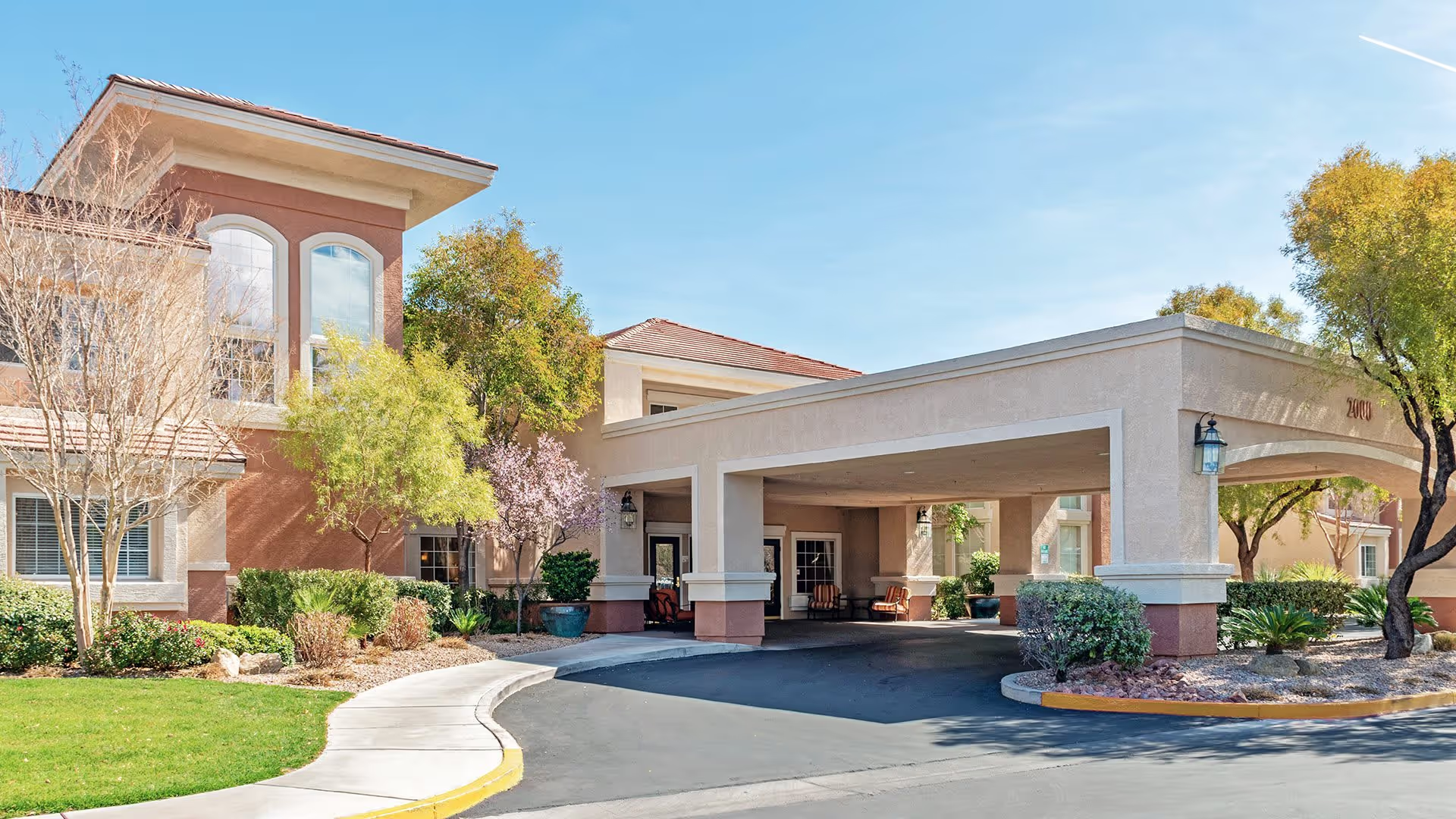
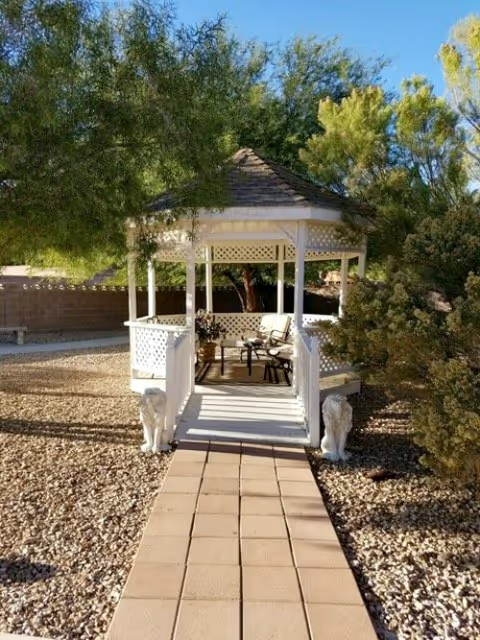
Facilities, cleanliness, and safety Perceptions of the physical environment are mixed. Some reviewers report clean, cheerful common areas and a pleasant entrance; others raise sanitation and odor concerns in particular units, inconsistent housekeeping, and specific maintenance issues such as doors that do not close or structural settling. Accessibility issues — including limited wheelchair access and lack of in-room phones — were also described. A small number of accounts raise serious safety concerns, including alleged resident harm and delayed family notification; these are outlier but significant and indicate a need for rigorous incident investigation and transparent communication protocols.
Management and communication Leadership is frequently cited as a strength where present: several families described approachable, supportive management and measurable improvements following administrative changes. However, a contrasting pattern includes reports of evasive or unresponsive administration around discharge, transport coordination, and follow-up care authorization (including payer-related limits). Communication gaps with families — delayed notifications about clinical issues or personal belongings, and difficulty reaching the facility by phone — appear as recurring operational weaknesses.
Notable patterns and considerations for families The facility shows capability for high-quality, rehabilitation-focused care under engaged clinical leadership and therapy teams; many families credited staff professionalism and compassion with positive outcomes. At the same time, persistent operational weaknesses — chronic understaffing, delayed responsiveness, sanitation/odor concerns, medication-management gaps, and inconsistent family communication — create variability in resident experience. Prospective residents and families should consider visiting at different times of day, asking about current staffing levels and recent quality-improvement initiatives, verifying accessibility features for mobility needs, and clarifying communication and incident-notification procedures before admission. If continuity of post-acute therapy under a particular payer is a concern, confirm authorization processes and expected therapy frequency in writing.