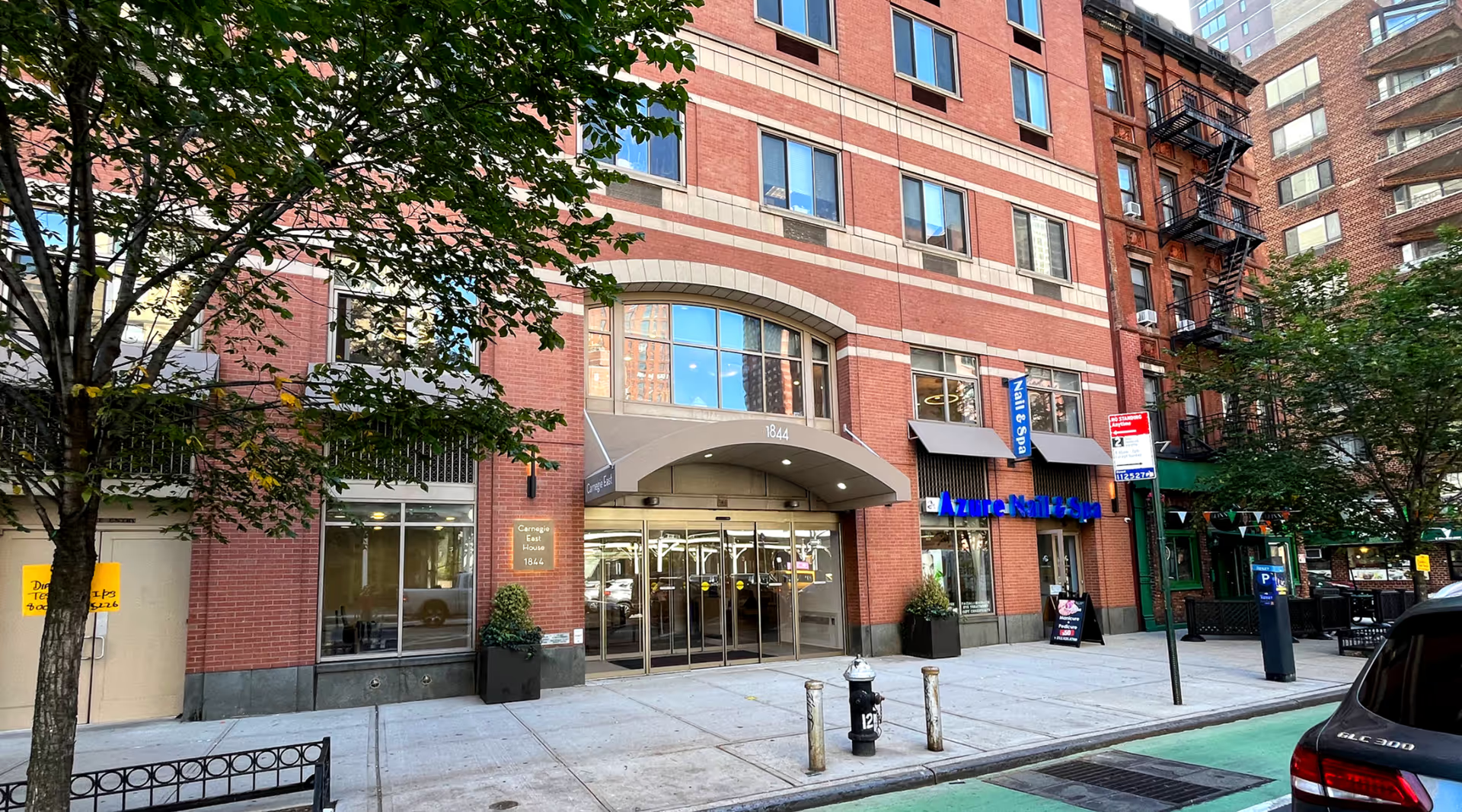
The review set describes a facility with strongly polarized experiences: many families and clinical visitors praise individualized, high-quality clinical care on particular units, while others report operational weaknesses that affect safety, responsiveness, and family confidence. Positive accounts emphasize clinically effective rehabilitation, respiratory therapy, wound care and thoughtful hospice coordination; those outcomes are often attributed to specific nurses, therapists and unit teams who provide attentive bedside care and clear communication. Recreation and activity staff are frequently cited as engaged, and housekeeping and public areas are commonly described as clean and comfortable.
Care quality appears uneven across shifts and units. Several reviews highlight successful clinical outcomes — rapid progress in rehabilitation, healing of complex wounds, and effective ventilator management — underscoring capable specialty teams. At the same time, families describe delays in basic bedside assistance (including toileting and hygiene), missed or late medication doses, and variability in nursing responsiveness. These patterns suggest that clinical strengths exist alongside operational reliability issues; several families reported feeling the need to provide or supplement care when staffing was limited.
Staffing and staff conduct are central themes. Many individual nurses, CNAs and therapists received high praise for compassion and competence, and some unit leaders and front-desk personnel were singled out for excellent service. However, reviewers also note inconsistent behavior across shifts, especially on weekends and nights, higher use of agency staff with variable engagement, and frequent staff turnover. Supervisory communication and managerial accessibility were described as uneven, which contributes to family frustration when escalation or clarification is needed.
Dining and activities show contrasting impressions. Activity and therapy programs are frequently described as robust and recovery-focused, with staff who foster resident engagement. Dining receives more criticism: reviewers cite limited variety, under-seasoned or cold meals, and delays in meal delivery. For families for whom nutrition and mealtime routines are important, these service inconsistencies are meaningful.
Facility and sanitation observations are mixed. Many reviewers praise the physical environment, patient rooms, and scenic views, and several note reliable housekeeping on certain floors. Others raise sanitation concerns in specific units or shifts, inconsistent cleaning turnaround, room-readiness delays, and pest-control concerns. Room-sharing and privacy constraints were also noted as an operational limitation in some placements.
Management, communication and safety processes are areas of recurring concern. Families report difficulty reaching clinical staff by phone at times, incomplete or inaccessible records, and slow responses from leadership on billing or incident questions. Allegations of missing personal items and supply-management problems appear in multiple reviews and have undermined trust for some families. There are also reports of uneven infection-control and quarantine handling during outbreak events. Conversely, a number of reviewers note improvements under new ownership and positive responsiveness from particular administrators.
Overall, the pattern that emerges is one of a facility with clear clinical strengths — notably in rehabilitation, respiratory care and some high-performing unit teams — coupled with operational vulnerabilities that include staffing consistency, responsiveness, meal service, and administrative communication. Prospective residents and families should consider asking targeted questions about staffing ratios (including weekend/night coverage), medication-administration and documentation processes, incontinence and bathing schedules, meal-service routines, procedures for handling missing items, language access services, and how clinical incidents and family communications are escalated. Visiting during different shifts and speaking directly with therapists and unit leaders can help assess whether a specific unit’s strengths align with the resident’s care priorities.