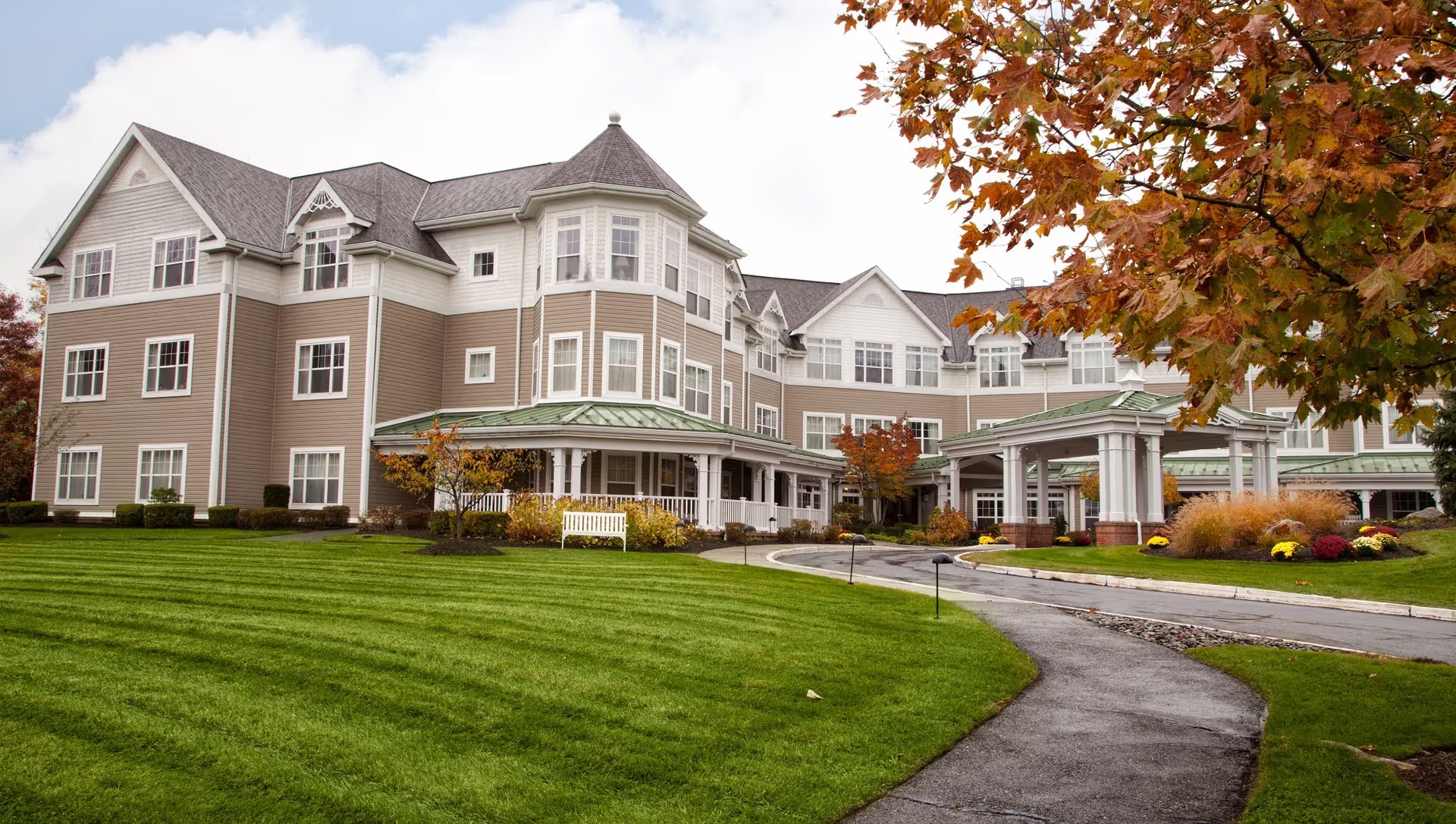
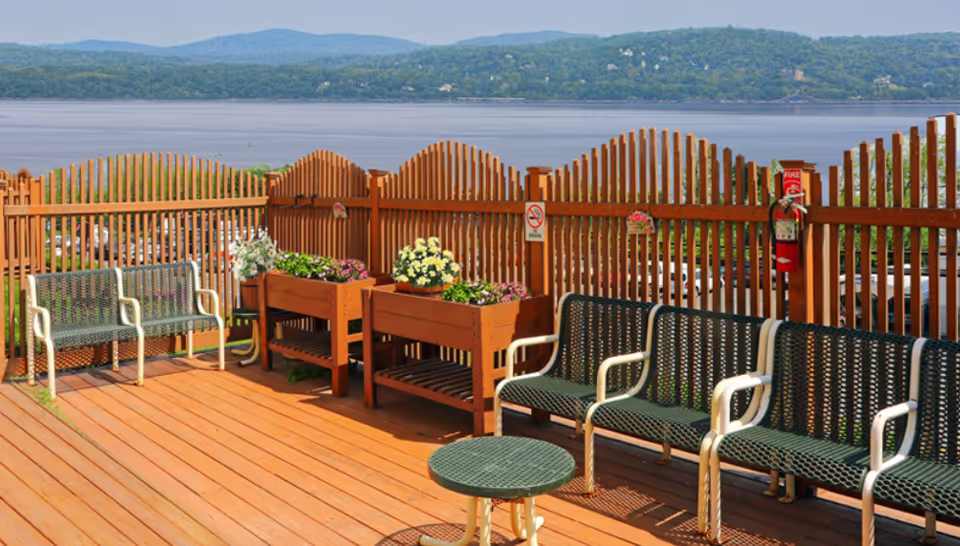
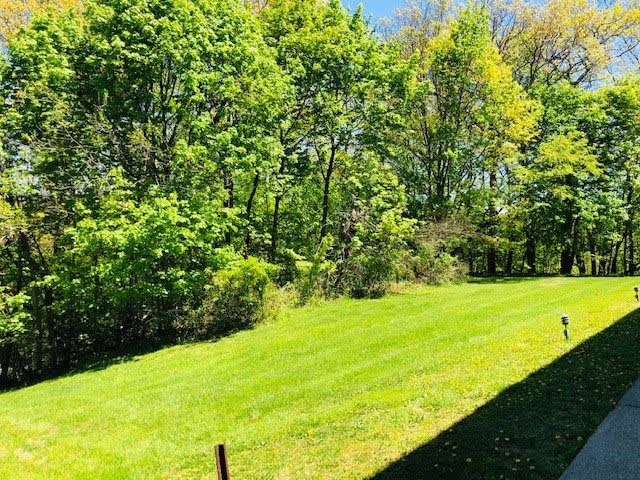
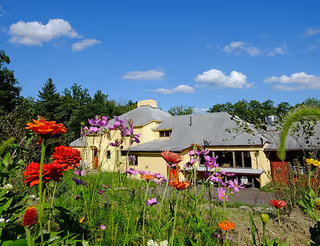
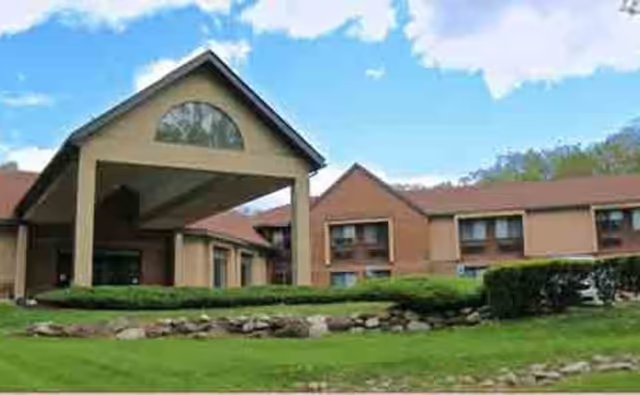
Overall impression The Chelsea at New City presents as a newly built, upscale community with a strong hospitality orientation. Many families describe an attractive, hotel-like environment with modern finishes, spacious bright apartments, and a wide array of amenities including a gym, theater, cafe, living rooms, and resort-style grounds. Move-in coordination, reception, and sales teams are frequently described as helpful and attentive, and many reviewers cite a warm, red-carpet welcome and supportive social-work involvement during transitions.
Care and staffing Frontline caregiving and support staff are frequently praised for compassion, patience, and individualized attention, and several reviewers singled out specific employees as standouts. However, there are recurring operational concerns about staffing stability and clinical coverage. Reviewers describe high turnover and uneven staffing levels that have the potential to affect responsiveness, daily care follow-through, and clinical continuity. Relatedly, there are reports indicating limited behavioral-health capability and gaps in escalation protocols when residents develop complex behavioral or medical needs; prospective families should clarify the community's process for handling behavioral incidents and acute clinical escalations.
Sanitation, safety, and clinical oversight While many reviewers compliment the clean, well-kept public spaces, other accounts raise sanitation concerns and indicate lapses in incontinence-related care and laundry/room-cleaning processes in some units. Families also expressed worries about safety practices tied to staffing levels, including fall risk and timeliness of assistance. Given these mixed observations, prospective residents should ask for details about cleaning schedules, incontinence-care protocols, staffing ratios (day/night), fall-prevention programs, and oversight of infection-prevention practices.
Dining and activities Dining is positioned as a strength in format and setting—restaurant-style service, menu choices, and flexible dining options are commonly noted. Opinions about food quality are mixed: several families praise the meals as very good to excellent, while others find the execution inconsistent and recommend confirming current menus and sample meals. Activities programming appears robust on paper, with music, speakers, memory-care games, exercise classes, and outings regularly scheduled. That said, some areas report limited engagement or reliance on passive entertainment (television) rather than consistent, purposeful activity—families should review the daily/weekly activity calendar for the specific unit they are considering and ask how programming differs by care level.
Facilities and services The physical plant and amenities are frequently lauded: large bathrooms, walk-in closets, kitchenettes, swift elevators, and abundant communal spaces. On-site rehabilitation (OT/PT), transportation for medical visits and outings, pet-friendly policies, and multiple care levels including skilled nursing are noted as important conveniences. A few reviewers referenced licensing or occupancy timing issues (e.g., early opening with limited resident occupancy or pending licenses), so confirm current licensing status and which services are available at the time of move-in.
Management, admissions, and financial matters Families have mixed experiences with management and administrative transparency. Positive accounts highlight caring leadership and responsiveness from executives; negative accounts point to lapses in communication, perceived blame-shifting, difficulties obtaining timely responses, and frustration with deposit and pricing practices. Several reviewers described unexpected changes around deposits, pricing inflexibility, or fee increases. Prospective residents should request clear, written explanations of tiered care packages, deposit and refund policies, fee escalation clauses, and what specific medical qualifications or screening criteria could affect admission after deposit.
Notable patterns and recommendations The dominant pattern is of a high-quality physical environment combined with strong hospitality and many dedicated staff — but with operational variability around clinical staffing, sanitation protocols, behavioral-health capacity, and administrative transparency. Before committing, families should (1) confirm current staffing ratios and turnover metrics for the unit of interest, (2) review written cleaning and incontinence-care protocols, (3) evaluate the community's experience and processes for behavioral-health incidents and clinical escalation, (4) sample dining and review recent menus, (5) examine the activity calendar for the specific care level, and (6) obtain clear, written terms for deposits, pricing tiers, and admission criteria. These steps will help reconcile the facility's clear physical and hospitality strengths with reported operational inconsistencies.