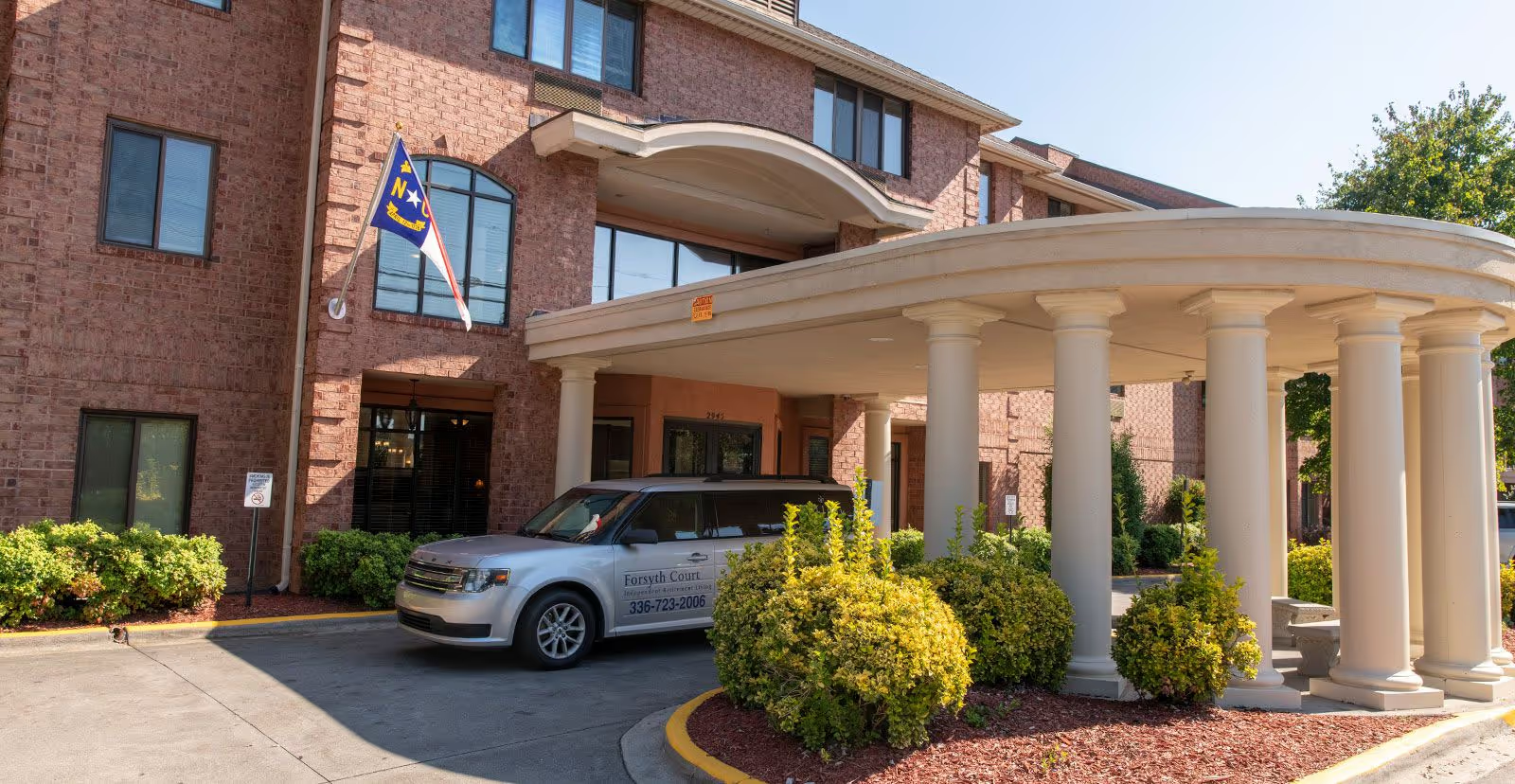
Somerset Court of University Place presents a mixture of clear strengths and operational inconsistencies. Positives frequently mentioned include large, comfortable rooms with space for personal appliances, a generally clean and well-kept interior, and a family-like community atmosphere. Many reviewers describe staff as professional, warm, and attentive, and the community offers a range of social programming — music, crafts, parties, and off-site outings — that contribute to an active daily life for residents. The facility provides on-site medical services and has infection-control measures in place, which some families contrasted favorably with other local options.
Care quality emerges as a mixed picture. Several reviewers praised proactive care, careful medication administration, and management that addresses issues before they escalate. At the same time, other accounts point to operational weaknesses: inconsistent medication handling, occasional refusal or incorrect administration of medications, and delays in responding to resident requests. These disparities suggest variability in clinical practice and responsiveness across shifts or personnel, rather than a uniform standard of practice.
Staffing and conduct are central to the polarized impressions. Numerous comments commend individual caregivers for being loving and attentive, while other accounts describe rudeness, harassment, and communication problems. There is at least one serious claim involving discriminatory conduct; this elevates the importance of asking management about staff-training, grievance processes, and any follow-up actions when touring the facility. Staffing variability also appears to affect service continuity, with references to new staff influencing food quality and cancellations or reductions in certain offerings.
Dining and support services show both strengths and concerns. Reviewers note decline in meal quality associated with recent kitchen staffing changes and describe what one critic characterized as a punitive meal policy; these characterizations point to inconsistent culinary standards and meal-service policies that some families find problematic. Laundry service and personal-care amenities are mentioned positively, but ancillary services such as the library and beauty salon have, at times, been unavailable, suggesting limited staffing or scheduling constraints for nonclinical services.
Activities and facility amenities are overall a strength when staffed: scheduled music, visiting performers, crafts, and shopping trips are part of the community life and are cited as meaningful for resident engagement. However, several accounts note cancellations of trips or reduced access to salon and library services — indicating that program availability may vary with staffing levels. Cleanliness is generally praised in public descriptions, but there are also explicit concerns about inconsistent housekeeping in some resident rooms and bathrooms, which prospective families should inspect during a visit.
In summary, Somerset Court offers many of the desirable qualities of a residential care setting — spacious rooms, an active social calendar, on-site medical support, and many caring staff members — but prospective residents and families should be attentive to operational variability. Key topics to address on a tour or during the intake process include current staffing levels and turnover, specific medication-administration protocols and oversight, housekeeping schedules, meal policies and recent kitchen staffing, and the facility’s procedures for handling complaints and allegations of discriminatory conduct. Asking for recent inspection results, staffing rosters by shift, and examples of management follow-up on concerns can help clarify whether the facility’s strengths are consistently delivered for an individual resident’s needs.