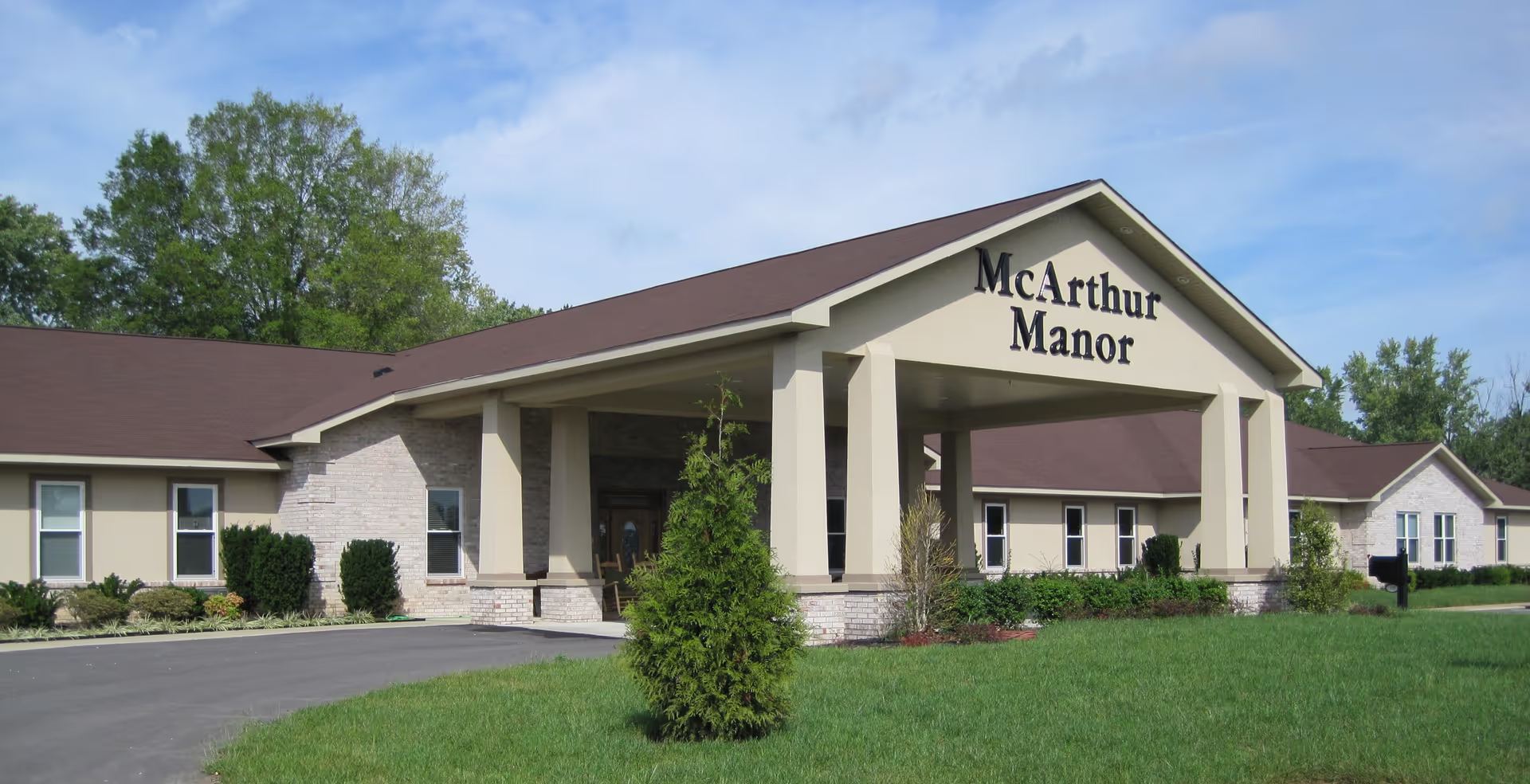
Manchester Center for Rehabilitation and Healing is frequently praised for the quality of hands‑on care delivered by its clinical and therapy teams. Many families described compassionate, attentive nurses and rehabilitation therapists who achieved observable mobility improvements and supported discharge goals. Night-shift staff and certain named caregivers received repeated commendations for responsiveness and personal attention. The facility’s infection-control practices, entry screening, and concierge/check‑in functions are also identified as strengths that contribute to a welcoming first impression.
The physical environment is another consistent positive: reviewers commonly noted a clean, bright, modern interior with well‑maintained common areas, outdoor dining opportunities, and amenities such as a conference room and planned library. Activity programming—bingo, crafts, singing, regular worship services and social meals—was highlighted as enriching for residents and appreciated by families. Several reviewers also emphasized strong interdisciplinary communication in formal care‑planning meetings and individualized attention to resident preferences.
At the same time, a set of operational weaknesses appears repeatedly. Staffing levels and coverage are described as inconsistent, with variability between shifts that can affect response times and perceived attentiveness. Multiple reviews raise concerns about medication administration and oversight; these comments suggest families should inquire specifically about medication‑management policies and monitoring. Meal service and food quality were variable: some families praised customized meals while others experienced missed meals, small portions, or unsatisfactory food, indicating unreliable meal‑service continuity.
Administrative processes and communication are additional areas of concern. Several accounts describe inefficient admissions and registration coordination, unanswered or delayed phone communication, and uneven follow‑through on administrative requests such as laundry and locating personal items. There are also recurring complaints about handling of personal belongings and, in some cases, disposal of items after a resident’s death. Privacy and noise control in shared rooms—doors or curtains left open and noisy roommates—were noted as affecting resident comfort. Finally, a few reviews contain serious, isolated allegations related to adverse clinical events and discharge/transfer communication; these raise the need for direct, facility-level clarification and, if desired, review of regulatory records.
Overall, Manchester Center appears to deliver strong rehabilitative and relational care in a clean, well‑appointed setting, with many families praising individual staff members and therapy outcomes. Prospective residents and family members should balance those positives against reported inconsistencies in staffing, medication oversight, meal delivery, and administrative responsiveness. Recommended due diligence includes asking for current staffing ratios, medication-safety protocols, recent survey or inspection results, specifics about admissions and discharge procedures, and examples of how the facility addresses lost‑property and communication escalations.