Overall impressions of The Waters of Winchester are mixed and often sharply divided. Many families and visitors praise the direct-care staff, therapy teams, and certain clinical strengths: rehabilitation services (PT/OT/ST) are frequently described as strong and encouraging, staff are often characterized as compassionate and supportive, and some units — including the Memory Springs Unit — receive positive marks for attentive, team-oriented care. When present, staffing cohesion and engaged leadership correlate with good experiences, including proactive pressure-injury prevention and accommodating individual resident needs.
Counterbalancing those positives are recurring operational concerns. Several reviews describe inconsistent sanitation and infection-control practices, with visible cleanliness issues and subsequent infection events cited in a subset of accounts. Staffing variability is a common theme: daytime care is often described as competent while night shifts or certain shifts are described as understaffed or less responsive. This shift-to-shift inconsistency contributes to delays in responding to call lights and attending to personal-care needs, and to inconsistent bathing and incontinence-care scheduling.
Clinical processes and communication are additional areas of concern. Some reviewers reported medication-administration errors and lapses in documentation or explanation of medications; these accounts raise concerns about medication-management controls and resident identification practices. There are also reports of delayed physician follow-up, delayed or unclear hospice coordination, and at least one account raising questions about unexplained strong-analgesic administration following a resident’s death. Administrative issues appear alongside clinical ones: families describe difficulties reaching management, repeated paperwork requests, lost forms, and uneven follow-through on family communication.
Dining and activities present a mixed picture. The facility offers meal choice, standby menu options, snacks, and a visitor-friendly dining area; several families appreciated the food and opportunity to dine with residents. Other families cited inconsistent meal quality, processed-meat options, and failures in allergy-safe meal handling. Recreational programming such as movies, music, and games is available and cited positively by many families, and therapy programming is a clear strength for those in rehabilitation.
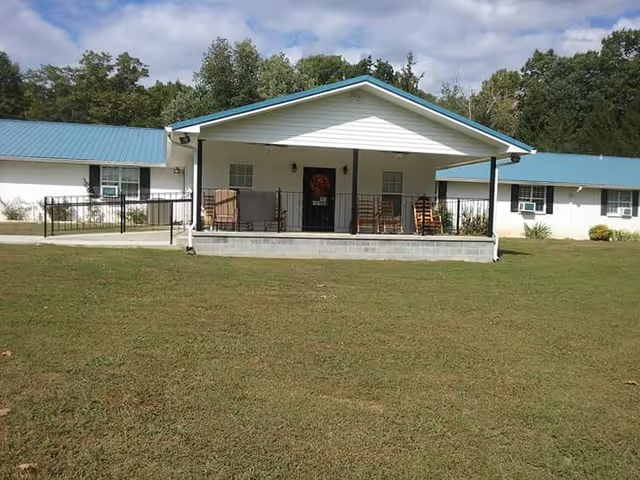
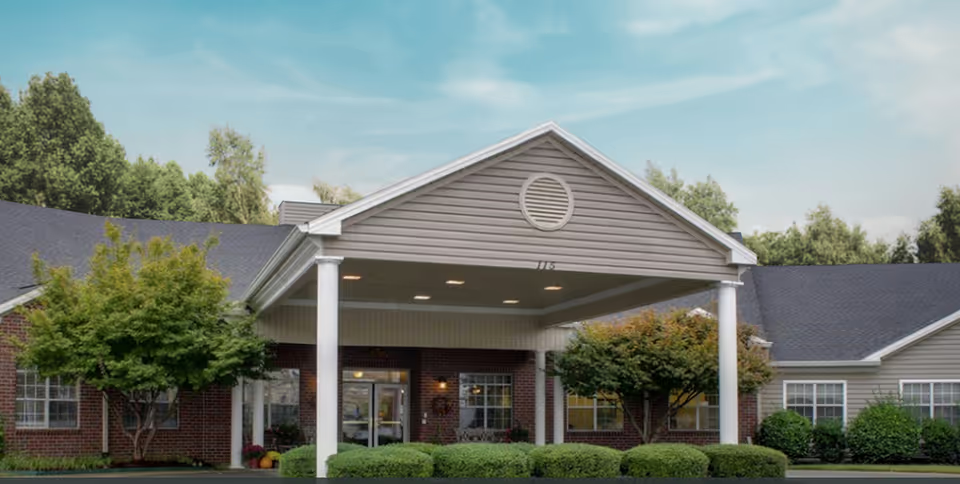
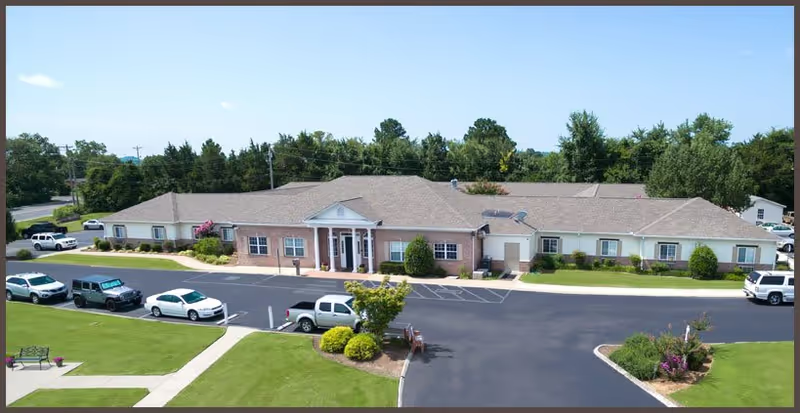
Facility condition and safety show variability. While some reviews describe exceptionally clean, well-maintained units with bright common areas, others identify maintenance issues (for example, HVAC or wall damage), odor concerns in parts of the building, and pest-control vulnerabilities. These divergent accounts suggest that facility upkeep and environmental controls may vary by unit or over time. Concerns about supervisory conduct, chain-of-command clarity, and ownership/management transitions also recur in feedback, which may contribute to uneven implementation of policies and staff training.
In sum, The Waters of Winchester demonstrates notable strengths in rehabilitation services, certain caregiving teams, and family-oriented amenities. However, persistent operational weaknesses — especially around sanitation consistency, staffing reliability, medication controls, communication, and administrative systems — merit careful inquiry by prospective residents and families. Visiting in person, asking specific questions about shift staffing, infection-control protocols, medication-administration safeguards, allergy-meal procedures, and recent inspection or staffing changes, and speaking with current families on-site will help assess whether the facility’s strengths are consistently realized for a given resident.