Onion Creek Nursing and Rehabilitation Center elicits strongly mixed impressions. A number of reviewers describe positive experiences with rehabilitative services, admissions coordination, and specific staff members who provided compassionate, attentive care. These positives tend to concentrate in therapy, social-work/case-management, and certain nursing or housekeeping teams; when those elements align, families report smooth transitions, good therapy outcomes, and appreciative aftercare planning.
Conversely, a consistent pattern of operational concerns appears across many accounts. The most prominent themes are inconsistent staffing and delayed responsiveness: families cited prolonged waits for assistance, slow responses to call bells, and uneven attention during nights and weekends. These timing and staffing problems are associated with incontinence-care delays, delayed assistance after falls or accidents, and occasional problems with wound or skin care follow-up. Several reviewers flagged gaps in medication administration and coordination with physicians or pharmacy services.
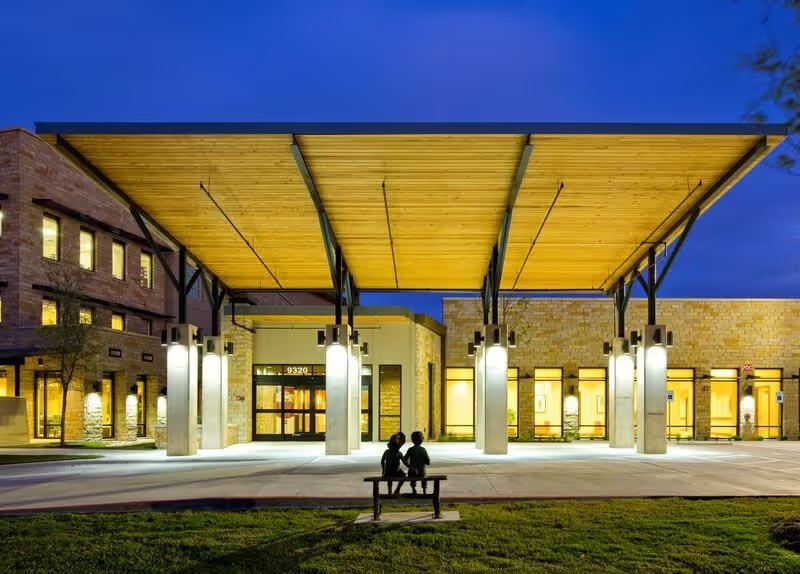
Cleanliness and maintenance present a polarized picture. Some visitors praised clean, modern areas and an attractive, restaurant-style dining room; others described sanitation concerns, odor issues in certain corridors or rooms, sticky floors, and furniture or equipment in disrepair. This contrast suggests variability by unit or shift rather than a uniformly maintained environment. Housekeeping and laundry staff received praise in multiple accounts, indicating those teams can provide good service when resourced and supervised appropriately.
Staffing culture and communication are another area of divergence. Many reviewers singled out individual employees (therapists, social workers, admitting staff, and some nurses/CNAs) as especially caring and effective. At the same time, other families experienced unfriendly or dismissive interactions, arguments about duties, and broken promises around care plans. Multiple reports point to miscommunication during shift changes and insufficient follow-through from administration on family concerns. There are also indications of weaker clinical oversight during weekends and night shifts, which contributed to family safety and monitoring concerns.
Dining and activities receive mixed marks. Therapy groups and engaging activity programming were praised in several reports; however, other accounts describe limited or unappealing activities, loud dining spaces, inconsistent food quality, and small portions. Prospective residents who prioritize active rehabilitation and social engagement may find the facility’s therapy resources strong, but those seeking consistently robust activity schedules and dining experiences should verify current programming.
Management and leadership perceptions vary over time. Some reviewers acknowledge visible improvements under new management and commend administrative responsiveness, while others report inadequate follow-up, poor customer-service interactions, and problems with discharge planning that left families feeling unsupported. There are serious family concerns following a resident’s death and an allegation about attempts to silence an advocate; such matters merit careful inquiry during any evaluation of the facility.
Recommendations for prospective residents and families: tour the specific unit where care would be provided, observe staffing levels and response times at different shifts (including nights/weekends), ask for unit-specific cleanliness and maintenance records, review medication-administration and fall-response protocols, and request details on therapy schedules and activity calendars. Speak directly with social work or case-management staff about discharge planning and aftercare coordination. If possible, speak with current families on the wing to understand day-to-day consistency. The facility demonstrates clear strengths in rehabilitation, individual staff dedication, and certain administrative functions; however, the documented variability in staffing, sanitation, communication, and off-hour clinical oversight suggests that careful, unit-level evaluation is essential before placement.