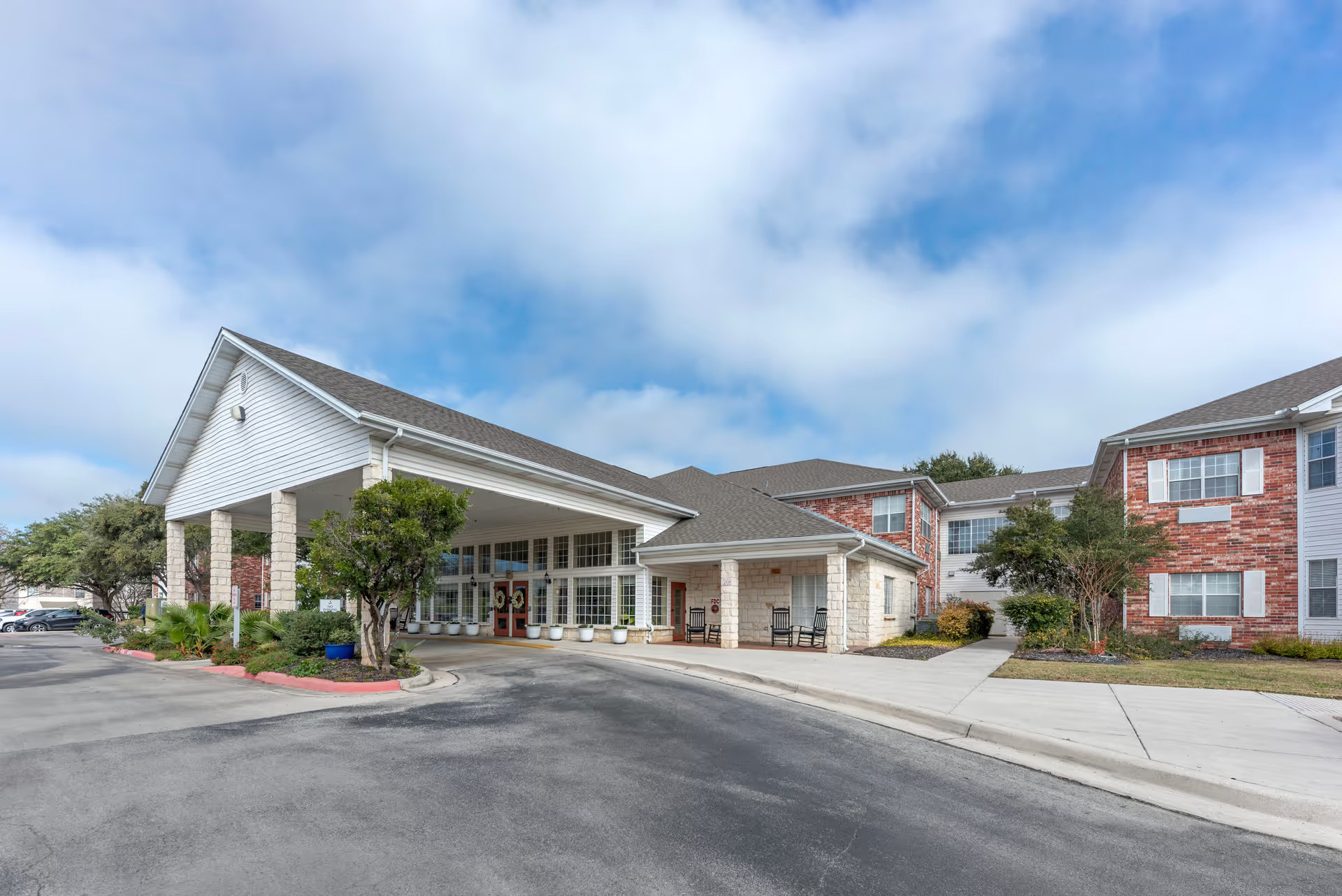
Orchard Park of Kyle presents as a well-appointed, recently developed assisted-living community with many operational strengths alongside recurring operational shortcomings. Reviewers consistently highlight compassionate, resident-focused caregivers and a visible, professional admissions team that facilitates smooth move-ins. The community offers an extensive activities program (with several long-tenured activity directors noted), on-site therapy and rehabilitation, a range of amenities such as a salon, fitness room, library and movie room, and comfortable unit options including larger two-bedroom apartments. Common areas and outdoor courtyards are frequently described as clean, attractive, and conducive to social interaction; dining is often framed as restaurant-style with a welcoming atmosphere when meals are prepared well.
At the same time, a pattern of service inconsistencies emerges across reviews. Staffing levels and turnover are the most frequently cited operational weaknesses; reviewers reported instances of delayed responses to resident calls, limited overnight monitoring, and periods when staff coverage felt insufficient. These staffing patterns correlate with reported gaps in basic care processes — including irregular bathing or toileting assistance, inconsistent housekeeping or laundry service, and delayed medication or therapy communications. Several reviewers raised concerns specific to memory care: uneven behavior-management approaches, worries about medication oversight, and a sense that dementia-related needs are not consistently addressed to the same standard as general assisted-living residents.
Dining and activities show similar variability. Positive accounts describe engaging, meaningful programming (music hours, outings, gardening, holiday events) and staff who tailor activities to resident interests; other accounts say the published calendar is not always delivered, with residents defaulting to group television or passive options. Food quality is an inconsistent area: while some families praise balanced, flavorful meals and a pleasant dining experience, others report small portions in memory care, limited fresh-vegetable and fruit options, and menu monotony. These inconsistencies suggest gaps in kitchen staffing, menu planning, or portion-management practices rather than a uniform culinary standard.
Management and administrative experience appears mixed. Many reviewers commend approachable leadership, clear admissions support, after-hours communication options, and responsive follow-up when issues are raised. Conversely, others describe communication lapses, billing or contract transparency problems, move-in logistics errors (incorrect room assignment or incomplete setup), and occasional unresponsiveness after serious concerns were reported. A small number of reviews mentioned more serious issues — references to regulatory attention and a resident security incident — which prospective families may wish to corroborate with state inspection records during their evaluation.
For prospective residents and families, the community's strengths are most evident in its social environment, amenities, and pockets of very attentive caregiving. The operational risks to evaluate on tour include current staffing ratios (day and night), memory-care staffing and behavior-management protocols, fall-monitoring and post-fall response processes, meal-scheduling and menu-sourcing practices, sanitation routines, and administrative transparency around contracts and billing. Asking for recent state inspection reports, specific examples of dementia-care protocols, a sample activities week in practice (not just the calendar), and a clear explanation of after-hours response procedures can help clarify whether Orchard Park's positive elements are being consistently delivered at the time of placement.