Overall impression Colonial Living and Rehabilitation of Sealy receives strong praise for its clinical rehabilitation services and elements of personal care, alongside recurring concerns about facility upkeep and staff consistency. Many accounts emphasize the effectiveness of occupational and physical therapy and note measurable functional gains during short-term stays. At the same time, other comments indicate operational gaps that prospective residents and families should evaluate during a visit.
Care quality and staff Therapy services are a clear strength: reviewers describe skilled occupational and physical therapists and rapid functional improvements, including gains in mobility and speech. Nursing and caregiving are frequently characterized as compassionate and respectful, with specific mention of prompt assistance for personal needs. However, there is variability in staff conduct and responsiveness; while some families describe attentive, courteous interactions, others describe encounters that felt unprofessional or inadequately responsive. This pattern suggests differences in experience by shift, unit, or individual staff members rather than a uniform culture.
Dining and activities Dining is a consistent positive. Meals are described as well-prepared with generous portions, and the facility organizes seasonal events (for example, Thanksgiving activities) that contribute to resident engagement and community. These elements support quality of life for short-term rehab and longer stays alike.
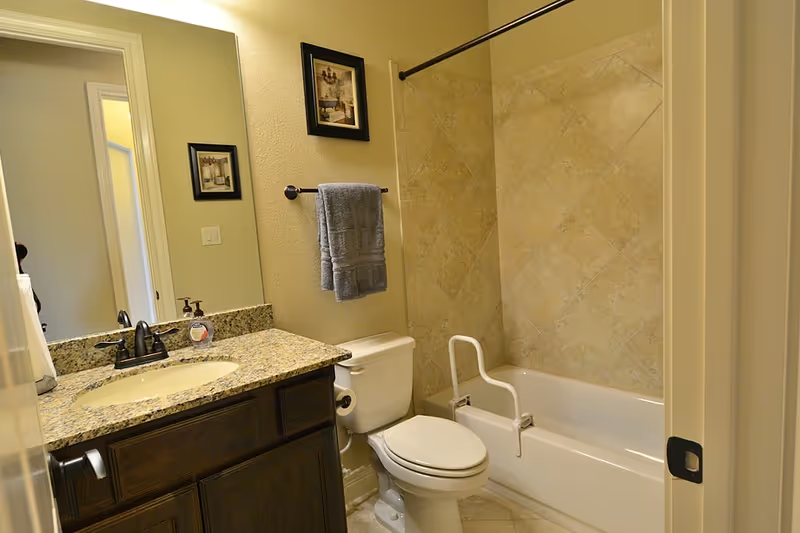
Facilities and infection control Several comments indicate generally clean common areas and an emphasis on infection-control, including strict COVID-related measures. Contrastingly, other observations point to sanitation concerns and odor control issues in some areas, as well as perceived shortcomings with air quality and ventilation maintenance. These mixed accounts suggest that cleanliness and environmental maintenance may be inconsistent across the building or between cleaning cycles.
Management and operational patterns The reviews show a split picture: strong clinical outcomes and caring staff are paired with operational weaknesses in housekeeping, environmental maintenance, and sometimes staff communication. Management strengths include attention to infection-control protocols and therapy programming; areas for improvement include ensuring consistent housekeeping standards, addressing ventilation/air-quality maintenance, and strengthening staff training and supervision to reduce variability in conduct and responsiveness.
Notable patterns and guidance for families The most notable pattern is a contrast between high-quality rehabilitation and uneven facility maintenance and staff consistency. Prospective residents and families should observe cleanliness and air quality during visits, ask about housekeeping schedules and HVAC maintenance, meet therapy leaders, and request to observe care/staff interactions across different shifts. Asking management about staff training, staffing ratios, and specific protocols for personal-care follow-through can help set expectations and identify whether the facility’s strengths align with the resident’s needs.