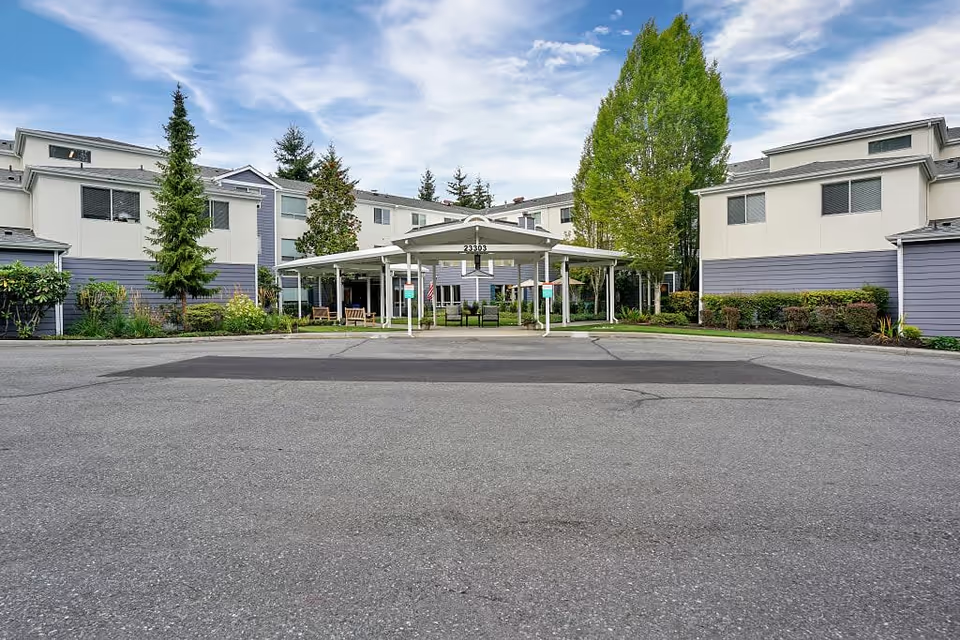
Aegis Living Callahan House presents as a memory-care–focused community with several operational strengths and some notable operational weaknesses. Families consistently praise the caregiving team as warm, experienced, and personable; many reviews highlight long-tenured staff, individualized attention, and a strong activity program that includes music and art therapy, live performances, exercise classes, and organized outings. The physical environment is described as clean, well-maintained, and home-like, with private rooms, tasteful décor, a courtyard and fireplaces, and accommodations that can ease pet transitions for residents. These attributes contribute to many families feeling their loved ones experience social engagement, improved mood, and safety within the living environment.
Care quality and staffing present a mixed picture. Several reviewers describe strong nursing presence and attentive caregivers, while others point to inconsistent staffing levels that produce slow response times and service delays. Complaints include problems with the internal paging or call systems and delays in attending to resident requests; these issues have been framed by families as potential safety risks. There are also recurring concerns about delays and inconsistencies in medication administration and in following physician-directed treatment plans, suggesting gaps in clinical follow-up and handoff procedures that prospective families should assess directly.
Dining and programs are likewise described unevenly. Many families praise the activity calendar, outings, and opportunities for social meals, while commentary on food quality varies from “excellent” to “salty, manufactured” and limited by menu choices. A few reviews suggested a greater role for dietary oversight. Prospective residents should inquire about current menus, accommodations for special diets, and whether a dietitian reviews meal planning.
Administration and financial practices are another area of divergence. Positive accounts note a smooth move-in process and welcoming staff at admission; contrasting comments raise concerns about aggressive sales tactics, unclear contract interpretations, and a point-based or add-on charge structure that some families found opaque or difficult to dispute. Several reviewers expressed frustration with perceived gaps in management accountability, particularly when clinical or communication problems arose. Cost is frequently described as high relative to perceived value.
Overall, Callahan House offers many of the environmental and programmatic features families seek in memory-care communities — compassionate caregivers, a rich activity program, and a well-kept facility. At the same time, consistent due diligence is advisable: verify current staffing ratios and emergency-call systems, review medication administration and clinical-communication policies, examine contract terms and charge structures, and sample dining options. Visiting during different times of day and asking for recent examples of how the community handled clinical issues and family communication will help determine whether the facility’s strengths align with an individual resident’s needs.