Overall sentiment in the provided reviews is clearly mixed: one reviewer describes a very positive experience with clean, warm, attentive care that met advanced clinical needs, while another describes a negative experience characterized by unhelpful staff, absent management, and unclean facilities. These two summaries reveal a split in experiences where some families are very satisfied and others are sufficiently dissatisfied to say they will not return.
Care quality: On the positive side, one reviewer explicitly praises the facility for providing advanced, appropriate care for their mother's needs, noting that the mother was happy and received good, attentive care. That indicates the facility is capable of delivering higher-level, individualized clinical attention at least in some cases. On the negative side, the other reviewer’s comment that the overall experience was negative suggests that care quality may be uneven: while some residents receive attentive support, others (or at least one family) perceived care as substandard. The pattern points to variability in resident outcomes rather than a uniformly high or low standard.
Staff and management: Staff impressions are a major theme and are directly contradictory across reviews. Positive feedback highlights warm, caring, and attentive staff — staff who make the resident comfortable and provide good day-to-day care. Contrastingly, the negative feedback calls staff unhelpful and specifically notes that managers were not present. The mention of absent management is notable because it implies potential issues with oversight, responsiveness to concerns, and accountability. Together these comments suggest that staff behavior and management presence are inconsistent and that leadership visibility may be a driver of family satisfaction.
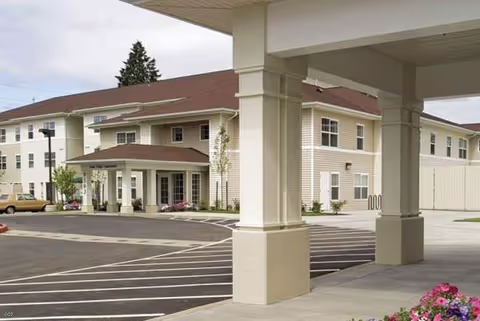
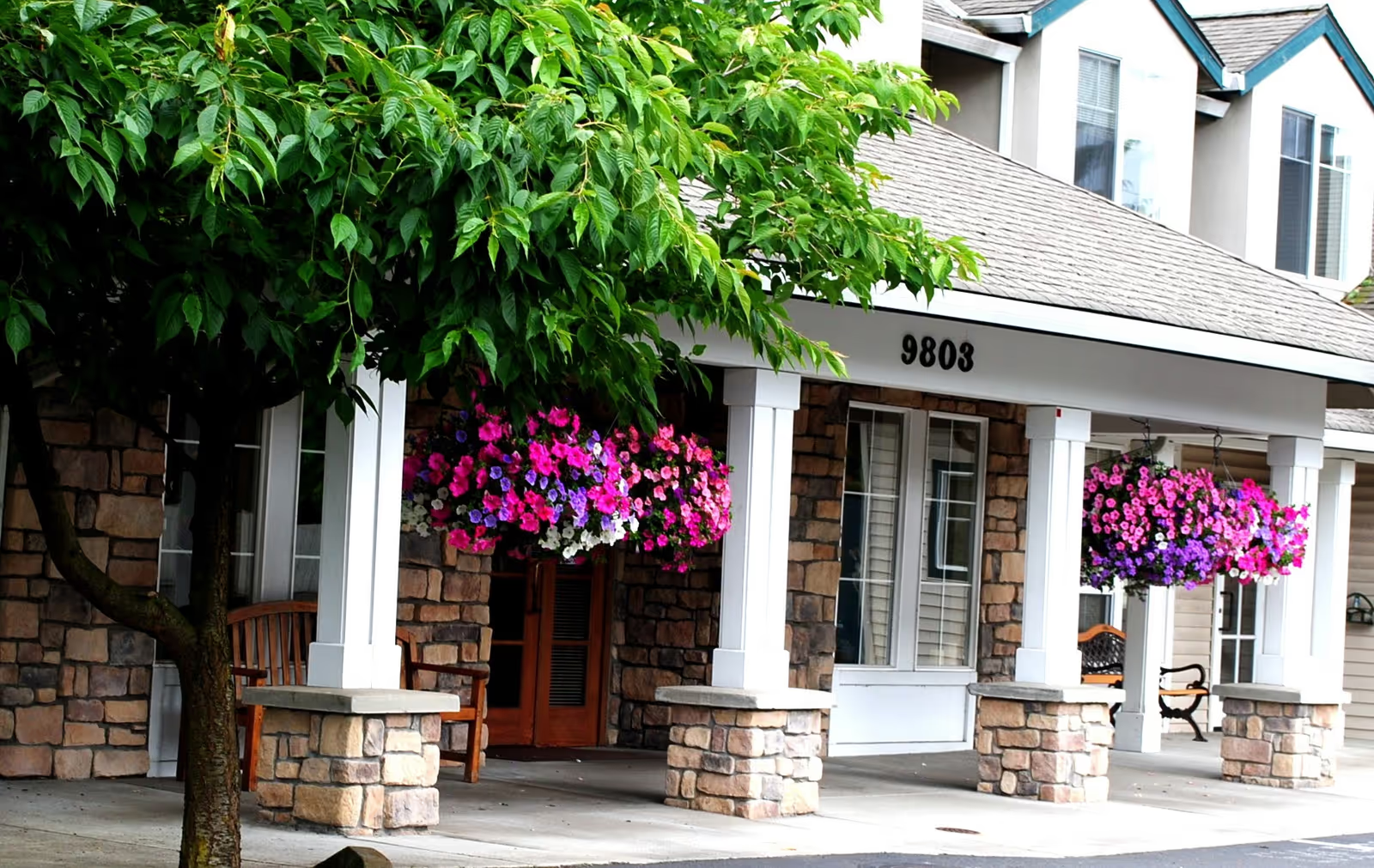
Facilities and cleanliness: Cleanliness is another contradictory point. One reviewer describes the facility as clean and wonderful, while the other labels the facilities unclean. That divergence could reflect differences in which areas were seen (e.g., a room versus common areas), the timing of the visits (cleaning schedules), staff shifts, or simply different standards/expectations among reviewers. Because cleanliness affects comfort and infection control, the inconsistency is important and deserves verification during visits.
Dining and activities: The reviews provided contain no information on dining, meals, social programs, or activities. There is therefore no basis to evaluate those aspects from the supplied summaries; anyone evaluating the facility should request details or observe them directly during a visit if those services matter to them.
Notable patterns and final assessment: The dominant pattern is inconsistency. Positive reports show the facility can deliver high-quality, attentive, and specialized care that leaves families satisfied. Negative reports indicate problems with staff helpfulness, facility cleanliness, and managerial presence — issues serious enough that at least one family stated they would not return. Taken together, these summaries suggest the facility may perform well under some conditions (certain staff, shifts, or residents) and poorly under others. Prospective residents and family members should treat these mixed signals as a cue to investigate further: tour the facility multiple times (including different shifts), ask to meet managers and observe their availability, request references from current families, and directly inspect cleanliness in resident rooms and common areas. These steps will help determine whether the positive experiences are typical for the unit or whether the negative issues are systemic and likely to recur.