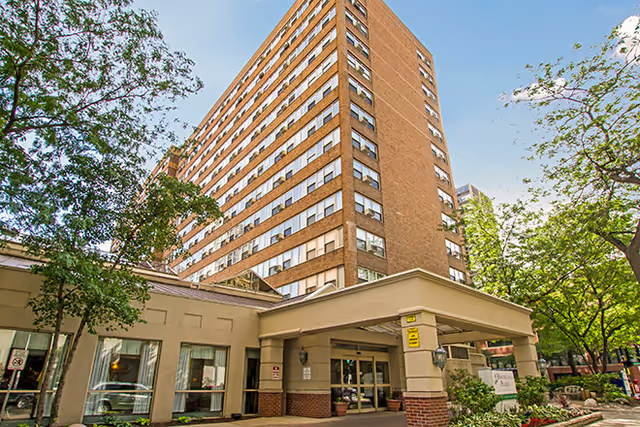
Maple Pointe Apartments is a large, older senior-oriented high-rise with a mixed reputation: reviewers note both meaningful strengths and persistent operational weaknesses. Positive aspects include an engaged security presence, active resident community, onsite communal spaces such as a library and community room, and affordability for eligible seniors (including Section 8 eligibility). Ownership has invested in some energy-efficiency measures and in-unit upgrades such as new appliances in multiple units; several accounts describe visible improvements to common-area carpeting and cleanliness after a management transition.
Care-quality and staff observations are varied. Many reviewers praise individual security and maintenance employees for courteous, professional interactions and timely responses under certain management teams. At the same time, there are recurring concerns about inconsistent responsiveness, delays in completing repairs, and uneven professionalism among front-office and security personnel. These inconsistencies affect perceptions of safety and service continuity. While there are community activities and engaged residents, staffing variability appears to influence how reliably resident needs are addressed.
Facility- and amenities-related feedback highlights tradeoffs typical of an aging, large building. Renovation activity has produced some upgraded kitchens and appliances, but processes have at times been disruptive and poorly coordinated—residents report temporary displacement during work, removal of original fixtures, and replacement finishes that some find lower quality. Building systems such as elevators, HVAC, thermostats, and water pressure have shown reliability problems. Reviewers also cite cleanliness and sanitation issues in some common areas and units, along with pest-control concerns. Fitness and physical-activity options are limited, and there are no balconies; parking and storage management have been a source of frustration when spaces were relocated or repurposed.
Management and operational patterns are a central theme. Several accounts describe improved responsiveness and visible maintenance after a change in management, while others characterize ongoing communication gaps, meetings that appear to misrepresent plans, and administrative difficulties (including concerns about financial processes). Pet policies that allow animals have contributed to safety and sanitation complaints when enforcement is inconsistent. Security staffing is viewed positively by some residents and questioned by others, reflecting uneven performance. Taken together, the reviews suggest a facility in transition: there are tangible improvements and community strengths, but persistent infrastructure, sanitation, renovation coordination, and management-communication challenges that prospective residents and families should weigh when considering Maple Pointe.