Emporia Rehabilitation and Healthcare Center elicits a mix of positive experiences and operational concerns. Many accounts emphasize the facility’s strengths: a welcoming atmosphere, friendly frontline staff, and a family-focused orientation. Residents and visitors commonly describe compassionate nursing and CNA care, staff who provide personalized attention, and a social environment with planned activities and worship opportunities. Rehabilitation outcomes are frequently cited as successful, with several families noting effective therapy and wound-care support that helped residents return home. Administrative and support roles — notably the social worker and business office — receive repeated praise for being helpful and responsive.
At the same time, a set of recurring operational issues appears across reviews. Communication and accessibility are uneven: long phone hold times, delayed call-backs, and inconsistent frequency of family updates create frustration for relatives attempting to stay informed. Staffing levels and workload are another theme; reviewers describe staff who are caring but overworked, which reviewers connect to slower responses at times and to variability in service delivery. Emergency readiness and clinical responsiveness were raised as specific concerns, with accounts indicating delays or lack of preparedness during acute needs; these reports suggest the facility should clarify its emergency protocols and readiness for respiratory or oxygen-related situations.
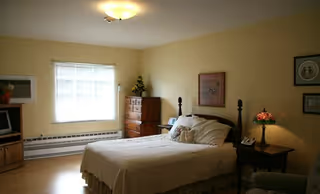
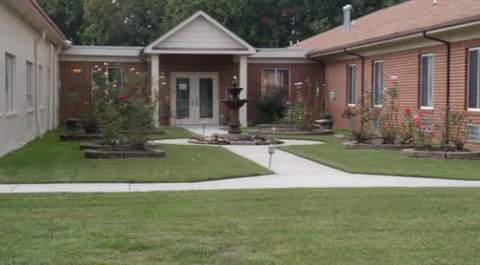
Dining and environmental observations are similarly mixed. Several reviewers praise home-style meals and pleasant common areas such as TV rooms, while others note variability in meal temperature and presentation and the absence of on-unit reheating options. Overall cleanliness and maintenance receive many positive comments about a neat and pleasant interior, but some reviewers raised sanitation and cleanliness concerns in particular areas. Activity programming and the social environment are generally viewed positively: residents are described as sociable with visible engagement in planned events, and staff-led activities contribute to a welcoming, family-like atmosphere.
Notable patterns are the contrast between consistently praised frontline staff and concerns tied to systemic operations — communication systems, staffing ratios, clinical readiness, and management responsiveness. This pattern suggests that individual caregivers are often committed and effective, but overall resident experience can vary depending on shift staffing and supervisory oversight. Prospective residents and families may find it useful to ask about current staffing levels, skin-integrity and wound-prevention protocols, emergency-response procedures (including oxygen/respiratory readiness), and the facility’s standard approach to family communication and daily meal service during tours or admissions discussions.
In summary, Emporia demonstrates many strengths in interpersonal care, rehabilitation outcomes, and social programming, paired with identifiable operational areas that would benefit from stronger consistency and oversight. Families who prioritize warm staff relationships and active programming may find the facility appealing, while those most concerned about consistent clinical responsiveness, communication systems, and environmental sanitation should probe those areas directly during visits and admissions conversations.