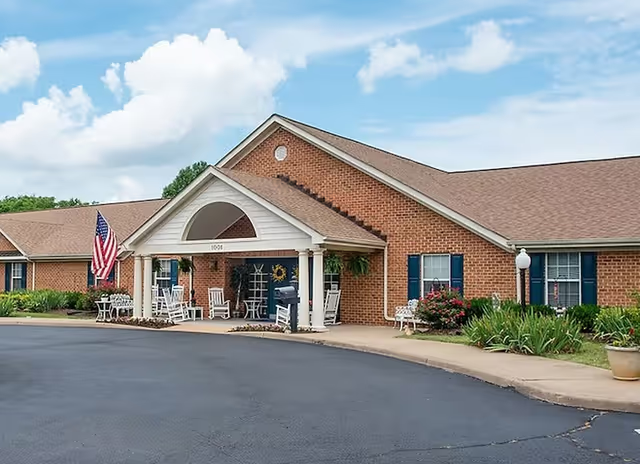
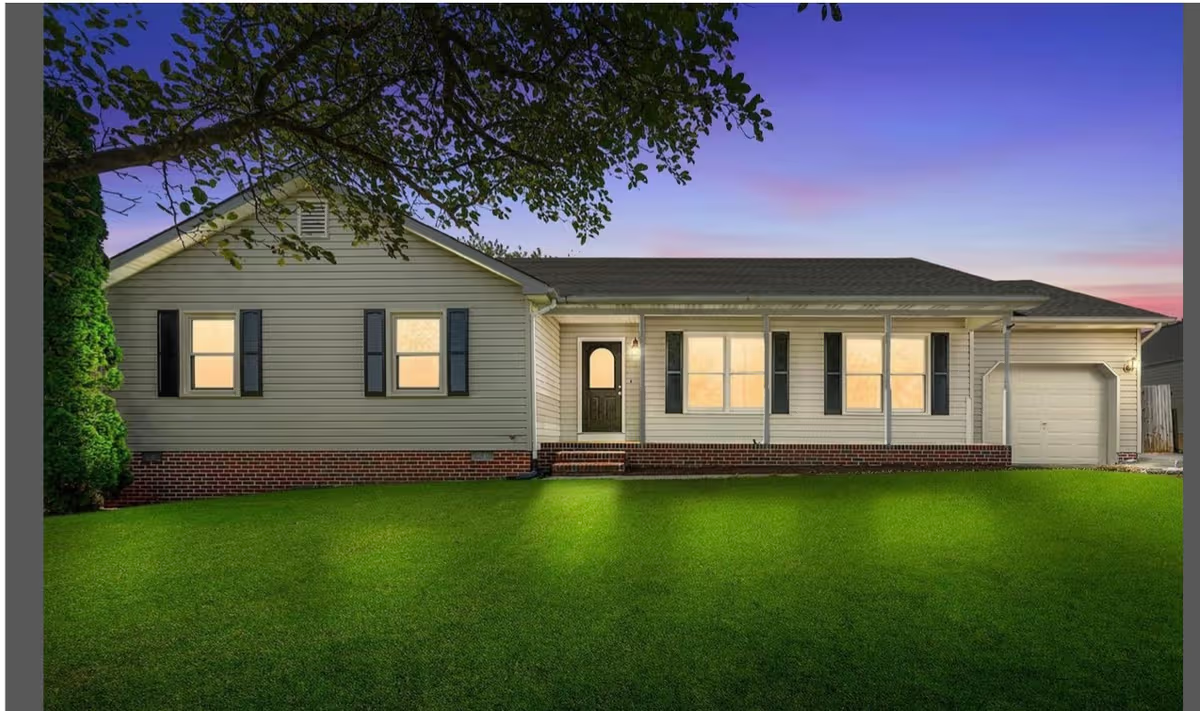
Reviewer impressions of this facility are mixed, with a substantial proportion describing a positive clinical and social experience and a smaller but consequential set of serious operational concerns. On the positive side, many families praised the facility’s physical environment — newer construction, clean common areas, and spacious resident rooms — and noted that admissions and some administrative interactions were smooth and supportive. Several accounts highlighted effective physical and occupational therapy that contributed to improved strength and independence, and multiple reviewers commended nursing and therapy teams for coordinated care when staffing and communication were functioning well.
Care quality descriptions vary. Positive narratives emphasize attentive nursing, compassionate CNAs, and successful rehabilitation outcomes leading to safe discharge home. Conversely, other accounts describe operational lapses that affected clinical care: missed medication doses, gaps in medication tracking, and inconsistent therapy follow-through. These issues suggest variability in clinical processes and handoffs rather than uniformly poor clinical capability.
Staffing and responsiveness are recurring themes. Many reviews celebrate individual staff members and leadership accessibility, but a pattern of inconsistent staffing levels — particularly during evenings, nights, and weekends — was repeatedly mentioned. That variability appears linked to longer call-response times, delays assisting residents with eating or toileting, and missed therapy sessions. Reviewers also raised concerns about staff conduct and communication tone in some interactions, indicating unevenness in staff performance and family communication practices.
Dining and nutrition feedback is mixed. Several families praised the meals as nutritious and well-presented; others described cold or undercooked food and expressed specific concerns about diabetic meal safety and inconsistent nutrition education. These contrasting comments point to variability in meal-service reliability and a need for clearer diabetic meal protocols and mealtime oversight.
Facilities and activities are generally viewed positively: the building, decor, and activity programs receive strong marks for keeping residents engaged, including memory-stimulation and social programming. At the same time, a subset of reviews raised sanitation concerns and incontinence-care delays in specific rooms or shifts, indicating inconsistent housekeeping or incontinence-care practices that warrant attention.
Management and operations present a mixed picture. Several families praised accessible leadership and seamless admissions or discharge planning, while others described poor discharge coordination, financial handling issues (including deposit/refund problems), and unresponsive front-desk or phone systems. Together these comments suggest that administrative processes and communications are inconsistent across shifts or units.
Notable patterns for prospective families: assess staffing coverage during off-hours, ask about medication-administration and documentation practices, review diabetic-meal policies and mealtime assistance, observe transfer and bed-safety procedures, and confirm financial/discharge policies in writing. The facility demonstrates clear strengths in environment, therapy, and many individual caregivers; however, variability in staffing, clinical coordination, sanitation practices, and administrative responsiveness is an important consideration when evaluating placement.