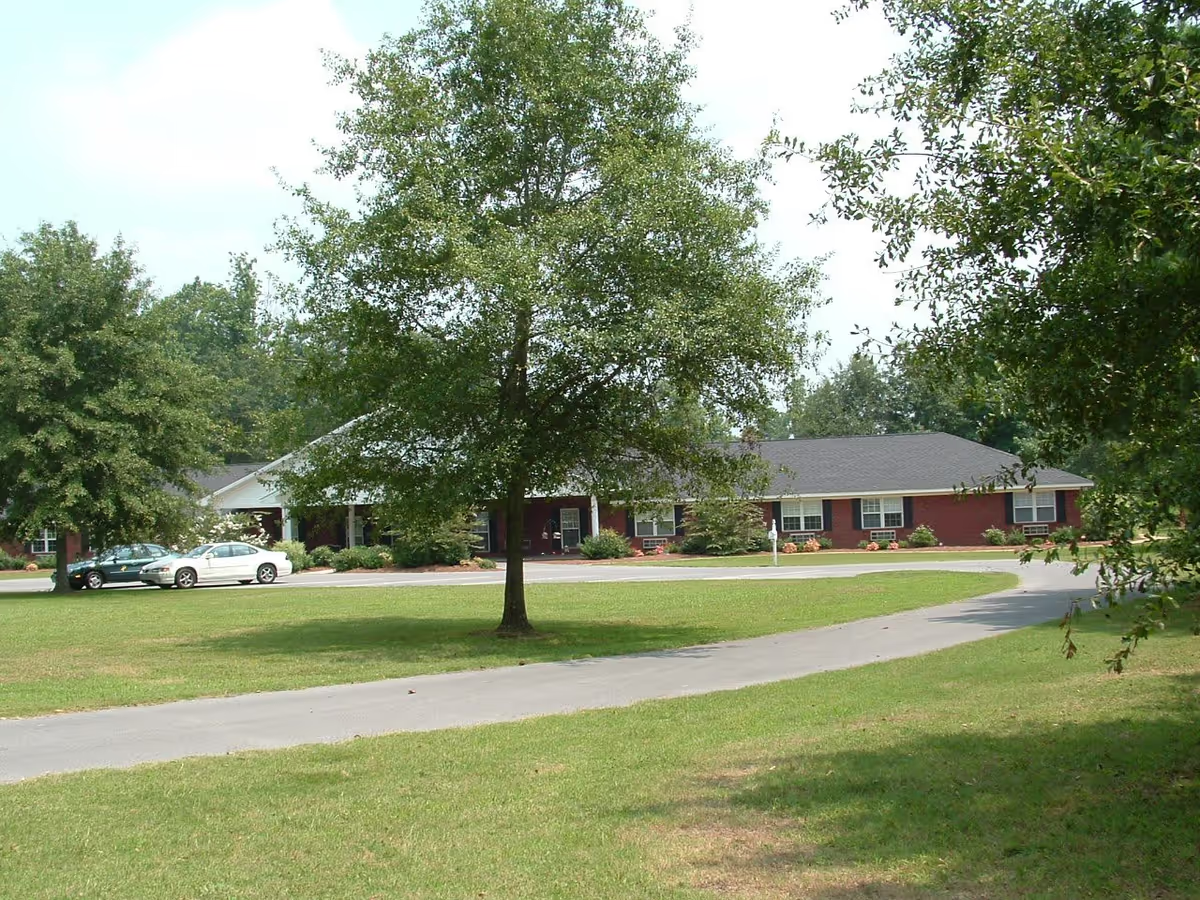
Reviews for McGuffey Healthcare are strongly polarized: many families describe highly positive experiences driven by individual caregivers and therapy staff, while others report persistent operational concerns. Positive accounts commonly cite compassionate CNAs, attentive front-desk and admission staff, and strong rehabilitative outcomes — several reviewers credited therapy teams with meaningful recovery progress. The facility offers a dedicated memory-care unit, routine worship services, an activities program, a courtyard gazebo and an on-site resident bank, and a low-cost Wi‑Fi/cable option; these amenities contribute to a constructive environment for some residents.
At the same time, a consistent cluster of concerns emerges around clinical care and staffing. Reviews indicate variability in staffing levels and responsiveness to call bells, with several families describing delays in attending to residents. Reviewers raised issues about gaps in clinical monitoring, inconsistent medication management, and delays in treating infections or acute conditions. There are also frequent mentions of inconsistent assistance with activities of daily living (bathing, toileting, feeding), which families associate with adverse outcomes for dependent residents.
Dining and therapy are similarly mixed. Many families praised the therapy teams and credited them with rehabilitative gains; however, multiple reviewers described limited therapy availability on weekends or interrupted therapy schedules. Meal-service weaknesses include inconsistent food quality, menu deviations, and failures to adhere to prescribed diets or food restrictions, which have led to dissatisfaction and, in some cases, adverse reactions.
Facility condition and safety concerns appear in a number of reviews. Some families reported sanitation and odor concerns in parts of the building, inconsistent housekeeping, and small room footprints that restrict mobility and use of assistive devices. Safety-process shortcomings were also described, including delays in providing mobility aids, fall-prevention and transfer-safety weaknesses, and inconsistent supervision that affects resident wellbeing.
Management and communication are additional themes. Several reviewers cited poor communication from nursing and case-management staff, difficulty reaching social workers or nursing leadership, and perceptions that management did not adequately address complaints. There are also serious, though less frequent, allegations regarding theft and financial misconduct and concerns following a resident's death; these are significant for families to consider and may warrant follow-up with regulators or facility leadership.
In summary, McGuffey Healthcare provides notable strengths in hands-on caregiving and rehabilitation for many residents, along with useful on-site amenities and memory-care programming. Prospective residents and families should weigh these positive aspects against recurring operational issues documented in reviews: inconsistent staffing and responsiveness, gaps in clinical monitoring and medication oversight, variable housekeeping and dietary adherence, and concerns about management responsiveness. Visiting the facility, speaking with current families, reviewing recent inspection reports, and clarifying care plans, staffing ratios, and complaint-resolution processes are recommended steps for anyone considering placement.