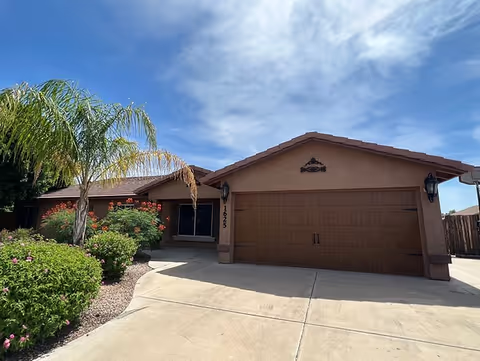
Pegasus Landing of Mesa elicits strongly mixed impressions. Many families describe warm, compassionate caregivers, an inviting admissions experience, and an active social program; memory-care services and activity programming are frequently praised for creativity and resident engagement. The community offers a wide range of amenity-level features — restaurant-style and cafeteria dining with flexible hours, transportation and outings, an on-site salon, theater and game rooms, and generally well-maintained, renovated common spaces. Apartment options include larger two-bedroom units and accessible layouts that several families found attractive.
Care quality appears uneven. Positive accounts highlight attentive staff, successful transitions for residents with cognitive needs, and helpful clinical support. Conversely, other accounts describe operational gaps that affect day-to-day care: inconsistent personal-hygiene and bathing assistance, medication-management lapses, and delays in response to call lights or during clinical incidents. Availability of licensed clinical staff is variable in reviews (references to RN coverage at times and to only LPN coverage at other times), which suggests prospective families should verify current clinical staffing models and night-coverage protocols.
Staff and culture show a similar polarity. Numerous reviewers commend friendly, responsive, and familiar staff who know residents by name and facilitate family communication. At the same time, reviewers note high turnover, uneven training, and concerns about staff conduct and cultural sensitivity in isolated cases. These operational personnel issues are linked in some accounts to management transitions and cost-control measures that reviewers say have affected staffing consistency.
Dining and activities are commonly reported strengths but with variability. Several families praise made-to-order meals, salad bars, and an anytime-dining concept; dining staff are frequently described as accommodating. However, other reviews describe uneven food quality, cold or limited-menu service at times, and diminished offerings after staffing changes. Activities programming — day trips, crafts, exercise, and memory-focused engagement — is frequently cited as a positive factor supporting resident well-being.
Facility condition and housekeeping are often rated positively: renovated wings, clean common areas, and frequent room cleaning are regularly mentioned. Nevertheless, there are intermittent sanitation and pest-control concerns reported for some units; prospective families should inspect specific apartments and ask about pest-control and housekeeping schedules. Unit layouts vary — some residents praise spacious two-bedroom apartments, while others find one-bedrooms small or lacking storage.
Management and business practices emerge as notable areas to vet. Reviews describe ownership and leadership changes, billing errors, unclear additional fees (community fees, medication-management charges), and instances where families had to pursue refunds or clarifications. A few reviewers allege financial and timekeeping irregularities; these are serious claims that merit direct inquiry. Cost increases and conditional fees are recurring themes; ask for a detailed, written fee schedule and change-notification policy.
Overall pattern: experiences range from highly positive (clean, caring, well-run memory care and strong activity/dining offerings) to materially concerning (inconsistent clinical oversight, hygiene-assistance gaps, medication and billing problems). Recommended next steps for prospective residents and families include touring multiple times (including evenings and weekends), confirming current clinical staffing and night response protocols, reviewing the full fee schedule and sample statements, asking about housekeeping and pest-control procedures, and speaking with current resident families about continuity of care and recent management changes.