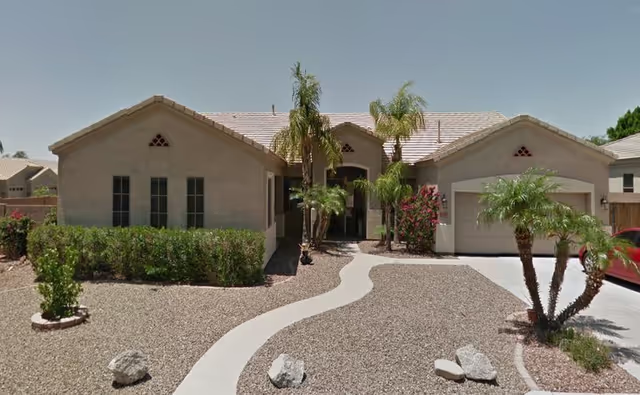
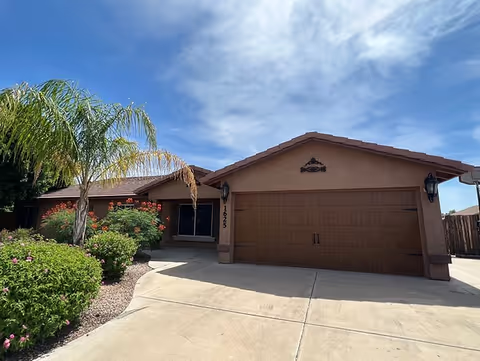
Overview The Villages at Red Mountain elicits strongly polarized evaluations. Many families and visitors describe a newer, well‑maintained, home‑style campus with attractive cottages, chef‑style kitchens, and accessible outdoor spaces. Several reviewers praised individual caregivers and supervisors for attentive, compassionate approaches, proactive admissions support, timely maintenance, and engaging group programming. At the same time, there are numerous operational concerns that recur across reviews and that prospective families should consider when evaluating fit.
Care and clinical oversight Positive accounts indicate individualized, respectful care in many households and successful transitions for residents requiring assisted living. However, a consistent countervailing theme is variability in clinical competence and responsiveness. Reviews point to uneven training—particularly for staff caring for residents with advanced Alzheimer’s or dementia—and gaps in nursing involvement. Concerns described include medication-administration and storage control weaknesses, delayed communication about clinical incidents, and inconsistent supervision that can affect outcomes for higher‑acuity residents. Families seeking memory‑care support should verify staff training, clinical oversight, and escalation procedures directly with the facility.
Staffing, conduct, and communication Staff quality appears to be highly variable. Numerous reports praise warm, professional, and engaged caregivers and named staff who facilitate strong family communication and smooth admissions. Conversely, a substantial number of reviews indicate inconsistent staffing levels (high resident‑to‑staff ratios at times), long waits for assistance, and variability in staff conduct and responsiveness. Communication shortcomings are also a recurrent item: families cited poor follow‑up, delayed incident reporting, and an impression of management defensiveness in some cases. There are also mentions of serious allegations of staff misconduct and related regulatory attention; such matters warrant direct inquiry with the provider and oversight agencies for current status and remediation steps.
Dining, housekeeping, and facility operations The facility’s dining program receives mixed feedback. Many reviewers applaud an on‑site cook/chef, appealing dining spaces, and generous portions in some households. Other comments indicate inconsistent meal quality, small portions for some diners, and concerns about kitchen and food‑safety processes (for example, food‑rotation and dish sterilization practices). Housekeeping and maintenance are described positively in many accounts (timely repairs, clean interiors), while other families note irregularities in laundry, bathing schedules, and general sanitation controls. These mixed observations suggest operational variability between cottages and shifts rather than uniform performance across the campus.
Activities and environment The Villages’ layout and programming are frequently cited as strengths: small household models, communal dining areas, activity coordinators, and scheduled outings were described as promoting socialization and quality of life. Memory‑care activity offerings were sometimes characterized as more limited than the broader assisted‑living program, so families should confirm programming scope and frequency for memory‑care units.
Management and notable patterns Admissions and marketing staff are commonly described as helpful and supportive, and several reviewers highlighted proactive service around move‑ins. At the same time, reviews include repeated concerns about management transparency and responsiveness to complaints, inconsistent enforcement of security procedures (e.g., door access and elopement prevention), and lapses in property controls. The overall pattern is one of strong positive experiences for many residents alongside operational weaknesses that have, in some instances, led to serious family concerns and regulatory scrutiny.
Recommendations for prospective families Given the polarized feedback, prospective families should: (1) tour multiple cottages at different times/shifts, (2) ask for current staffing ratios and dementia‑care training records, (3) request the facility’s medication‑management and incident‑reporting policies, (4) review food‑safety and sanitation procedures, and (5) inquire about any regulatory actions and corrective plans. Validating these operational details in writing and observing shift changes and mealtimes can help determine whether the facility’s strengths align with a prospective resident’s clinical and social needs.