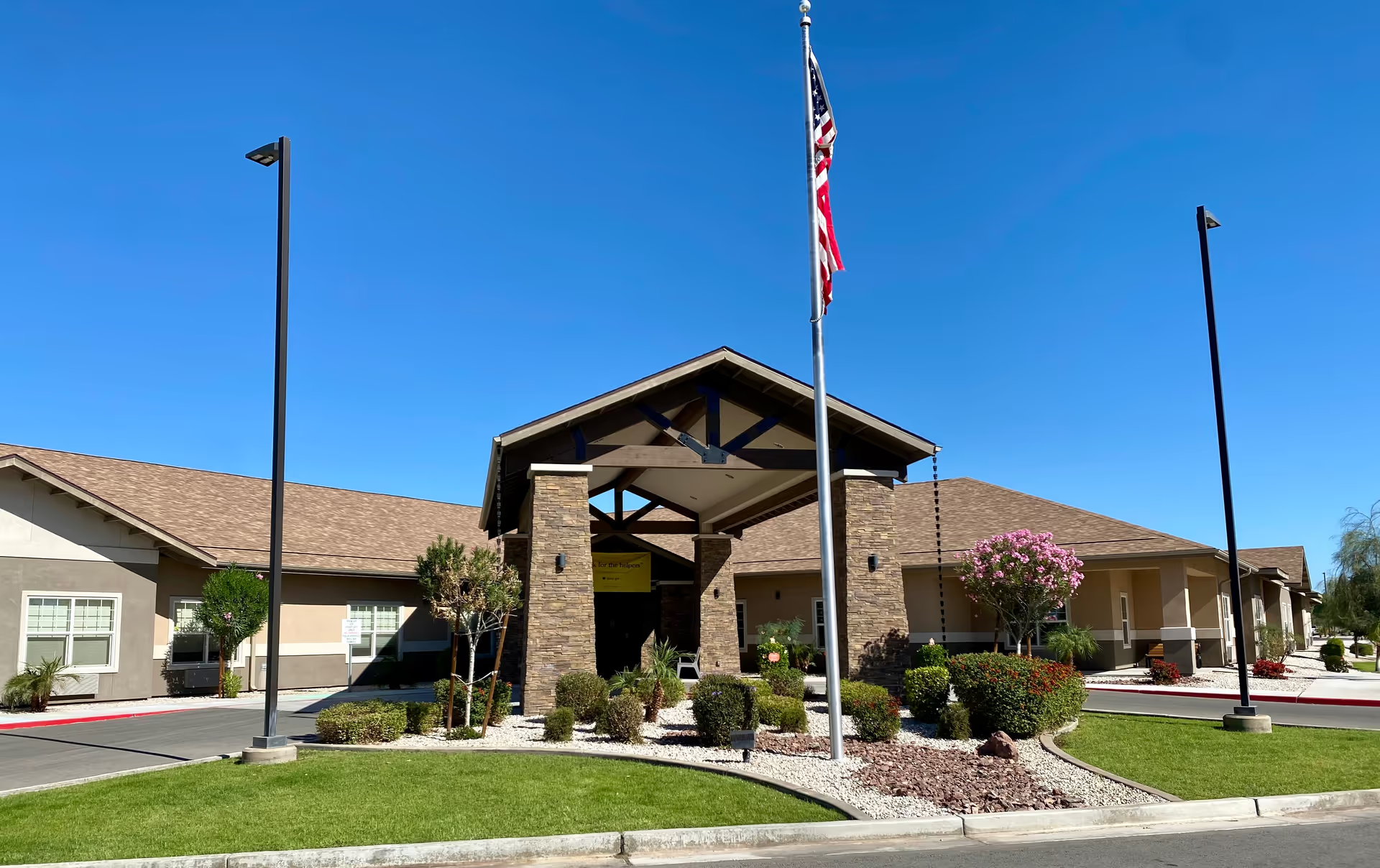
Haven Health Yuma elicits strongly mixed but consequential impressions. The facility is repeatedly praised for its rehabilitation program and for staff who deliver hands-on recovery support: physical and occupational therapy teams are described as skilled, motivating, and effective at improving mobility and independence. Many admissions and front-line staff (including several named admissions aides) receive commendation for prompt intake, transportation logistics, and proactive communication that smooth transitions from hospital to facility.
Direct care is a clear strength in many accounts. Nurses and certified nursing assistants are frequently characterized as compassionate, attentive, and invested in patient comfort; multiple families and patients credited CNAs and therapists with measurable functional gains. At the same time, reviewers describe notable variability in responsiveness across shifts: slow call-light responses, delayed assistance with toileting and pain medication at times, and uneven follow-through on orders. There are also recurring concerns about medication administration and monitoring, ranging from missed or delayed doses to insulin-management problems—issues that potential residents and families should address directly with clinical leadership before admission.
Dining and activities draw a split response. Numerous respondents praised varied menus, accommodating kitchen staff, and enjoyable meal options that supported recovery needs; others reported inconsistent food quality, temperature issues, limited portioning, or menu repetitions. The activities program and social opportunities are generally viewed positively, with regular programming, socialization, and therapy-driven engagement noted as beneficial for morale and rehabilitation.
Facility condition and management present another mixed picture. Several reviewers describe clean, bright common spaces, outside views, and well-kept rooms; conversely, others flagged sanitation and odor concerns in specific areas, pest-control issues, and older equipment in therapy spaces. Privacy and roommate management are also uneven—shared rooms and noise from roommates were recurrent complaints. Administrative patterns mentioned include billing and insurance coordination that can be helpful, but also complaints about insurance-driven discharge timing, unclear financial communication, phone responsiveness, and occasional ineffective front-desk/customer-service interactions.
Taken together, notable patterns are variability by unit and by shift, with outcomes closely tied to staffing levels and specific personnel. Positive experiences cluster where therapy teams, attentive nurses, and proactive admissions staff are present; negative experiences tend to involve understaffing, lapses in clinical oversight, and administrative friction. Prospective residents and families should verify current staffing ratios, ask about medication-safety protocols (especially for diabetes and pain control), confirm room configuration/privacy options, and review the facility’s discharge and payment policies. For many, Haven Health Yuma offers strong rehabilitation value and compassionate caregivers; for others, operational inconsistencies are significant enough to warrant careful pre-admission inquiry and ongoing family engagement in care coordination.