Overview: Reviews of Arvin Post Acute present a mixed picture. Many families and patients describe effective rehabilitation, attentive bedside care, and a clean, recently remodeled environment. At the same time, recurring operational issues — especially around communication, medication timing, documentation, and equipment maintenance — create variability in the resident experience. Prospective families should weigh the facility's strengths in therapy and nursing against these operational weaknesses and ask targeted questions during tours.
Care quality and clinical services: Therapy services (occupational and physical) are frequently identified as a strength; several accounts describe skilled, resourceful clinicians who contributed to measurable recovery. Conversely, other reviewers described therapy approaches as either overly aggressive or insufficiently individualized. Medication management is an area of concern: there are multiple accounts of delayed doses and timing inconsistencies. Documentation quality also appears variable, with mentions of inaccurate or incomplete records that complicate clinical follow-up. Overall, the facility offers strong rehabilitative capability for many patients, but clinical-process controls (medication timing, chart accuracy, individualized therapy plans) appear uneven.
Staff and management: Many reviewers praise nurses, CNAs, and administrative staff for being compassionate and helpful; CNAs are repeatedly described as central to daily care. However, reviewers also describe variability in staff conduct and professionalism, with a subset reporting negative attitudes or poor responsiveness. High staff turnover and reports of heavy workloads were noted and may underlie some inconsistencies. Communication from management is another recurring theme—families cite unanswered calls, delayed notifications (including appeals or care decisions), and unclear explanations about insurance and case management. There are allegations concerning case-manager representation of services and financial handling; these are serious concerns that warrant direct verification with the facility and payers.
Dining and daily living: Opinions about meals are mixed. Some residents dislike the food, while others note that the facility can accommodate dietary preferences, including plant-based options. Reports also touch on policies affecting toileting assistance and incontinence-care practices; families should clarify care protocols and availability of supplies and assistance during admission discussions.
Activities and social environment: Descriptions of activities vary. Some reviewers describe a welcoming atmosphere with regular check-ins, active programming, and a recovery-oriented environment; others cite a lack of activities and a more depressing atmosphere in certain units. This suggests inconsistent programming across shifts or units rather than a uniform absence of engagement.
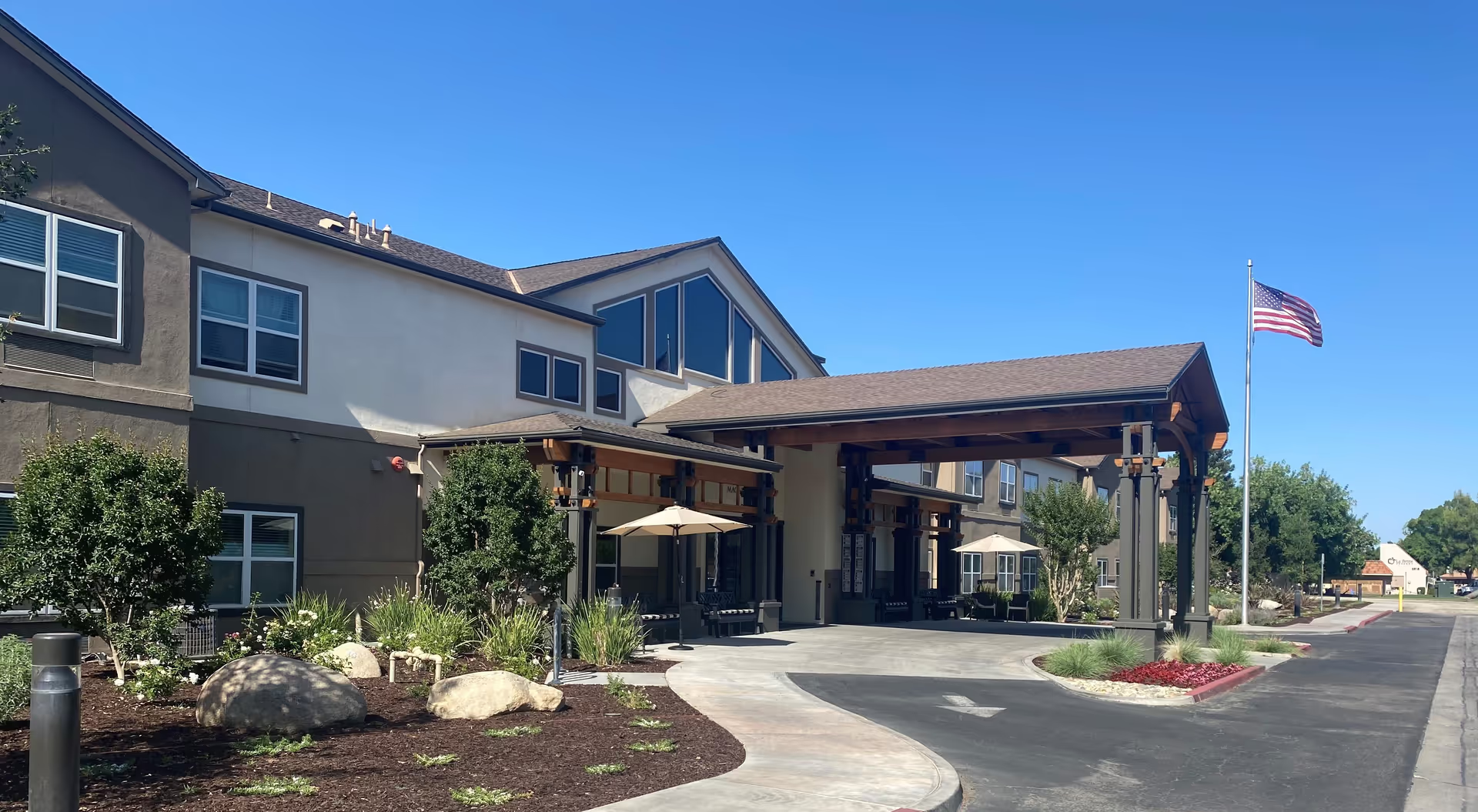
Facilities and maintenance: The facility benefits from recent remodeling and generally clean common areas, but localized maintenance issues emerge in reviews — examples include nonfunctional beds or TVs, damaged window coverings, and missing or inadequate room equipment. These environmental and equipment gaps can affect comfort and safety, so visitors should inspect rooms and ask about preventive maintenance practices.
Notable patterns and practical guidance: The dominant pattern is one of strong clinical and caregiving capacity coupled with operational variability. Therapy and many frontline staff receive positive remarks, but problems with communication, medication timing, documentation, and equipment reliability recur. Before committing, families should (1) observe care at different times of day and ask about staffing ratios, (2) review medication-administration policies and escalation procedures, (3) examine documentation and care-plan communication practices, (4) ask about activity schedules and how individualized programs are, and (5) get clear written explanations of billing, case management roles, and insurance interactions. These steps will help determine whether the facility’s strengths align with a prospective resident’s needs and whether the operational gaps can be satisfactorily addressed.