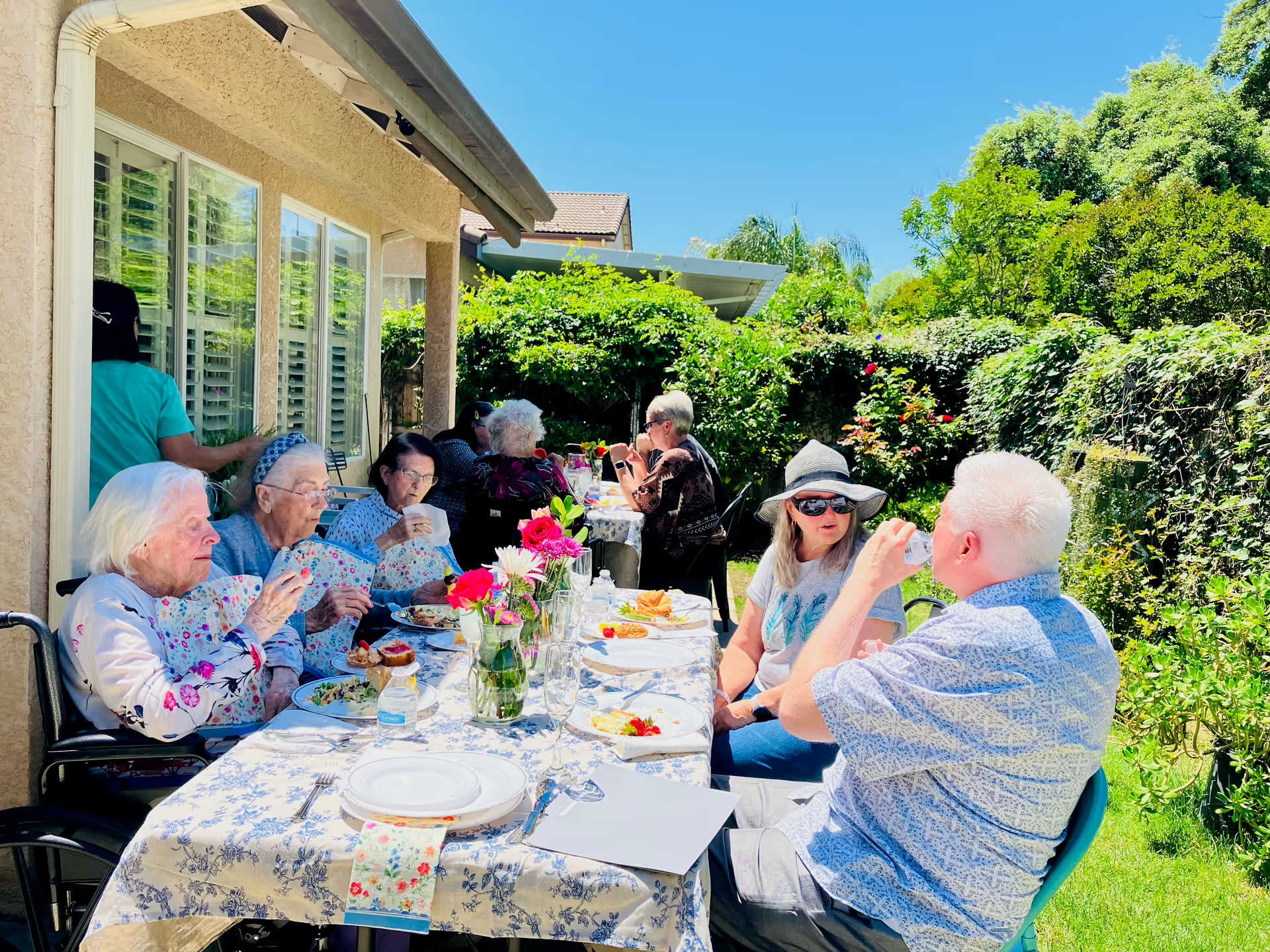
Magnolia Crossing presents as a newer, small-format assisted living community with many qualities families seek: a home-like atmosphere, fresh construction and furnishings, private rooms with en-suite bathrooms, well-kept grounds, and purposeful communal spaces for dining, crafts and movies. Multiple reviewers praised the facility’s cleanliness, non-institutional feel, and comfortable outdoor seating. Admissions and tour staff are frequently described as warm and informative, and several accounts highlight staff who provide personalized, family-style care and continuity for residents—particularly in the memory-care program.
Care quality and staffing are mixed in the reviews. Many families describe consistent, compassionate caregivers, tailored care plans, reliable communication, and staff who assist families during transitions. However, there is a recurring pattern of inconsistent staffing levels and variable professionalism: accounts reference inattentive behaviors, distracting use of phones while on duty, and concerns about on-shift conduct. There are also notes about medication-administration shortcomings. These items indicate operational weak points that may affect reliability of day-to-day care for some residents.
Dining receives both praise and criticism. Several reviewers complimented an on-site kitchen, an immaculate cuisine area, and appetizing meals. At the same time, other reviewers criticized food quality, menu choices that felt unfamiliar to some residents, and occasional unappealing meal presentations. This points to inconsistency in culinary execution and menu planning rather than a single, uniform meal experience.
Activity programming and engagement are uneven. The community offers structured spaces and activities—arts and crafts, bingo, movie areas, reading rooms, and regular outings—which support socialization. Yet reviewers also described limited daily engagement for some residents, and exercise/activities that were not always appropriate for memory-care needs. For prospective residents who require higher levels of cognitive engagement, program content and staff facilitation should be reviewed in person.
The facility’s physical environment is generally a strength: bright, new interiors, wide walkways, communal dining and living spaces, and private patios/gated memory-care outdoor space. Practical concerns include smaller room and bathroom footprints that may be difficult for residents using wheelchairs or mobility equipment, and an open layout that can contribute to noise and privacy challenges. A few reviewers raised safety and night-supervision concerns, indicating a need to clarify security and night-shift procedures.
Management impressions vary across the reviews. Some families describe proactive, involved owners and an attentive director, while others report slow or insufficient responses to concerns and inconsistencies in operational oversight. Taken together, the pattern suggests that care experience at Magnolia Crossing can be highly positive when staffing, supervision, and culinary services align, but these elements are not uniformly reliable. Prospective residents and families should arrange a detailed tour, meet direct-care staff on shift, review staffing ratios and night procedures, sample meals, and evaluate bedroom/bathroom dimensions for mobility needs before making a placement decision.