Reviews reflect a facility with meaningful clinical and rehabilitative strengths alongside operational inconsistencies that prospective families should assess. Positive accounts consistently highlight skilled physical and occupational therapy, effective wound and pain management, and caregivers who provide emotional support and personalized attention. Many families described recovery trajectories that benefited from organized rehab programs and engaged case managers who assisted with discharge planning and return home.
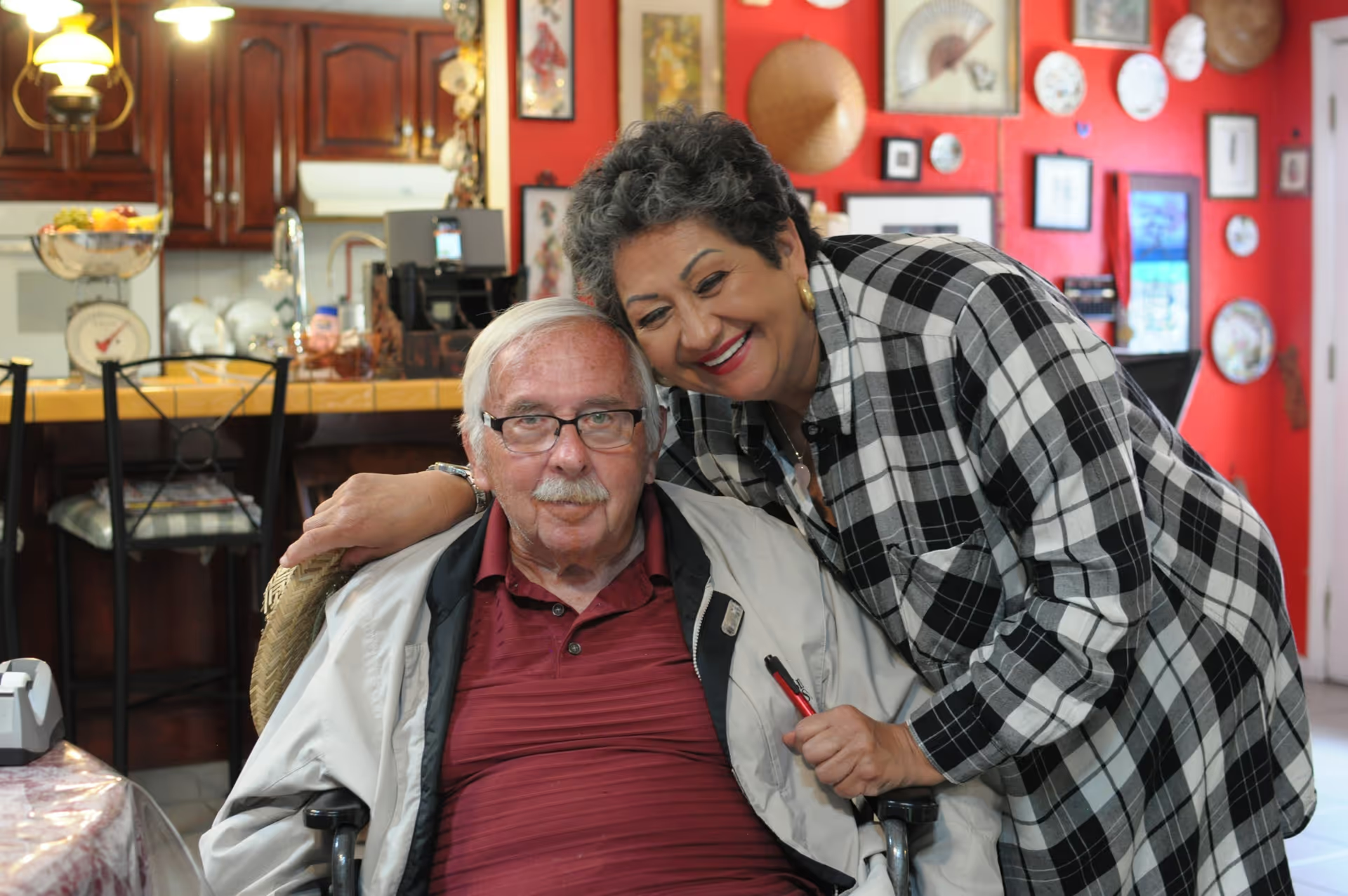
Staffing and day‑to‑day care are characteristically warm and family‑oriented according to numerous accounts; owners and managers are often described as hands‑on and visible. At the same time, there are repeated descriptions of uneven responsiveness, particularly during overnight hours, and delays attending to call bells or immediate requests. These indicate variability in staffing coverage and response protocols rather than uniform clinical failure. Prospective families should ask about night staffing levels, average response times, and escalation procedures during a tour.
Dining and social support are mixed. Several reviewers praised meals as better than typical hospital fare and noted accommodations for dietary needs; others described inconsistent food quality. Therapy staff are frequently singled out for providing emotional as well as functional support, and the facility appears to offer hospice and respite options. Activity programming is noted mostly in the context of therapy sessions and personalized engagement rather than large organized recreational offerings.
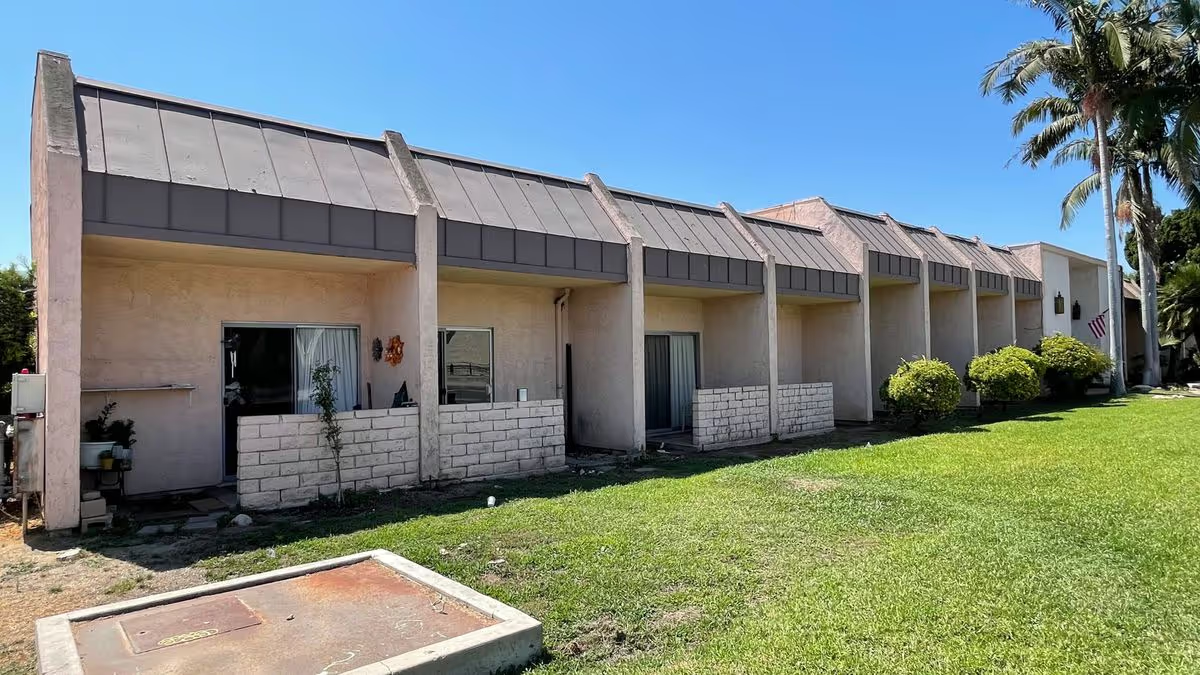
The physical environment is generally described as clean, home‑like, and well‑kept, with some areas modernized and others showing age. However, some reviewers raised pest‑control concerns in specific areas, variability in room temperature control, and noise management issues in shared rooms. These suggest that environmental maintenance is adequate in many respects but uneven in others; an in‑person inspection focused on the specific unit and room is advisable.
Operationally, the facility benefits from engaged management but also shows gaps in formal human‑resources and administrative processes. Families noted responsive case managers and helpful front‑desk staff, yet others described difficulties with Medi‑Cal navigation, billing assistance, and overall communication. More serious individual claims — including allegations involving a privacy breach and missing personal items — were also raised and merit direct inquiry. These do not by themselves establish a pattern of facility‑level misconduct, but they do indicate areas where written policies, secure storage procedures, incident reporting, and visitor/privacy safeguards should be reviewed prior to admission.
Overall, Rowland Convalescent Hospital appears to offer strong rehabilitative care and compassionate personnel, with variability in night coverage, communication consistency, and some environmental controls. Recommended steps for families: tour the specific unit and a prospective room, meet therapy and nursing staff, ask for staffing and call‑response metrics (including night coverage), review policies for personal‑property security and privacy, verify assistance available for Medi‑Cal or other public benefits, and request recent inspection or complaint history. These inquiries will help determine whether the facility’s strengths align with a given resident’s clinical and safety needs.