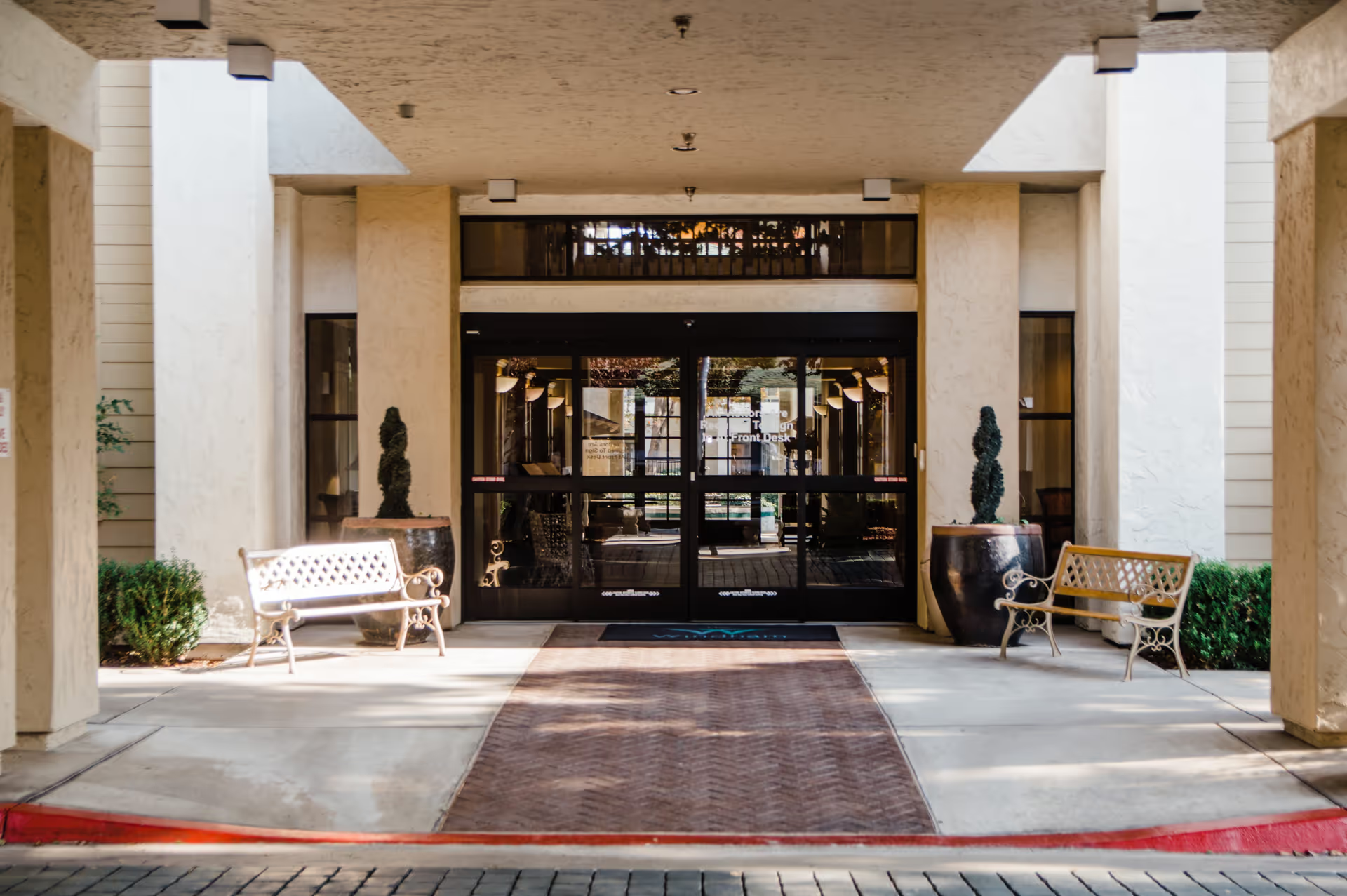
Overall impression: Cedarbrook Memory Care Community is frequently described as a clean, modern, memory-focused facility with a hotel-like atmosphere and well-maintained indoor/outdoor spaces. The community emphasizes memory-care specialization and houses on-site clinical support, including nursing coverage around the clock, immunizations, podiatry and physical-therapy services, and routine medical coordination. Many families reported that residents appear safe, comfortable, and socially engaged while living there.
Care and staff: Reviewers consistently highlight compassionate, respectful staff and a family-oriented culture. The facility is noted for having trained memory-care nurses available 24/7 and for front-line caregivers who are personable and attentive. Positive comments emphasize individualized attention, teamwork with families, and staff willingness to address resident anxiety and behavioral needs. At the same time, there are patterns describing variability in staff engagement and proactivity across shifts; some families reported concerns about the facility's responsiveness during specific clinical events and desired more consistent follow-up after incidents.
Dining and clinical services: Dining is presented as an inclusive feature—meals and snacks are often included in the monthly fee and family dining is supported for a modest charge. Several families praised the quality and variety of meals, while others described inconsistency in portioning and memory-care meal presentation. Medication administration is handled by on-site nursing staff, but prescription fulfillment is performed via an off-site pharmacy, which some families noted as a point of operational separation from direct pharmacy oversight. The community provides additional on-site supports such as blood-work coordination, visiting physicians, and therapy services.
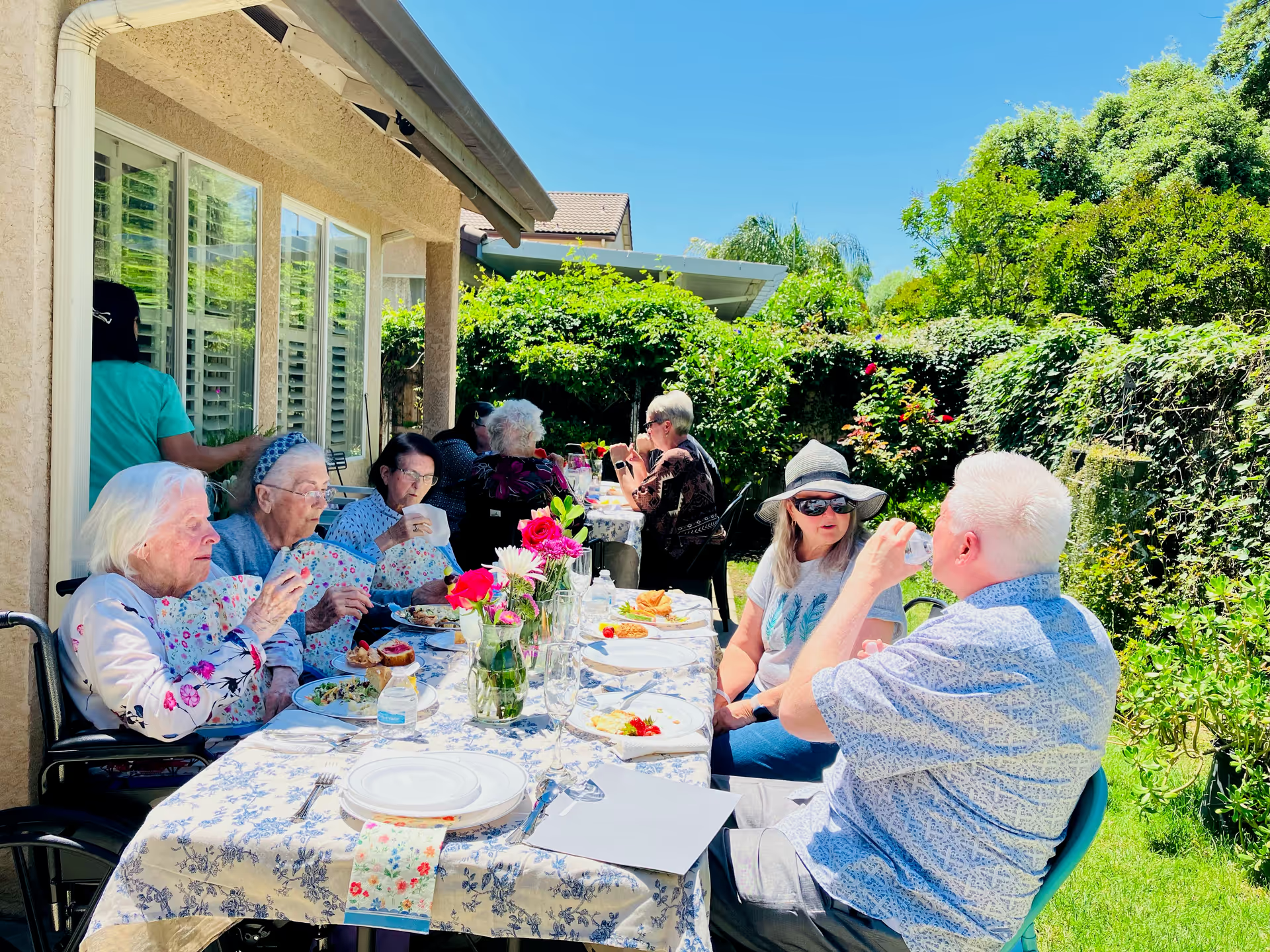
Activities and social engagement: The community offers a broad schedule of activities (music programs, crafts, exercise classes, outings, guest entertainers, worship music and painting/bingo), with many residents participating at their ability levels. Staff-led programming and excursions are recurring positives; reviewers report that activities contribute to residents’ contentment and engagement. A few residents are less interested in organized programming, which is expected in any memory-care setting.
Facilities and accommodations: The property is generally described as new, bright, and well landscaped, with spacious common areas and a peaceful patio. Room quality varies: many reviews describe large, attractive private rooms while others describe smaller companion/long-companion rooms and an uneven distribution of in-room amenities. A notable operational detail is that several units rely on centralized shower rooms rather than private in-room showers, which has implications for convenience and supervision.
Management and notable patterns: Tours and move-ins are frequently described as smooth, with staff and directors cited as informative and accommodating. Positive COVID-19 practices and creative visiting options were also praised. However, reviewers also raised facility-level concerns: variability in incident-response practices and family communication after clinical events; gaps in fall-prevention and post-fall procedures; personal-property controls that could be strengthened; and occasional inconsistency in food presentation and portioning in memory-care dining. Cost and financial accessibility were mentioned as a consideration by some families.
Bottom line: Cedarbrook projects many strengths typical of an actively managed, memory-care–focused community—round-the-clock clinical staffing, engaging activity programming, a clean and welcoming physical environment, and a caregiving culture that families often describe as warm and helpful. Prospective residents and families should weigh those strengths against operational trade-offs identified by reviewers: variability in room configurations and bathing logistics, the facility’s reliance on centralized shower areas and an off-site pharmacy, and noted gaps in incident-response transparency and fall-prevention processes. Those evaluating Cedarbrook should tour available room types, ask for details about fall-prevention protocols and incident communication, and discuss medication/pharmacy procedures and personal-property safeguards to ensure the environment matches the resident’s clinical and personal needs.