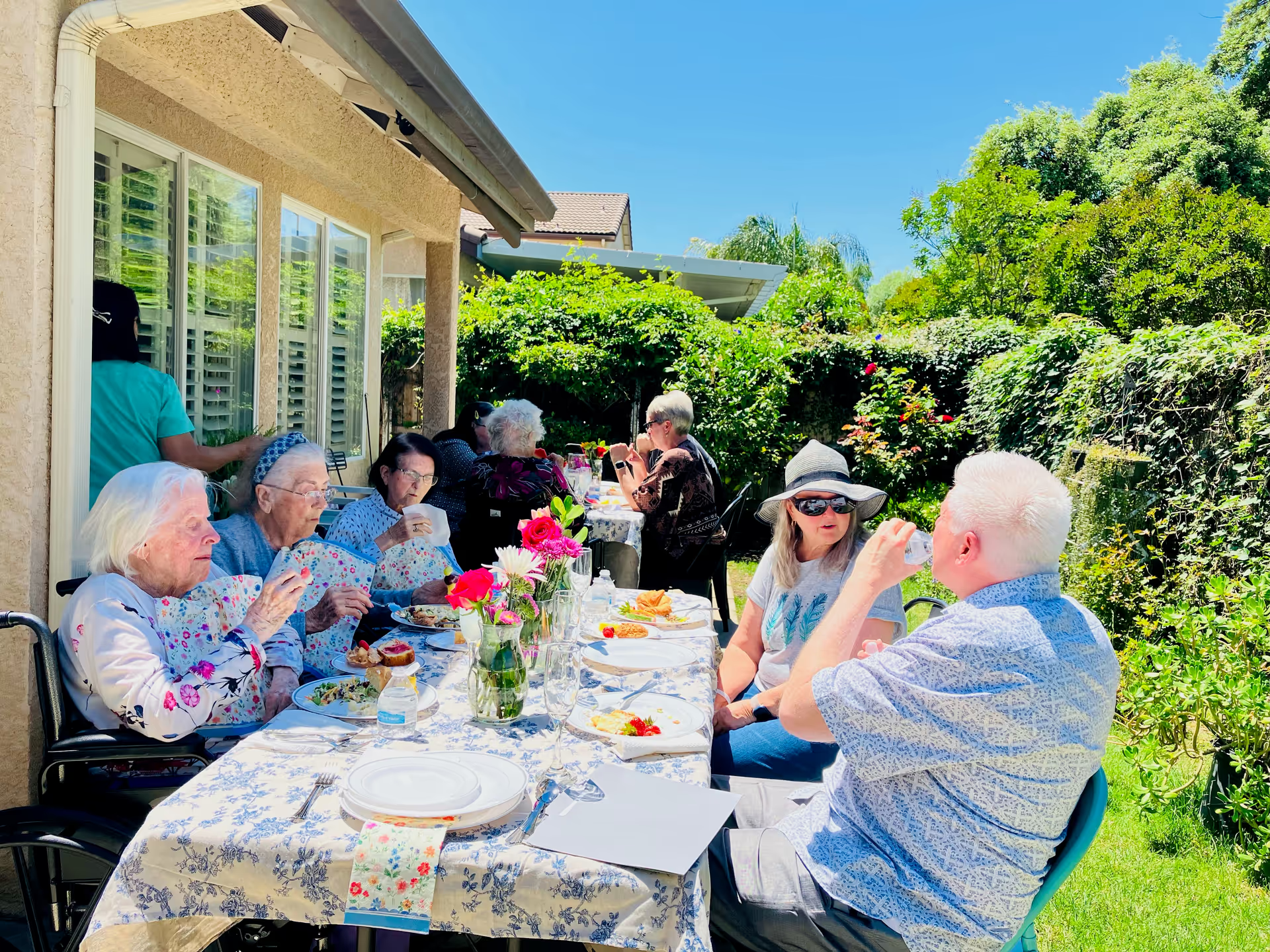
The Windham presents a mixed but generally favorable profile for prospective residents and families. Strengths repeatedly cited include a warm, attentive staff culture, an active program of social and recreational offerings, attractive grounds, and well‑maintained common areas. Many families described staff who learn residents’ names, provide personalized attention, and maintain open lines of communication with families. The property offers a range of amenities — dining spaces, gardening areas, a pool, library/computer room, and pet‑friendly features — and organizes regular outings and community events that support social engagement.
Activity programming is a clear asset: reviewers highlight daily exercise classes, crafts, music programs, bowling, ping‑pong, Wii activities, and seasonal celebrations that foster resident interaction. Apartment sizes and finishes draw positive comment in many accounts; larger one‑bedrooms and two‑bedroom units, accessible bathrooms with walk‑in showers and grab bars, and tasteful dining areas contribute to an appealing living environment for independent living residents.
Dining and clinical-care experiences are more variable. Several reviewers praised restaurant‑style dining, anytime dining options, and high‑quality meals under certain chefs. Conversely, a notable subset of reviews raised concerns about inconsistent food quality, limited menu choices, deep‑fried or repetitive offerings, Styrofoam takeout practices, and occasional shortages of staples. These dining inconsistencies appear linked in several accounts to kitchen staffing disruptions and changes in kitchen leadership.
Care quality in assisted living and extended‑care contexts also shows variation. Many families described caring, compassionate caregivers and professional nursing support; others reported rushed interactions, limited capacity to provide higher‑level assistance, and delays in attending to needs. These descriptions suggest uneven staffing levels or skill mix in the care units rather than a single uniform standard of clinical practice. Families with long‑distance caregiving needs frequently noted reassurance from supportive management and clinical staff, but some expressed the opposite — concerns about responsiveness and adequacy of assistance.
Operationally, the facility has experienced management and ownership transitions that reviewers linked to changes in service delivery. Several comments indicate perceived cost‑cutting, increased ancillary charges, and less transparent pricing after ownership change, which have affected perceptions of value. Ongoing construction in reception and public areas has reduced some communal space for socializing, and certain building layouts were called out as difficult to navigate for residents using walkers or mobility aids.
Overall pattern: many residents and families express high satisfaction with staff, community life, and the physical setting; concurrently, there are recurring, facility‑level concerns about dining consistency, pricing transparency, staffing continuity, and assisted‑living responsiveness. Prospective residents should consider arranging a meal sampling, asking for current staffing ratios and turnover data, clarifying all ancillary fees in writing, and touring assisted‑living units and the areas under construction to assess accessibility and communal space availability.