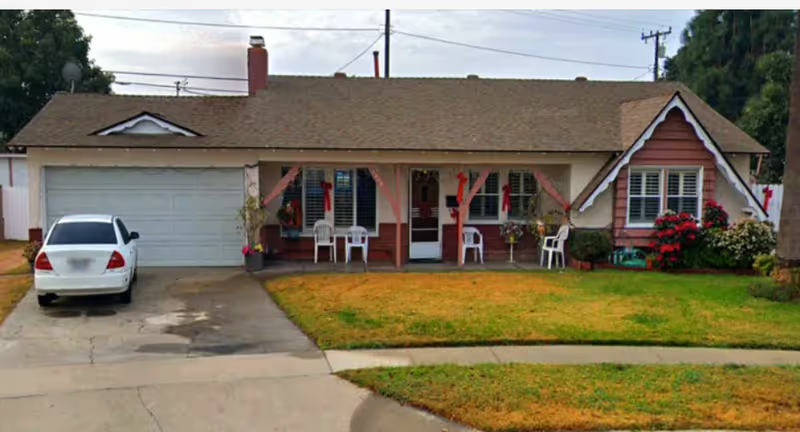
Ivy Terrace at Garden Grove Memory Care presents a largely positive profile as a dementia- and Alzheimer’s-focused community with a strong emphasis on daily engagement and environmental comfort. Strengths frequently cited include compassionate, attentive caregiving, knowledgeable nursing and med-tech support, and a dedicated activities program led by an active activities director. Families describe smooth transitions, proactive move-in support, hospice collaboration when needed, and ongoing communication about resident well-being. The physical environment is consistently praised: bright, remodeled rooms, a welcoming lobby, easy one-floor navigation, and well-maintained grounds with walking paths, a fountain/gazebo, aviary features, and pet/therapy-animal programming.
Care quality and staffing are areas of mixed but generally favorable feedback. Many families note respectful, patient interactions and measurable improvements in residents’ behaviors and routines after admission (improved sleep patterns, reduced self-harm behaviors, greater engagement). On-site clinical resources such as physician visits and round-the-clock monitoring are seen as assets. At the same time, reviews reflect variability in staff performance linked to turnover and hiring; while core caregiving teams are praised for dedication, there are recurring comments about inconsistent staffing levels, new hires with variable professionalism, and occasional lapses in timely clinical response.
Dining and activities are standout offerings for many residents. Reviewers highlight fresh plated meals, varied menus, regular entertainment, exercise classes, creative memory activities, and frequent family-invited events that support social engagement. A number of reviewers specifically commend meal quality and the chef, while others describe intermittent declines in food service continuity or meal preparation. The activities program is regarded as robust and central to residents’ quality of life.
Facility operations and management elicit the most divergent feedback. Positive notes include transparent admissions materials, helpful marketing and transition staff, and ongoing renovation/upgrades. Negative patterns center on management communication and follow-through, with families describing delays in responding to concerns, inconsistent documentation or monitoring of weight/nutrition, and occasional breakdowns in laundry or personal-item handling. Cleanliness and odor concerns are mentioned for some living areas or common spaces, even as many other areas are described as clean and well-maintained. Financial and policy items—limited flexibility on rates and occasional institutional-feeling clinical areas—are also cited as considerations for prospective families.
Overall, Ivy Terrace appears to deliver strong dementia-specific programming, family-oriented activities, and many compassionate staff members, making it a good fit for families prioritizing engagement and a secure memory-care environment. Prospective residents and families should weigh these strengths against operational variability: ask targeted questions during a tour about current staffing levels, management turnover, meal-service continuity, laundry protocols, and infection-control/cleanliness practices. Visiting during mealtimes and an activities period, and speaking with current families about recent leadership changes, will help clarify whether the facility’s current operating patterns align with a family’s expectations for consistent clinical oversight and service continuity.