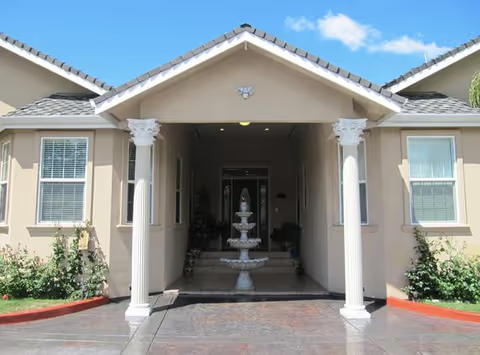
St. Francis Healthcare Center elicits strongly polarized impressions. Many families and residents describe a clean, bright facility with a small, family-style atmosphere, a favorable staffing ratio, and visible leadership that engages in care coordination. Allied services such as case management, discharge planning, and language accommodations are cited as strengths, and several accounts highlight effective post-surgical rehabilitation and individualized therapy that supported good recoveries. Recreational programming and meal variety, including accommodation for dietary restrictions, are commonly noted as positive aspects of daily life at the facility.
Clinical-care perception is mixed. Numerous reviewers praise the dedication and compassion of nurses, CNAs, and therapists and note 24/7 nursing coverage and hands-on support during rehabilitation. At the same time, other reviewers describe operational gaps: delayed escalation during clinical events, inconsistencies in nurse rounding and monitoring, and variability in therapy duration and intensity. There are serious individual claims — including a medication-related incident and missing personal items — that families should regard as isolated but significant; these raise concerns about medication-administration controls and personal-property safeguards that the facility would need to address systematically.
Staff conduct and communication are another area of divergence. Many accounts emphasize attentive, helpful staff, strong management engagement, and improvements from a clinical-liaison team; conversely, some families describe issues with staff tone, limited follow-through, and difficulties reaching staff by phone. These contrasts suggest variability in staff performance and in internal communication systems, with some units or shifts performing better than others.
Facilities and amenities are generally described positively: well-maintained rooms, on-site therapy spaces, accessible parking, and added safety features (alarms for wandering and fall risk). However, a subset of comments point to crowded rooms and limited privacy, and others note housekeeping or sanitation inconsistencies that affect particular areas or stays.
Overall, the pattern is one of a facility with clear operational strengths — committed clinical staff, visible management, active rehab services, and a pleasant physical environment — alongside persistent operational weaknesses that affect safety perception and family confidence: inconsistent responsiveness and monitoring, gaps in medication and property controls, variable therapy delivery, and communication shortcomings. Prospective residents and families may benefit from asking specific questions on medication-administration protocols, monitoring/rounding schedules, private-room availability, property-security practices, and recent quality-improvement actions implemented by leadership.