Imperial Healthcare Center consistently draws positive remarks for its direct-care teams and rehabilitative services. Across reviews, families and patients describe nursing staff, therapists and social workers as compassionate, hands-on, and recovery-focused; many accounts credit the therapy teams (PT/OT/speech) with measurable mobility gains and successful discharges home. Social-work involvement and individualized care planning — including nutritionist input and meal customization — are noted strengths, as is multilingual communication and a generally clean, wheelchair-accessible environment with well-maintained outdoor spaces.
Clinical care quality shows a dual pattern: exemplary bedside engagement and therapy effectiveness on one hand, and operational inconsistencies on the other. Reviewers frequently praise attentive nurses and director-level leadership, including strong end-of-life support and 24-hour hands-on availability. However, there are recurring concerns about medication administration consistency, delayed responses to call alerts, and variable staffing levels that can affect perceived responsiveness and timeliness of care.
Rehabilitation and therapy services are a clear institutional strength. Therapists are described as motivating and practical, with several residents improving from wheelchair use to cane or walker mobility. Therapy coordination, therapist-driven goals, and daily contact during rehabilitation periods are repeatedly highlighted as contributing to successful recoveries.
Dining and nutrition receive generally positive marks for flexibility — kitchens that will customize meals, nutritionist involvement, and availability of snacks outside normal service hours. That said, reviewers noted occasional issues with meal temperature and periodic inconsistency in food service that prospective families may wish to monitor.
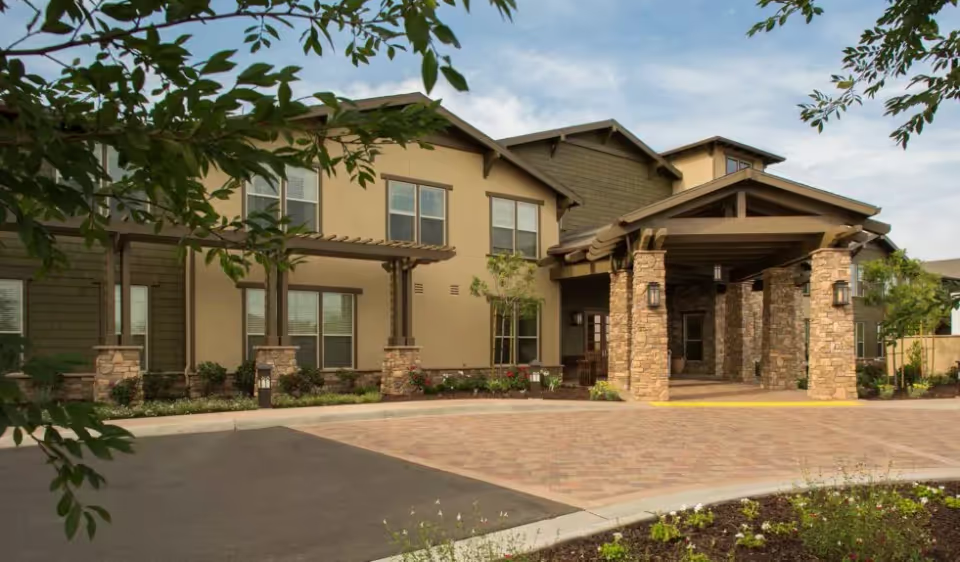
Facility and activity observations are mixed. The building and grounds are described as clean and pleasant with recent patio/garden improvements and accessible circulation for mobility devices. At the same time, the facility has an older infrastructure in places, shared-room arrangements are still used, and a few reviewers described sanitation or odor concerns in common areas. Activity and therapy programming are viewed positively, particularly as they relate to rehabilitation goals and patient engagement.
Administrative and management patterns warrant attention. Several families described problems with discharge planning, coordination of outside specialty services, insurance communication, and personal-belongings handling; these are best understood as operational-process gaps rather than uniform practice. In isolated but notable instances, reviewers described significant clinical or administrative failures — including an alleged diagnostic error and a discharge without arranged specialty follow-up — which underscore the importance of confirming discharge plans, medication schedules, and insurance authorizations in writing.
Overall, Imperial Healthcare Center appears to offer strong, compassionate direct care and excellent rehabilitation services, supported by engaged social work and therapy teams. Prospective residents and families who prioritize hands-on nursing and effective rehab will likely find the facility well suited to those goals. At the same time, families should proactively confirm medication-management procedures, staffing expectations, discharge coordination, and private-room availability to mitigate the operational inconsistencies that emerge in some accounts.