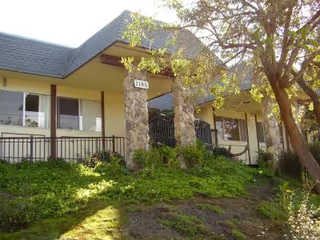
Cedar Lane presents as a small, residential-style care home with strengths in daily living support, atmosphere, and hospitality. Families and visitors commonly describe a clean environment, home-cooked meals, abundant natural light in common areas, and an appealing outdoor living space. The setting is characterized as calm and positive, and several accounts emphasize that residents appear content and experience an improved quality of life while living there.
Care and staffing appear oriented toward personal, non-skilled support. Reviewers frequently highlight a favorable staff-to-resident ratio, staff who are described as knowledgeable, compassionate, and dementia-aware, and active staff coordination with outside physicians and other clinical providers. The team is noted for managing appointments and communicating with clinicians on behalf of residents. This environment, combined with inclusive activities and attention to individualized engagement, supports residents who benefit from assistance with daily living and social involvement.
Dining and activities receive positive mention: meals are described as home-cooked and residents are included in recreational programming. Rooms are generally described as comfortable and well-appointed, with single and double options and in-room televisions. Natural-light features such as skylights and pleasant grounds contribute to an overall homelike ambiance. The facility is also noted for offering affordable pricing and perceived value by families.
Notable operational limitations appear where higher-acuity clinical needs are present. Reviews indicate limited on-site nursing coverage and constrained medication-management capacity, making the home better suited for residents who do not require skilled nursing. There are also references to variability in room size and condition, with some rooms described as small or less bright than others. A separate area of concern is transparency and communication around critical-care and end-of-life decision processes; this suggests the facility would benefit from clearer protocols and family communication in those situations. Finally, family impressions vary, so prospective residents and families should conduct an in-person visit, ask about current nursing and medication policies, and review how the facility handles clinical escalation and family communication to determine fit with the resident’s anticipated level of care.