Atria Del Rey is described largely as a warm, activity-rich assisted-living community with a strong emphasis on relationship-based caregiving and hospitality-style amenities. Families and residents commonly note attentive, compassionate caregivers and an accessible leadership presence; several accounts describe staff who form personal bonds with residents, proactive communication from management, and continuity of caregivers that supports individualized care. The community offers a range of living options (studios and one-bedrooms), pet-friendly policies, housekeeping and laundry services, and visible cleanliness and upkeep throughout common areas and outdoor spaces.
Dining and activities are prominent strengths. The dining program is run in a restaurant-style format with flexible hours, customizable menus, and social meal service; many note menu variety and themed events. The activities program is extensive, featuring daily exercise, arts and crafts, live music, regular happy hours, bingo, bridge, and frequent outings to local destinations. A dedicated memory-care neighborhood and hospice/ end-of-life support are available, and reviewers frequently cite meaningful programming and engaged activity staff that contribute to residents’ social life and wellbeing.
Operational patterns raise several consistent concerns. Medication-administration practices are described as inconsistent in some accounts, and there are multiple mentions of delays or errors that families found concerning; this points to an area where tighter clinical controls and documentation could improve reliability. Staffing ratios and workload were also noted as variable, with some shifts described as busy relative to staff on duty. Communication and billing processes receive mixed feedback—many families praise accessible directors and proactive updates, while others experienced billing delays, contract-clarity issues, or admissions interactions perceived as high-pressure. Leadership turnover has been noted and is associated in some reviews with uneven follow-through on programs or transitions.
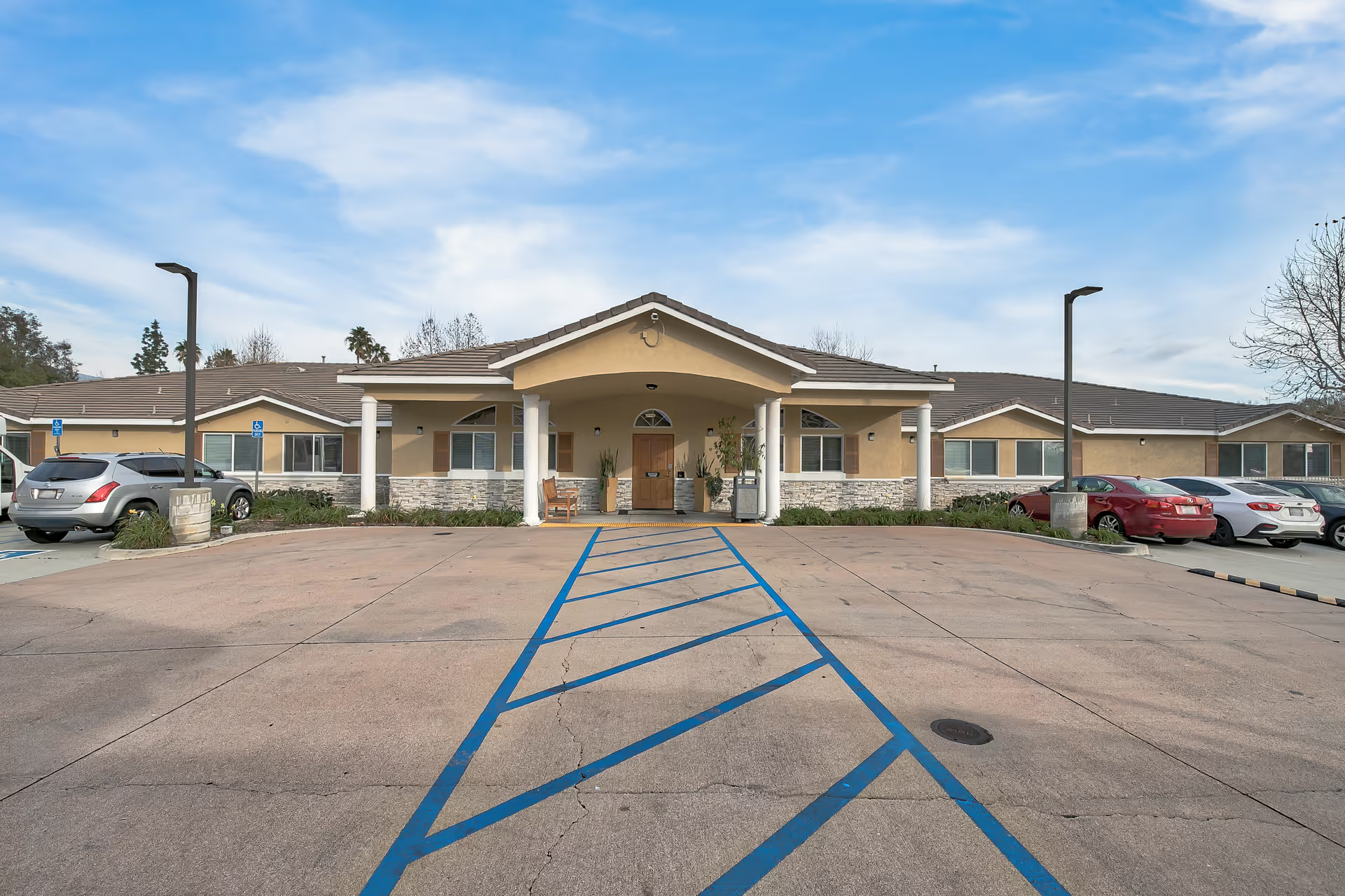
Facility and value considerations are mixed. The property and grounds are repeatedly described as attractive and well maintained, with a pleasant courtyard and multiple gathering spaces, but unit sizes and included amenities vary; several families felt some studio layouts lacked kitchen facilities at a price point they considered high. Food quality and dietary accommodation are generally positive but with intermittent variability noted for special diets. Activity engagement is robust overall, though some residents were observed to be under-engaged at times, suggesting opportunities to tailor offerings to quieter or less-mobile residents.
In summary, Atria Del Rey’s strengths center on a strong staff culture, hospitality-oriented services, diverse activities, and attractive facilities. Prospective residents and families should weigh those strengths against operational concerns highlighted in reviews—particularly medication administration controls, staffing ratios, billing/contract clarity, and unit-size/value alignment—and discuss these specific items during a visit and in the admissions contract. Asking about clinical protocols, staffing levels per shift, meal-accommodation procedures, and written billing/lease terms will help clarify fit and expectations prior to move-in.