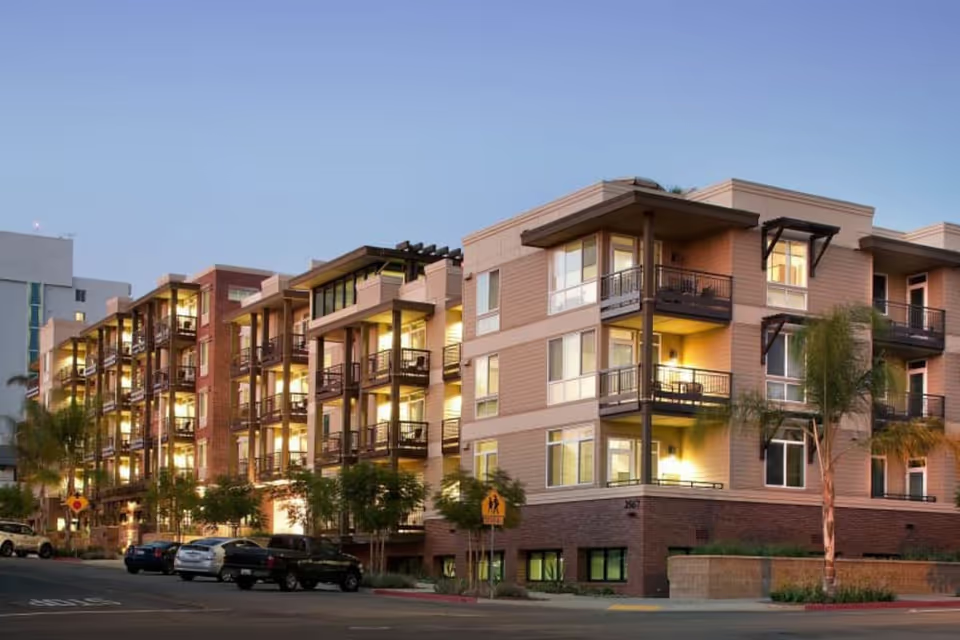
Balboa Nursing and Rehabilitation Center elicits strongly mixed but specific impressions. A substantial portion of reviewers emphasize high-quality clinical and rehabilitative care: physical and occupational therapy programs are frequently described as effective, therapists are noted as skilled and motivating, and several families credit the team with significant functional improvements. Nursing and caregiver staff are commonly characterized as compassionate, attentive, and family-oriented, and case managers and discharge coordinators receive repeated praise for clear planning and follow-through. Many accounts highlight a clean, well-maintained environment, comfortable therapy spaces, and an active calendar of activities that contribute to a sense of community.
At the same time, a consistent set of operational concerns recurs across reviews. Staffing levels and workload distribution are the most frequently cited operational limitations; reviewers link understaffing to delayed responses, variability in bedside assistance, and occasional gaps in routine care. Communication gaps appear at multiple points of the care pathway: families and some clinicians describe inconsistent updates from physicians, uneven follow-through on calls, and variable transparency around clinical changes. Medication administration and pain-management timing are raised as distinct process weaknesses in a subset of accounts.
Several practical and safety-related themes also emerge. There are repeated mentions of personal-property management problems (misplaced or delayed belongings) and equipment or maintenance issues such as unreliable call buttons and occasional faulty assistive devices. Infection-control and sanitation are generally praised in many comments, but other reviews note inconsistent practices and cite an outbreak experience; this mixed picture suggests variability across units or time. The physical plant is characterized as clean yet aging in places, with some shared or multi-person rooms that contribute to perceived crowding.
Dining and activities are areas of both strength and variability. The facility’s kitchen and nutrition staff receive commendation for accommodating diets and providing appealing options—several reviewers praise the chef and vegetable preparation—while others describe inconsistent meal quality or service interruptions. Programming, social activities, and outdoor/pet-friendly amenities are widely viewed as beneficial for resident engagement, though individual resident interest in activities varies.
Leadership and management receive contrasted evaluations. Some families call out effective, responsive leaders and well-coordinated case management; others note lapses in supervision, follow-up on belongings, or concerns about conduct and documentation practices. A few reviews include serious individual allegations related to advance-directive and power-of-attorney handling; these are not widespread in the dataset but warrant targeted inquiry by prospective families.
Overall, Balboa presents clear strengths in rehabilitation, hands-on caregiving, and community-oriented amenities, paired with operational vulnerabilities that include staffing variability, communication process gaps, property-management controls, and episodic maintenance or infection-control inconsistencies. Prospective residents and families would benefit from asking specific, concrete questions during a tour or intake: current staffing ratios and shift coverage, dementia-unit supervision protocols, infection-control procedures and recent outbreak responses, medication-administration safeguards, personal-belongings inventory practices, and how physician updates and case-management communication are handled. These targeted inquiries can help clarify whether the facility’s strong clinical and social programs will be consistently delivered for an individual resident’s needs.