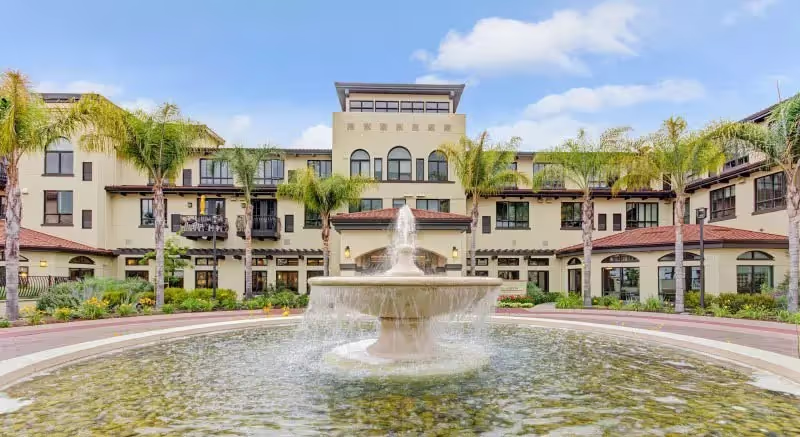
Belmont Village San Jose is widely perceived as an upscale, hotel-like senior living community with many operational strengths, particularly in staffing, programming, and dining. Reviewers consistently highlight a compassionate, well-trained caregiving team complemented by on-site nursing, therapy, and rehabilitation resources. The community offers structured dementia support through its Circle of Friends program, PALS monitoring, and a range of cognitive-level activities. Families frequently praise the facility’s move-in coordination, hospice coordination, and visible efforts to engage residents through exercise classes, live music, outings, and a broad daily activities calendar.
Dining and amenities are recurring positives. The community’s chef-driven, restaurant-style meals and varied menus receive repeated commendation, and many reviewers describe bright, well-maintained dining and common areas that give a high-end impression. Apartment options include private studios and one-bedroom layouts with efficient use of space; the property’s proximity to Santana Row and neighborhood amenities is often cited as a major advantage. The facility also advertises affordability programs (sliding-scale and veteran-focused) and family-focused communication practices such as photo updates and regular outreach.
Notwithstanding these strengths, several operational patterns produce concern. Cost is a consistent theme: monthly pricing is generally described as high and can be prohibitive for some families. Reviewers describe variability in staffing levels and coverage, including periods when call responses and personal-care assistance are delayed. These operational inconsistencies extend to maintenance and housekeeping at times—examples include delayed HVAC repairs and some cleanliness/maintenance lapses—which affect family confidence. Management responsiveness and internal communication are described as uneven: while many families praise proactive leadership and strong nursing direction, others report slower follow-up and coordination gaps.
Other practical considerations affect fit for particular residents. The community’s culture is described as busy and socially active, which many families value but some find too stimulating for residents seeking a quieter environment. Physical constraints noted include limited ground-level outdoor/garden space, elevator congestion during peak periods, and constrained parking at shift changes. Memory-care design and access controls are also a mixed picture: the Circle of Friends program is viewed positively for engagement and cognitive support, but some families expressed concerns about unit separation and movement-control consistency in certain areas.
In sum, Belmont Village San Jose is characterized by strong clinical and enrichment programming, high-quality dining, and a polished physical environment that appeals to residents who want an active, full-service community. Prospective residents and families should weigh those advantages against the facility’s premium cost and the documented variability in staffing responsiveness, maintenance follow-through, and management communication. Those considering the community will benefit from focused questions about staffing ratios, response-time expectations for personal care, HVAC/maintenance processes, and how the community accommodates quieter residents or those requiring consistent, predictable supervision.