Overall assessment Elim's Place presents as a memory-care–focused community with consistent, well‑organized clinical and support services. Families describe smooth transitions into the facility, personalized admissions and rehabilitation plans, and active nursing oversight that emphasizes monitoring and safety. The facility’s approach to dementia care appears structured and purposeful: units are secure, staff receive dementia-specific training, and programming emphasizes orientation cues, reminiscence, and preservation of remaining abilities.
Care and staff Care quality is the dominant strength cited. Staff are repeatedly described as warm, patient, and attentive; many accounts note caregivers learning residents’ personal histories and preferences and building genuine connections. Nursing and therapy teams are portrayed as proactive—providing oxygen monitoring, tailored rehab plans, and timely medication administration—while administrative personnel are credited with clear, timely family communication and efficient handling of admissions and insurance paperwork. Staffing levels and stable assignments are noted as contributing to continuity of care and calmer transitions for residents with cognitive impairment.
Dining and clinical accommodations Dining is presented as an elevated, restaurant-style experience with chef-prepared meals, varied menus, and the ability to provide texture-modified diets when swallowing concerns exist. Reviewers also highlighted dietary accommodations and enjoyable meal presentation. At the same time, a recurring operational note is a desire for more consistently health-forward menu options; some families described food as satisfactory but suggested healthier choices could be expanded.
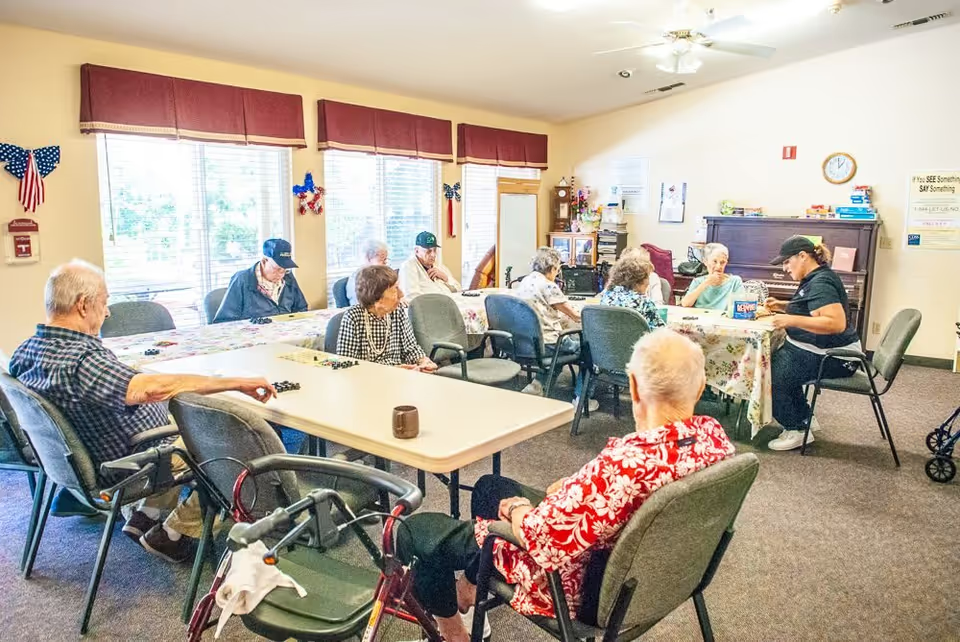
Activities and social engagement The activities program is broad and intentionally therapeutic: music therapy, art and creative-writing sessions, gentle exercise and yoga, computer classes, chess, and structured social hours are all mentioned. Programming is described as meaningful for residents at different cognitive levels and focused on engagement, celebration of incremental gains, and sustaining lifelong interests. These offerings are tied to measurable quality-of-life improvements for several residents.
Facilities, cleanliness, and safety Housekeeping and environmental maintenance are strengths: common areas and apartments are described as meticulously clean and well cared for, with pleasant, well‑lit circulation spaces and an appealing courtyard. Safety systems are robust, including controlled access, cameras, and emergency call systems. There is, however, variability in the physical plant: some rooms lack ensuite bathrooms and portions of the facility show dated finishes, indicating a mixed building-age profile.
Management and notable patterns Administrative responsiveness and family support are prominent themes—staff are credited with prompt responses to concerns, simplifying paperwork, and offering educational resources. The most consistent concerns across comments are operational rather than clinical: variability in how much detail caregivers provide to families, occasional staff workload pressures that can limit immediate availability, and some dining options that could be more health‑forward. These are trait-level items about operational consistency rather than systematic clinical deficits.
Bottom line Elim's Place is portrayed as a compassionate, clinically attentive memory-care provider with strong activity programming, high standards for cleanliness, and robust safety systems. It appears particularly well suited for families seeking specialized dementia care, consistent staffing, and rehabilitation support. Prospective families should confirm room configurations (ensuite vs. shared bathrooms) and inquire about current dining menus and staffing patterns to ensure those operational details meet their priorities.