The reviews present a mixed but consistent picture: the facility's rehabilitation services (PT/OT/Speech) are a clear strength, with multiple accounts of measurable functional gains, personalized therapy plans, and effective pain control during sessions. Many families praised individual therapists and rehabilitation outcomes that helped residents progress from limited mobility to using a cane. Nursing assistants and some nurses are frequently described as compassionate, attentive, and hands-on, and several administrative and admissions staff are noted as welcoming and helpful.
At the same time, there are recurring operational concerns that prospective families should evaluate. The most prominent pattern is inconsistent nursing responsiveness — delayed answers to call bells and lapses in basic incontinence care — with resulting skin and infection concerns. Several reviews describe medication-administration and documentation inconsistencies and at least one serious allegation regarding sedative administration; these point to the need for clear medication protocols and family oversight. Staffing and scheduling gaps, including limited coverage on weekends or nights, appear to exacerbate responsiveness and monitoring problems.
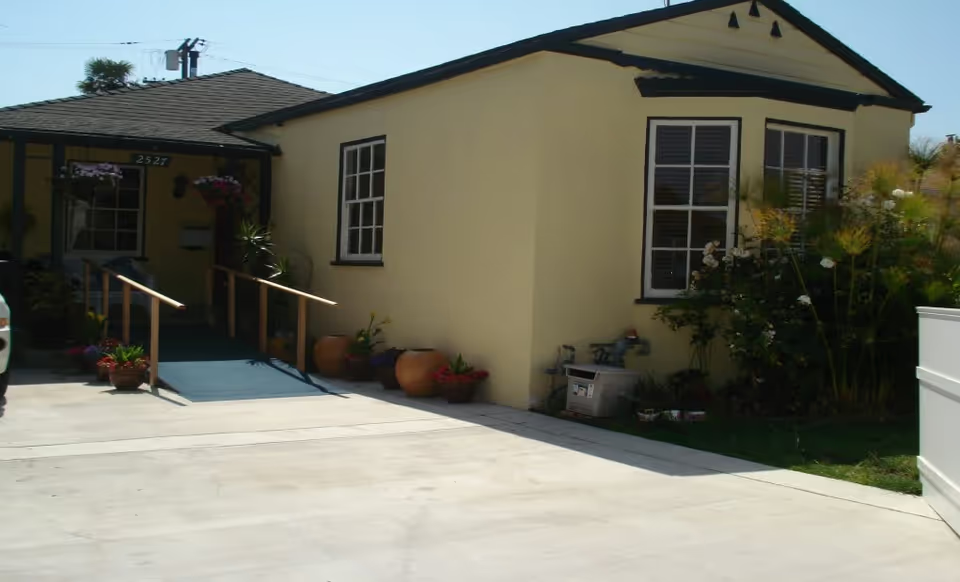
Facility environment and programming receive mixed feedback. Many reviewers describe clean, well-maintained common areas, a pleasant courtyard, and an active activities program offering crafts, music, movies, and social opportunities. Conversely, others report variability between units: small or multi-occupancy rooms, limited visitor seating, parking and accessibility challenges, and occasional sanitation concerns. Dining impressions range from positive to negative, indicating inconsistent food quality or presentation on different days or units.
Management and communication are another area of divergence. Some families describe responsive, accommodating administrators and helpful social workers who facilitate admissions and insurance questions. Other accounts note defensive communication, misrepresentation of transfers or coverage, and poor follow-up after orientation or incidents. Transfer and discharge coordination, weekend medical coverage, and family communication are specific operational areas flagged for improvement. Safety-related themes include mobility-assist equipment selection and transfer-safety processes, behavioral/noise management for residents with cognitive impairment, and isolated reports of security lapses.
Recommendations for prospective families: if rehabilitation and therapy outcomes are a priority, Fireside's therapy program appears strong and may be well suited for short-term rehab. If continuous nursing responsiveness, single-occupancy rooms, or robust weekend medical coverage are important, families should ask targeted questions prior to placement — request current staffing ratios, call-bell response-time metrics, medication-administration protocols, roommate options, behavioral-management strategies, and examples of post-discharge coordination. Visiting at different times (day, evening, weekend) and speaking with both clinical leadership and current families can help assess whether the facility's operational practices align with a prospective resident's needs.