Overview Temple City Healthcare elicits consistently strong positive feedback for its clinical rehabilitation services, staffing continuity, and homelike environment. Many families describe the nursing, therapy, and aide teams as compassionate and effective—particularly the physical and occupational therapy staff and wound‑care clinicians—who contributed to measurable recovery progress. The facility’s small scale, visible administration, and long‑tenured staff are frequently cited as contributors to a family‑like culture and reliable clinical oversight, including physician affiliation that supports clinical planning.
Care and staff Across reviews the facility’s clinical strengths stand out: knowledgeable nurses, attentive CNAs, proactive charge nurses, and a therapy program that many account for as central to patients’ functional gains. Staff interactions are commonly described as kind, responsive, and relationship‑oriented, with multiple mentions of specific team members and positive family communication about care plans. At the same time, reviewers raise operational concerns about inconsistent direct‑care responsiveness—examples include delayed checks and extended periods without assistance—which indicate variability in day‑to‑day staffing responsiveness rather than an absence of clinical capability.
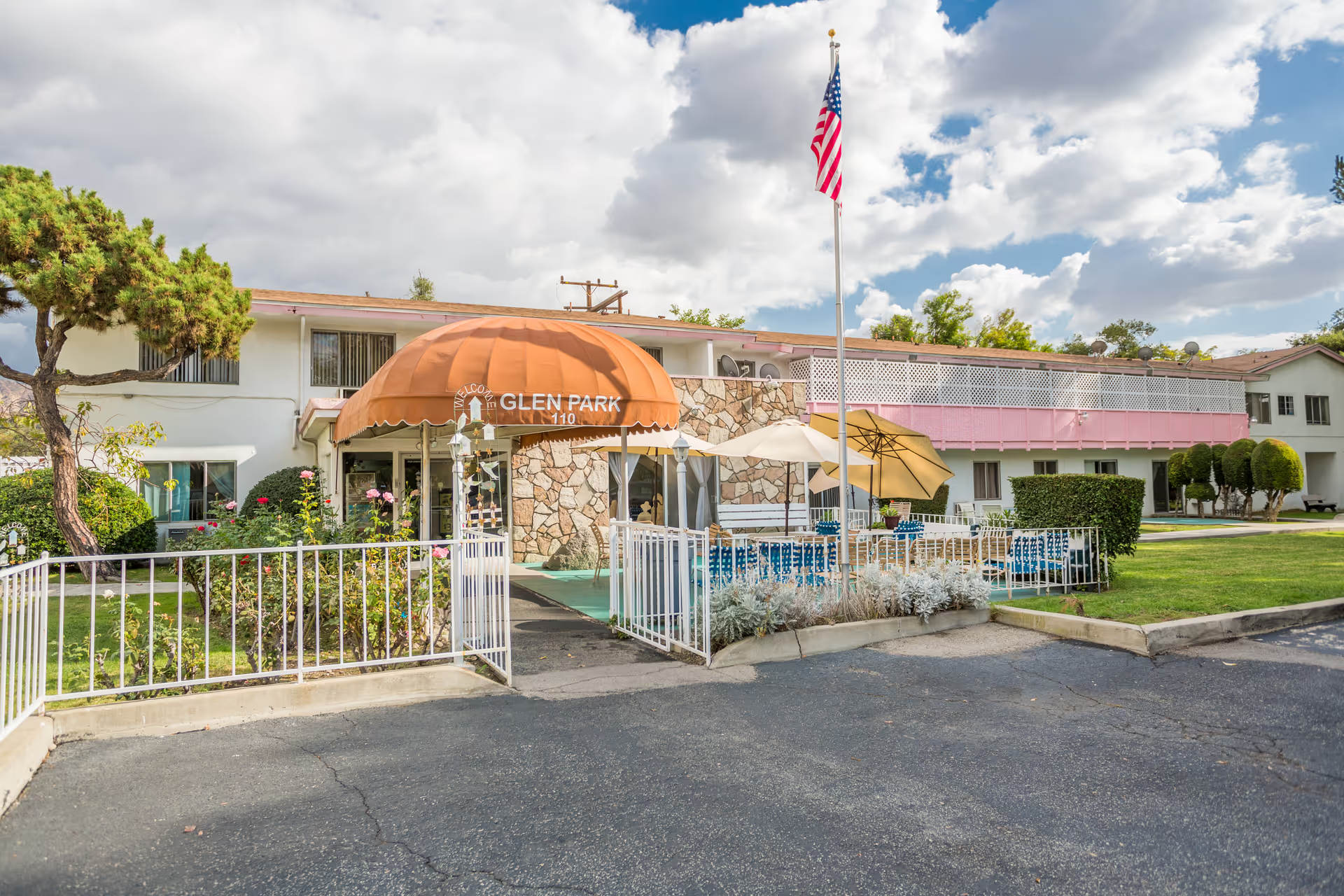
Dining, activities, and hospitality Dining and hospitality are recurring positives. The kitchen is described as attentive and supportive of residents’ nutritional needs, and meals are often characterized as nutritious and well prepared. The activities program is active and engaging, with outdoor patio and garden areas contributing to a pleasant atmosphere. Visitors note helpful hospitality (snacks, water) and spaces that support family visits and resident engagement.
Facilities and operations The physical plant receives mixed feedback: the facility is generally clean and well maintained, with pleasant décor and outdoor spaces, but reviewers also describe maintenance and supply‑management issues such as malfunctioning beds and toilets, linen shortages at night, and the limitations of an older building (for example, limited in‑room storage that requires walking to closets in hallways). These operational issues suggest opportunities to strengthen maintenance protocols and supply logistics.
Management, communication, and administration Many families praise visible, caring administration, responsive case management, and helpful business/finance personnel who facilitate discharge and care coordination. Conversely, there are recurring critiques about inconsistent communication tone from front‑desk or administrative staff and inadequate complaint resolution in some instances. Billing and payroll processing delays are also mentioned as an operational weakness. Of note are isolated, more serious allegations concerning clinical conduct and patient transfers; these are not described as systemic in volume but represent high‑impact concerns that families and prospective residents should inquire about directly.
Notable patterns and guidance for prospective families Overall, Temple City Healthcare is presented as a recovery‑focused facility with strong therapeutic outcomes, attentive clinical teams, and a home‑like setting. Key operational weaknesses center on variability in responsiveness, maintenance/supply management, and some administrative communication gaps. Prospective residents and families should weigh the facility’s clinical strengths and rehabilitation track record against these operational considerations. Recommended due diligence includes asking about current staffing levels and shift‑to‑shift responsiveness, confirmation of protocols for provision of ordered assistive devices, maintenance response times, linen and supply management, and the facility’s processes for handling family concerns and any serious clinical allegations.