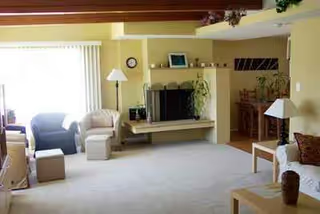
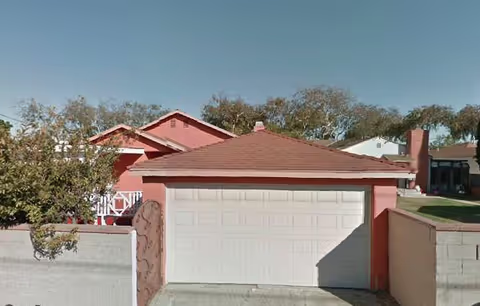
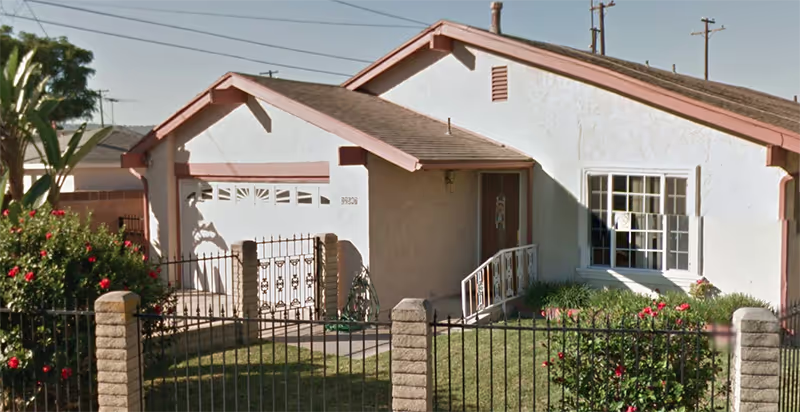
The reviews of J & A Compassionate Care show a mix of positive experiences and significant concerns. Many commenters emphasize the facility's strengths in everyday caregiving: staff are frequently described as compassionate, attentive, and communicative with families. Reviewers also note a clean, pleasant environment with private rooms and visible efforts to recognize residents’ personal milestones. The facility operates a regular meal schedule and offers a structured activities program that includes bingo, exercise sessions, and escorted walks.
Care quality and staff behavior appear to be uneven. Several positive accounts describe flexible, helpful caregivers who provide excellent attention; however, other accounts raise concerns about staff professionalism and conduct. These descriptions point to variability by caregiver or shift rather than a uniformly consistent standard of interaction. Relatedly, some reviewers expressed concerns about safety oversight and the facility’s responsiveness in specific situations, suggesting that practices for monitoring and incident response may not be uniform across all staff and times.
Dining and activity programming show a clear operational pattern: meals are provided three times daily, but menu options may be limited, with at least one account noting a single-choice meal service. The activity lineup is present and includes social and physical options, yet participation or engagement levels among residents can be uneven; some residents appear less active or less supported to engage than others.
Facility amenities and management communication receive generally positive comments: rooms are described as private and pleasant, sanitation is viewed favorably, and families report constructive communication with staff. However, a recurring theme is the perception that certain caregiving practices restrict resident autonomy; descriptions indicate that decision-making and personal independence may be constrained in some interactions. Taken together, the pattern in these reviews is one of polarization — strong positives around individual caregiver relationships and environment, paired with intermittent operational weaknesses around staffing consistency, menu flexibility, activity engagement, and oversight.
Prospective residents and family members may benefit from targeted questions and observations during visits: ask about meal planning and dietary accommodations, request to see activity schedules and observe participation, inquire about staffing patterns and supervision, and discuss how resident preferences and autonomy are supported. These focused inquiries can help determine whether the facility’s strong aspects align with a particular resident’s needs and whether the variability noted in reviews has been addressed operationally.