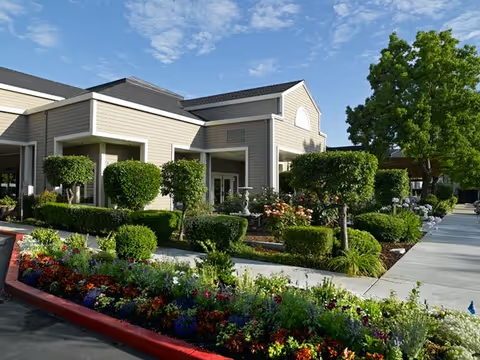
St. John’s Retirement Village presents as a well-maintained, rural campus with a range of housing types from sunlit independent cottages to assisted-living rooms and dedicated dementia/Alzheimer’s units. The grounds and exterior spaces are a consistent strength: reviewers describe landscaped gardens, a courtyard with a koi pond, private parking, and pleasant strolling areas across roughly 14 acres. Many units offer private bedrooms, large rooms with yard views, and the ability to personalize spaces with residents’ own furniture.
Care quality and staff interactions are mixed but tend toward the positive in several accounts. Numerous reviewers highlight compassionate, personable and professional staff who know residents by name and provide attentive care, including visible staff stations and night staffing in dementia units. At the same time, there are operational concerns about inconsistent staff engagement and responsiveness; families noted occasions of disengaged behavior, use of personal devices during shifts, and gaps in timely follow-up. Staffing levels emerged as a pattern-level issue, with some reviewers perceiving coverage shortages during certain shifts.
Dining and activities are generally active components of village life. The facility operates an on-site central kitchen that prepares country-style meals and accommodates vegetarian diets; residents eat in small-table dining settings. Activity programming appears robust, with music programs, church services, gardening, bingo, dominoes, trips and cognitive games offered multiple times per day. However, reviewers also flagged variability in meal quality (including examples of bland or overcooked entrees) and noted that dining hours can be limited, which may be important for families to confirm during a visit.
Facilities-level strengths include cleanliness, spotless common areas, private bathrooms in many units, walker-friendly bathrooms and in-room safety devices. Dementia-specific design features — such as separate units, rooms opening to shared living areas, visible staff stations and safety-focused layouts — are emphasized as contributing to secure care. Some reviewers identified a need for selective upgrades and modernization in parts of the campus and called out one-bedroom floor plans as having layout limitations that affect livability for certain residents.
Management and operational patterns merit attention during a tour. Several reviewers felt management places significant emphasis on occupancy and marketing, which can coincide with uneven resident engagement. Transportation practices and driver behavior were singled out as a specific area of concern for safety and courtesy. For families considering St. John’s, recommended actions include observing mealtime and activity participation, asking for current staffing ratios and shift coverage information, reviewing transportation protocols and driver training, and inspecting unit floor plans to ensure they meet the prospective resident’s mobility and privacy needs. Overall, the village offers a pleasant, activity-rich campus with strong points in staffing compassion and campus design, tempered by operational areas that warrant clarification prior to move-in.