Crossroads Senior Living at Northglenn elicits a strongly mixed impression across reviewers. The facility offers a broad activity schedule, spiritual programming, transportation for outings, and several onsite clinical resources (including an RN). Many families and residents describe well-maintained grounds, indoor walking areas, and apartments that can be personalized; others praise hospice coordination and individual caregivers who provide meaningful emotional support. These operational strengths make the community attractive for residents who are ambulatory and socially engaged.
Care quality assessments are variable. Positive accounts highlight compassionate bedside care, hospice support, and attentive nurses; negative accounts raise concerns about inconsistent medication administration, delays in clinical response, missed or late medications, and insufficient assistance for residents with higher dependency. Several families indicated they needed to intervene to ensure timely care, and at least one account referenced ombudsman involvement. These patterns suggest the facility can provide appropriate care in many cases but that reliability of clinical processes may fluctuate.
Staff performance and culture are similarly mixed. Multiple reviewers single out individual employees and managers for strong, caring engagement and name specific staff as standouts; at the same time, others report curt or unhelpful front-desk interactions, instances of rushed or inattentive conduct, and high turnover that contributes to operational strain. Staffing shortages and the perception of inexperienced personnel were commonly associated with slower responses and inconsistent daily support, particularly on weekends.
Dining experiences differ widely between accounts. The community offers alternative-menu options, snack choices, and occasional meals out, and some reviewers describe meals made from scratch and excellent food. Conversely, other families report times of poor food quality, limited vegetarian choices, breakfast-service gaps, and kitchen capacity constraints. Prospective residents should expect variability in meal satisfaction and ask about sample menus and accommodations for dietary needs.
The activity program is a consistent positive for residents who can participate independently. Offerings include exercise groups, sing-alongs, book clubs, crafts, religious services, and regular outings to nearby stores and restaurants; these events were frequently credited with improving social engagement. However, reviewers who described more isolated or higher-needs residents noted limited one-to-one activity time, indicating the program favors group engagement over individualized attention.
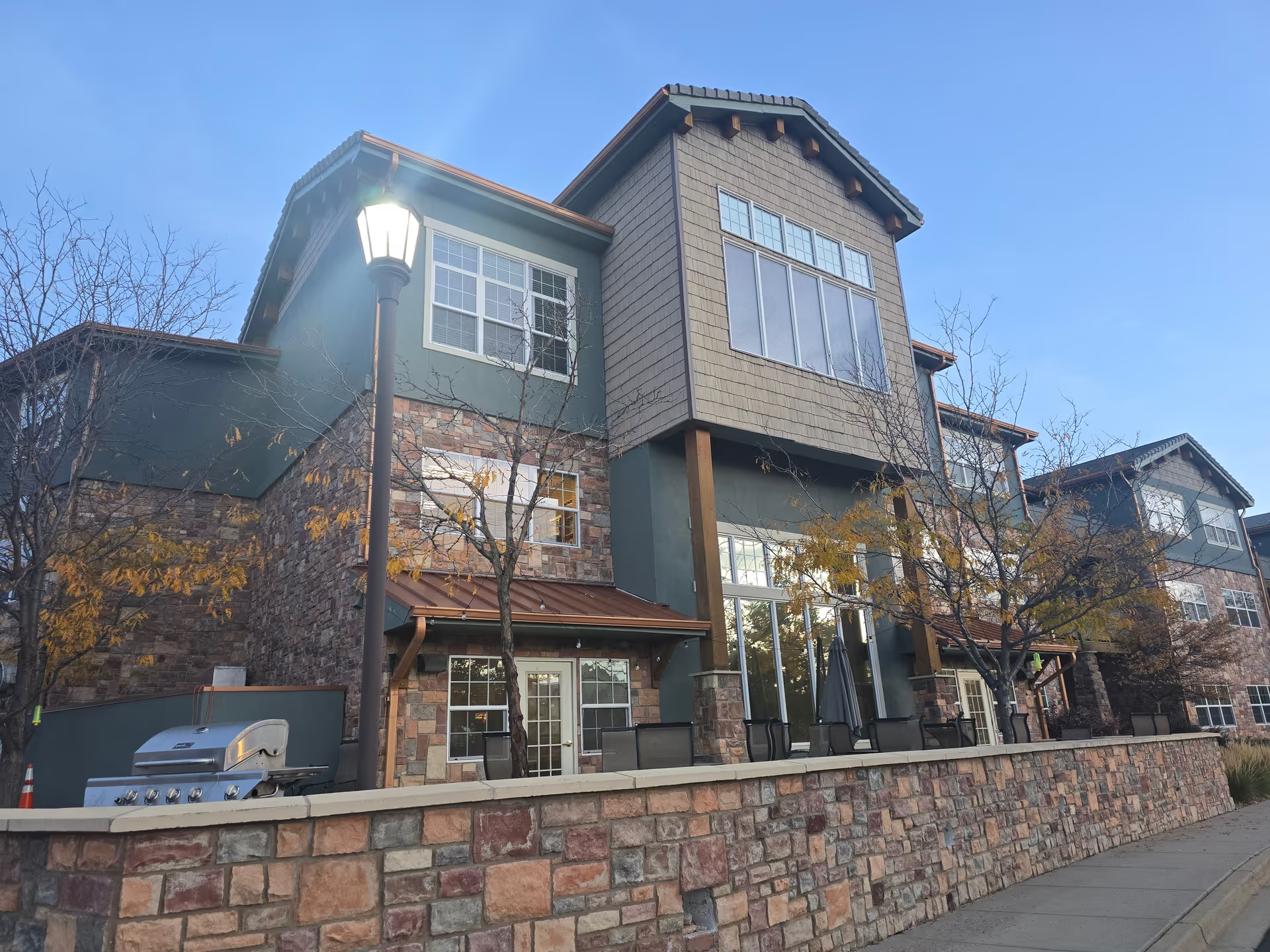
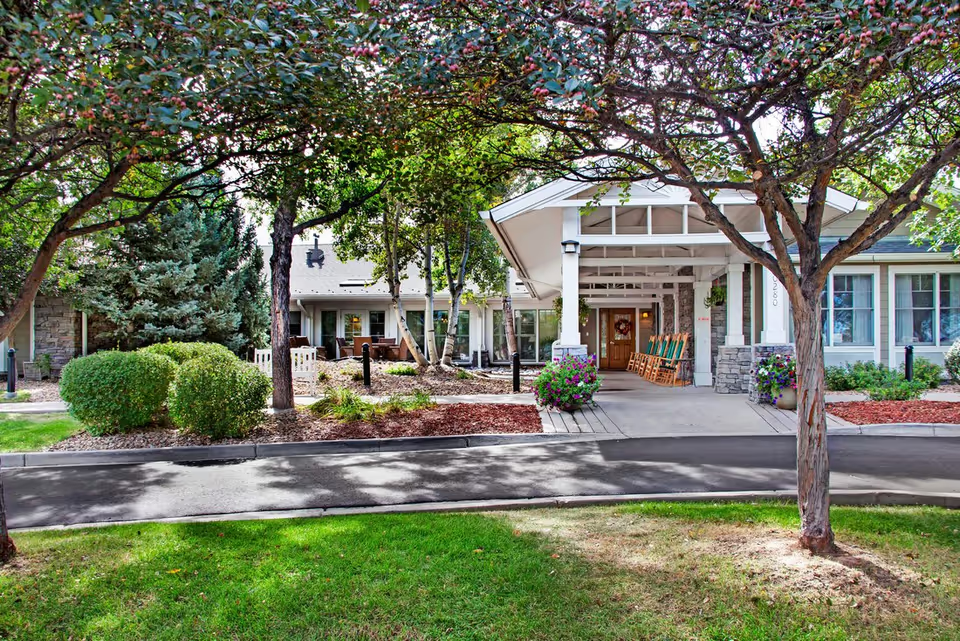
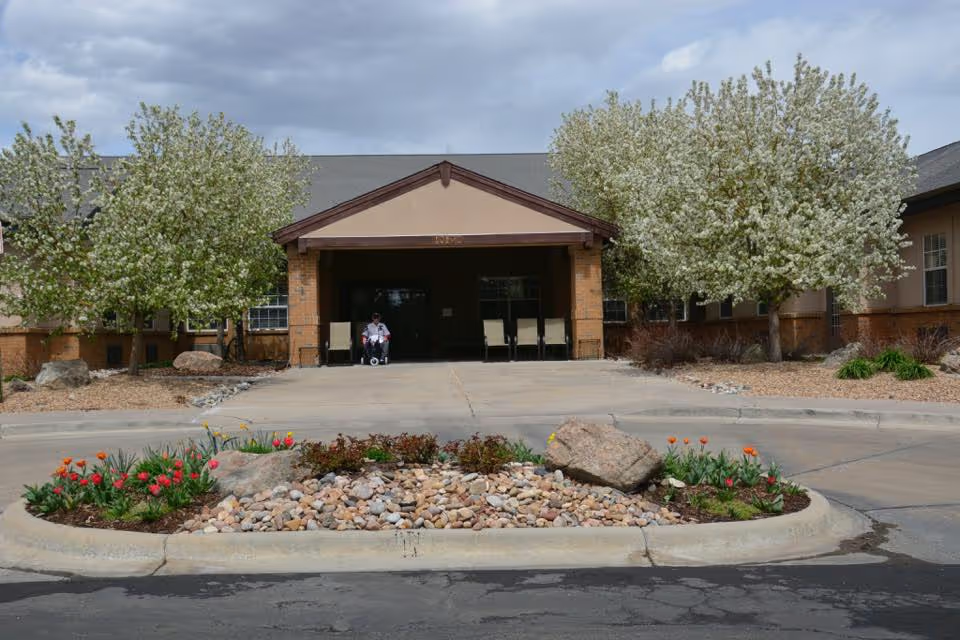
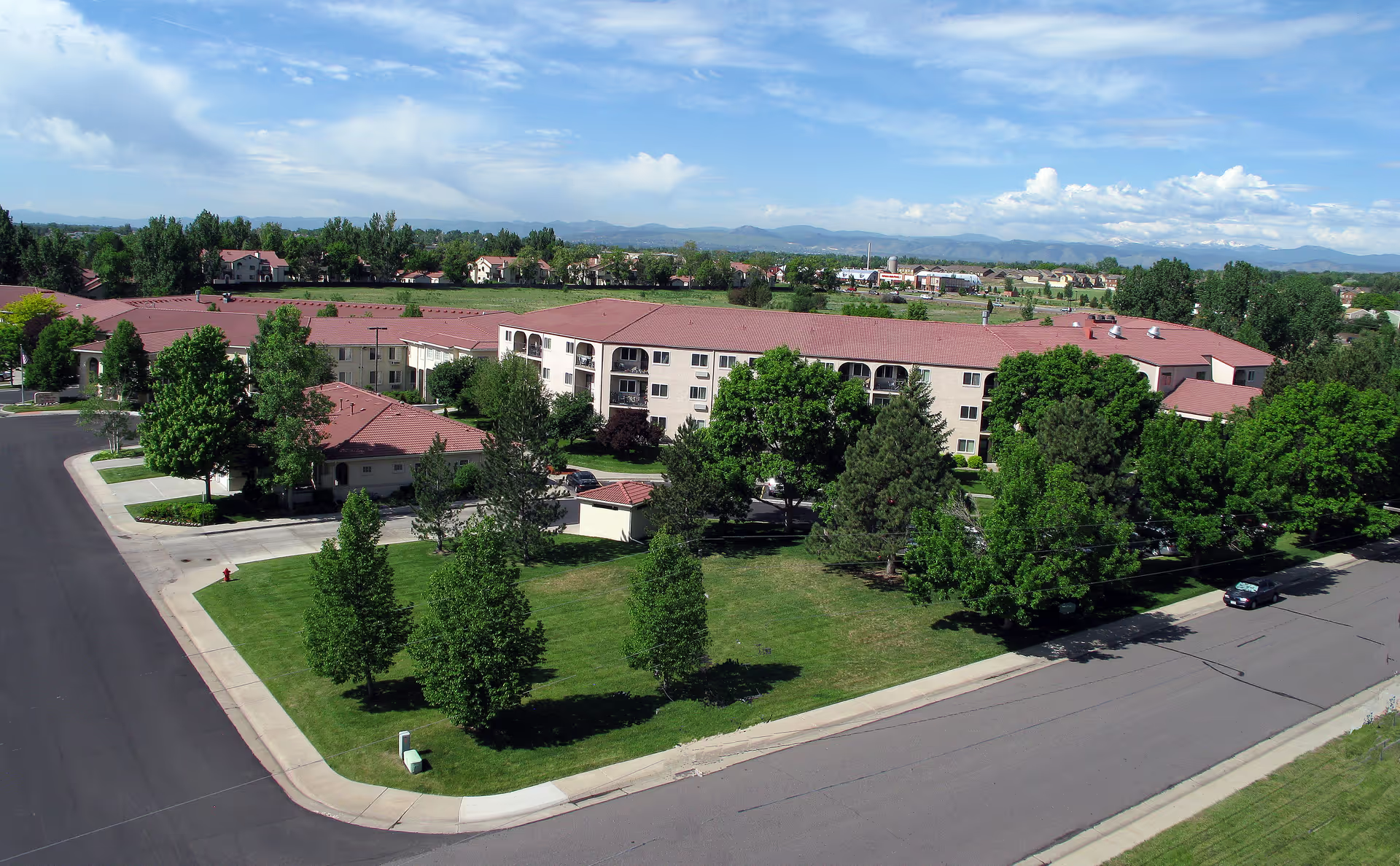
Physical plant observations combine strengths and limitations. Grounds, gazebo areas, and some updated common spaces receive favorable comments; apartments are described as clean and suitable for couples. At the same time, the building layout is characterized by some as motel-like or institutional in feel, with smaller studios, lower ceilings, noise issues, and occasional circulation constraints. Parking is generally adequate, but a few reviewers cited limited parking or warm, claustrophobic dining spaces.
Management and business-practice perceptions are polarized. Several reviewers describe recent leadership changes and improved communication and care under new directors, while others report inconsistent administrative responsiveness, unclear billing or rate increases, and decisions that felt poorly explained. These divergent accounts point to ongoing transition and variability in leadership effectiveness.
Notable patterns for prospective residents and families: the community can provide strong social programming and compassionate individual caregivers, but operational consistency—particularly around staffing, medication processes, personal-care routines, and management transparency—appears uneven. Visitors should conduct an in-person visit during active hours, observe meal service and activities, ask about staffing ratios and weekend coverage, clarify medication-administration protocols and incident reporting, and request written details on fees and level-of-care cost changes before making a placement decision.