Reviewer feedback for Glenwood Springs Health Care is polarized, with clear strengths around direct-care staff and therapy services alongside persistent operational concerns. Many comments emphasize dedicated caregivers, effective rehabilitation programs, and a community atmosphere that residents and families describe as welcoming. Nursing leadership and on-site therapy teams are frequently cited as strengths, and several accounts point to responsive staff who address issues quickly and provide resident-focused attention.
Care and staff: The facility receives repeated praise for compassionate bedside care, an engaged CNA team, and strong therapy outcomes that support functional gains in rehabilitation residents. At the same time, reviewers describe variability in staffing levels and occasional delays in attending to personal-care needs, particularly toileting assistance. There are also recurring observations about inconsistent communication style among some staff and front-desk personnel; while many families describe prompt, respectful interactions, others express concerns about tone and administrative handling.
Dining and activities: Positive notes include attentive kitchen staff and specific amenities (for example, around-the-clock coffee) that contribute to a home-like environment. Conversely, there are operational complaints about inconsistent meal quality and interruptions to meal service continuity. Activities and social aspects are repeatedly described as favorable, with residents forming friendships and participating in community life.
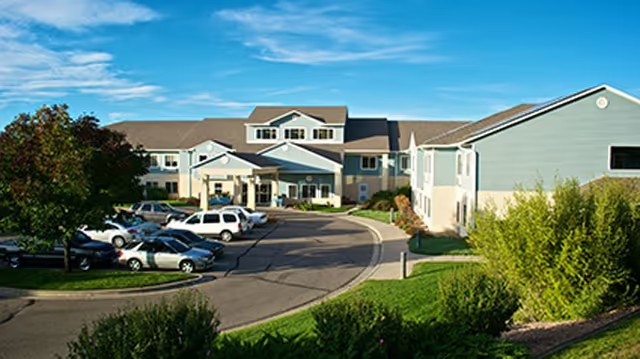
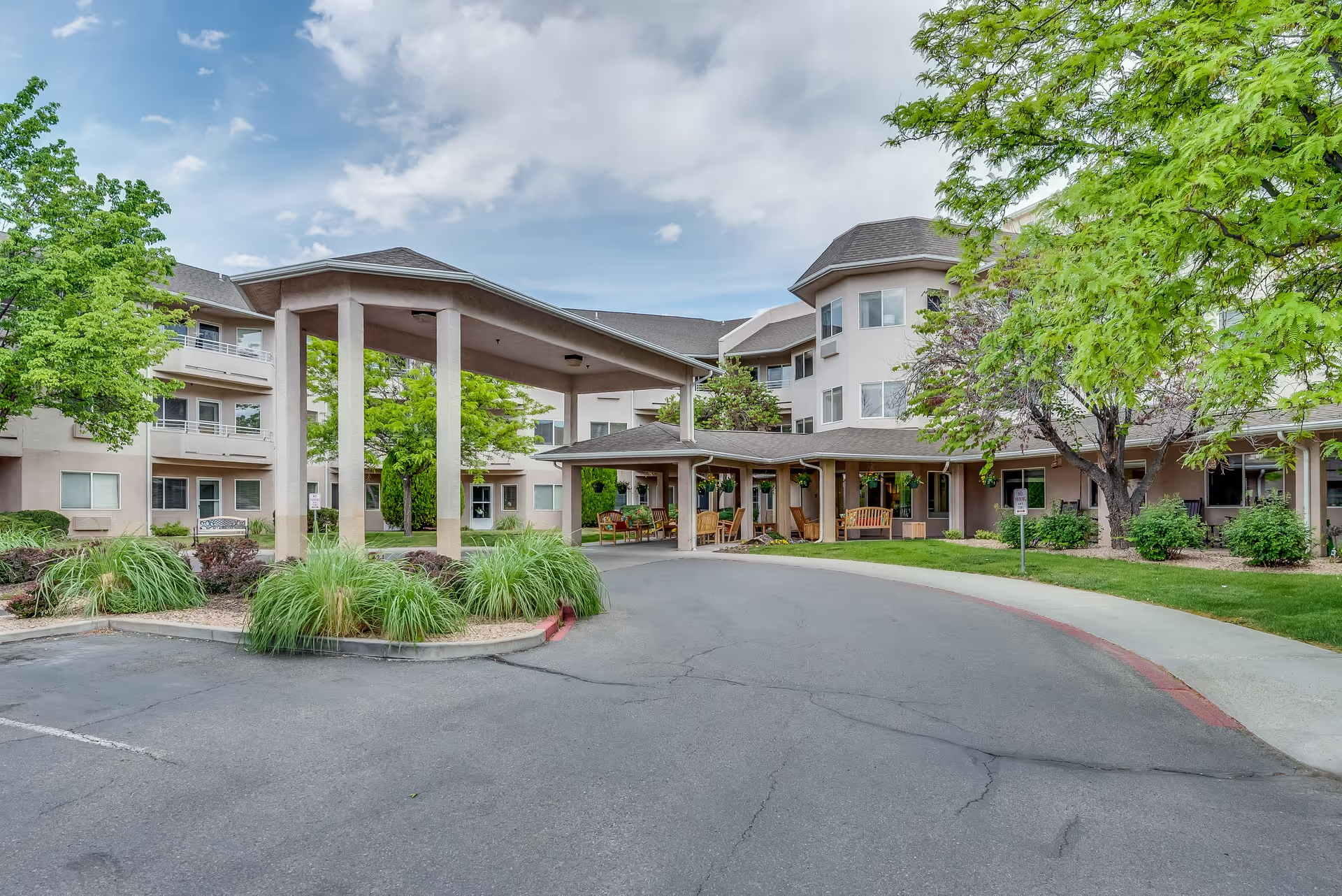
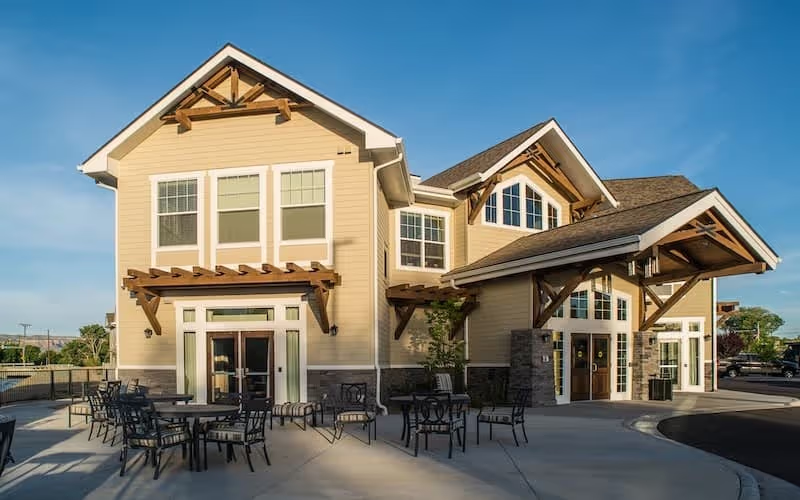
Facilities and maintenance: Multiple reviewers reference ongoing improvements — new paint, room refreshes, and planned upgrades — that have improved appearance and comfort in parts of the building. At the same time, there are reports indicating maintenance and infrastructure issues such as plumbing problems and other facility-level deficiencies that affect operations. Cleanliness and sanitation are areas of mixed feedback, with clean, updated rooms noted alongside sanitation concerns in some common areas.
Management and communication: Management appears to be making visible changes, and several families credit leadership with addressing concerns and implementing improvements. However, administrative problems persist for some: billing errors, front-desk interactions described as humiliating by a reviewer, and intermittent problems reaching the facility by phone. These administrative and communication gaps amplify clinical concerns for families when clinical escalation or clarification is needed.
Notable patterns and recommendations: The dominant pattern is a contrast between strong direct-care relationships, therapy effectiveness, and community atmosphere versus systemic operational weaknesses — primarily inconsistent staffing, maintenance needs, and gaps in clinical escalation for higher-acuity residents. Prospective families should weigh the evident strengths in bedside care and rehabilitation against these operational concerns. When considering placement, ask for current staffing ratios, recent inspection or maintenance reports, examples of clinical-incident policies and escalation protocols, and documentation of recent or planned facility improvements. Scheduling an in-person visit during a meal or therapy session can help confirm both the experiential strengths and any service inconsistencies described in reviews.