Reviews portray a facility with a mixed performance profile: several reviewers describe strong clinical rehabilitation services, caring direct-care staff, and a clean, residential environment, while others identify operational and safety weaknesses that have affected some residents and families.
Care quality and clinical coordination: Many accounts highlight effective therapy (PT/OT) and strong speech therapy, with some residents receiving intensive schedules that supported measurable recovery. Nursing and CNA performance descriptions vary: some families describe compassionate, respectful caregivers who provide timely attention, while others describe delays in basic-care tasks (grooming, lotion/shaving assistance), inconsistent wound-care supplies, and lapses in routine needs. There are recurrent notes about gaps in clinical coordination and medical-record handling that have complicated transfers or outpatient visits.
Staffing and conduct: Staffing levels appear inconsistent; staffing shortages were cited as a limiting factor for timely care in several accounts. Positive commentary about long-tenured, attentive staff coexists with concerns about staff conduct oversight and training. One review described a personnel termination related to staff conduct, and other comments raised broader concerns about how frontline behavior and response times are managed.
Safety and communication: A notable pattern is inconsistent family notification and incident response. Specific concerns include delayed or unclear communication following falls or incidents and unclear fall-watch/alarm procedures. These point to broader weaknesses in incident-response protocols and family notification processes rather than isolated administrative errors.
Dining and housekeeping: Reports about food quality are mixed. Some reviewers found meals satisfactory or noted recent improvements, while others described interrupted meal service (including occasions where food availability was limited). Cleanliness and housekeeping receive mostly positive remarks about rooms and common areas, but there are also notes of variability and specific supervisory concerns.
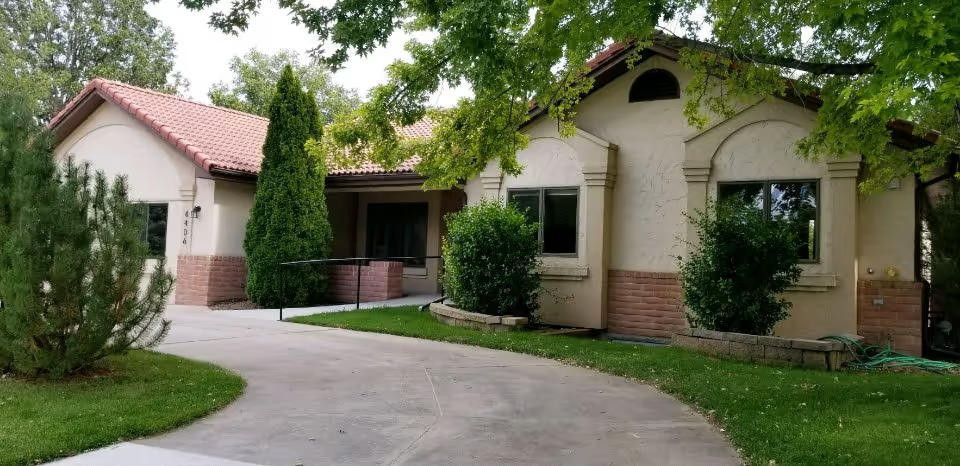
Activities and environment: The activities program is generally described as engaging and supportive, contributing to a less institutional atmosphere. Multiple reviewers commented that the facility feels residential rather than overtly clinical, with quiet corridors, personalized rooms, and polite staff.
Management and administration: Descriptions of management range from helpful and proactive—particularly regarding insurance/placement assistance—to disengaged and ineffective. Common administrative issues include limited Medicaid/financial-intake expertise, social-services gaps, poor internal communication, and abrupt staffing decisions that have affected continuity of care.
Overall patterns and guidance: The reviews suggest a facility capable of delivering strong rehabilitative care and compassionate direct care in many cases, but with operational inconsistencies that can produce variable experiences. Key areas for prospective residents and families to evaluate in a tour or intake conversation include current staffing levels and shift coverage, fall-prevention and incident-notification protocols, wound- and basic-care supply processes, Medicaid/financial-intake experience, and recent ownership or leadership changes. Asking for recent quality metrics, therapy schedules, and examples of how the facility communicates incidents to families may clarify whether the facility’s strengths align with a prospective resident’s needs.