Overall impression: Reviews describe a facility that delivers strong rehabilitative care and a generally compassionate clinical staff, alongside several operational and administrative weaknesses. Many families praised therapists and nurses for skill and empathy, and some residents experienced better-than-expected recovery outcomes. At the same time, recurring operational themes suggest that prospective residents and families should evaluate non-clinical aspects carefully before committing.
Care and staff: Clinical care and therapy services are frequently identified as strengths — skilled physical and occupational therapy, attentive nursing, and staff who listen to residents’ concerns. Reviewers highlighted instances where rehabilitation exceeded expectations following surgery. However, there are notable concerns about staff conduct and responsiveness: delays in answering resident calls and alarms, and at least one incident raising questions about staff professionalism. These issues point to inconsistencies in front-line staffing practices and response protocols that can affect perceived safety and comfort.
Dining and daily life: Dining experiences appear variable. Some meals were described as outstanding, while others were characterized as institutional and predictable. This indicates inconsistent meal quality and menu execution rather than a uniformly strong dining program. Recreationally, the facility benefits from accessible, level walking routes and outdoor options; grounds and nearby dining/boat-tour attractions are seen as positives that support activity and outings.
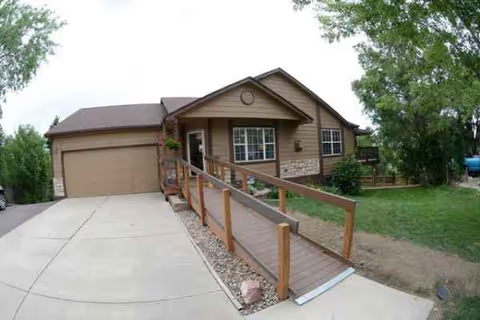
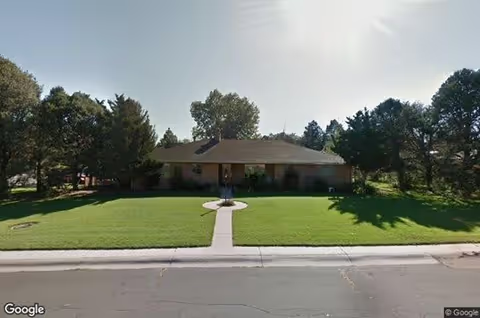
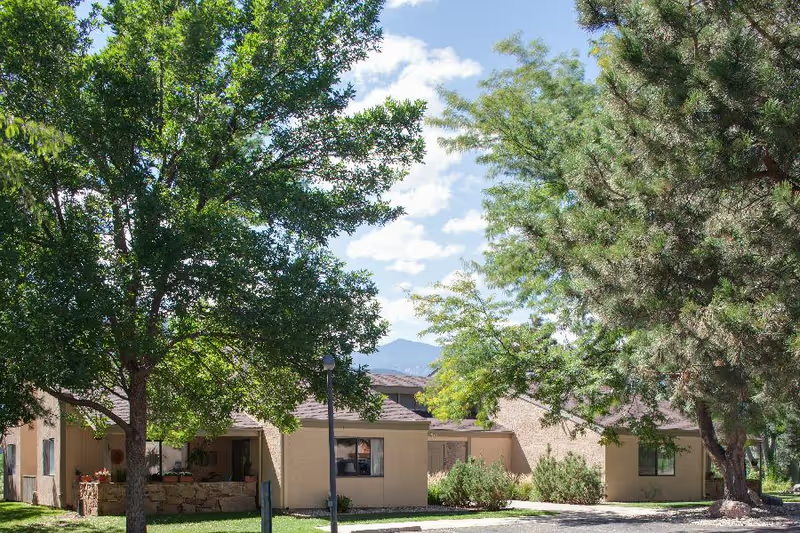
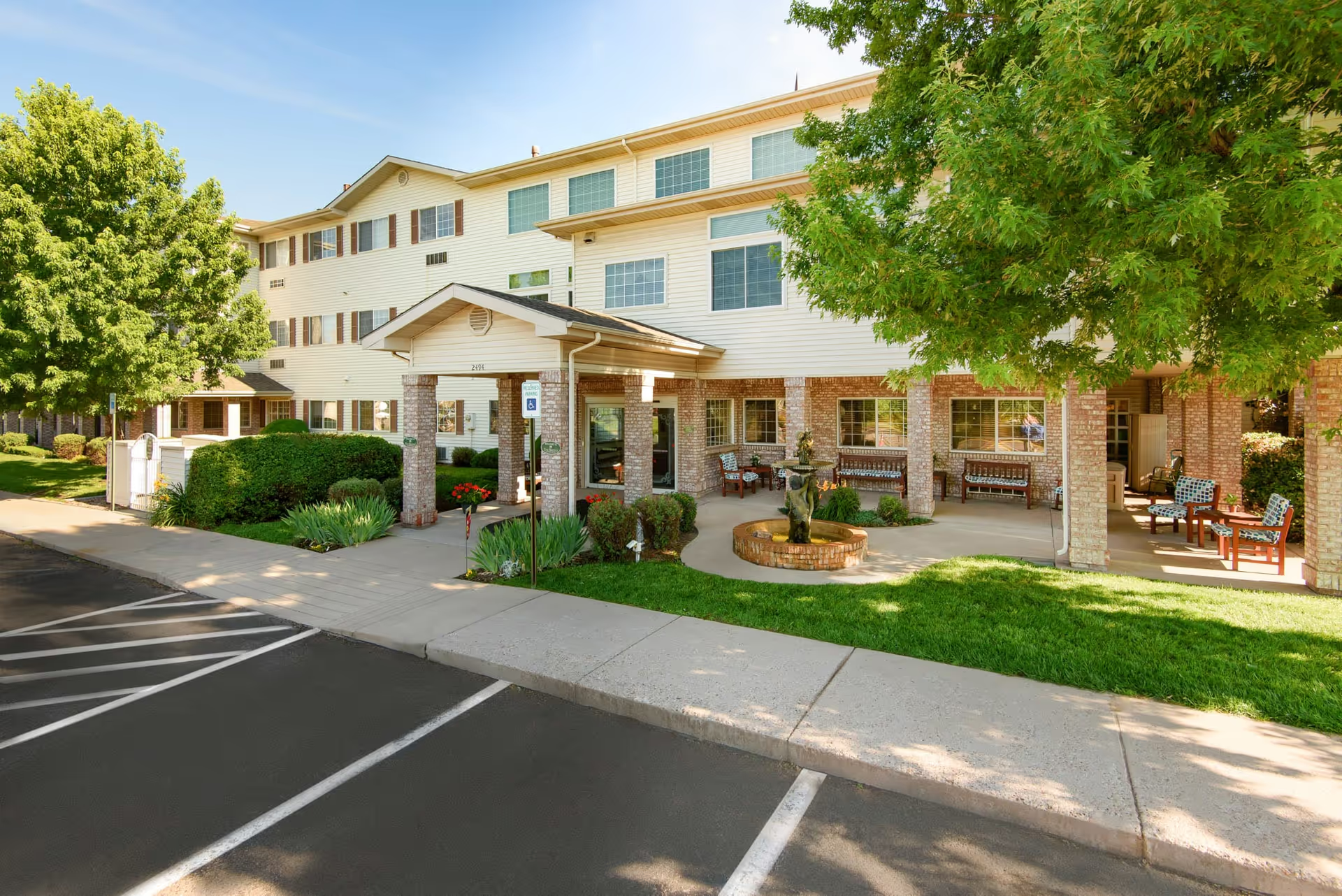
Facilities and neighborhood: Internally, rooms are described as spacious and well-appointed, and the facility’s aesthetic and nearby amenities appealed to several families. Conversely, there are concerns about the accuracy of the facility’s marketing and location presentation; on-site realities such as river cleanliness, smoking areas, and neighborhood noise (including reports of gunshots) were noted as detracting factors. Prospective residents should verify the immediate neighborhood and visit at different times of day to assess environmental conditions.
Management and administration: The strongest operational concerns center on communication, discharge, and property controls. Reviews point to gaps in clinical updates to families, limited flexibility in visitation during infection-control periods, contested discharge processes without adequate notice, and missing personal items after discharge. These indicate weaknesses in family notification protocols, discharge planning, and secure handling of resident belongings. A small number of families also described delayed notification following end-of-life events, which contributed to distress and dispute.
What this means for prospective families: The facility appears capable of delivering effective clinical rehabilitation and has a caring core of staff, but patterns in communication, responsiveness, discharge planning, and marketing accuracy introduce risk. Families considering this site should ask specific questions about alarm-response procedures, family communication protocols (including end-of-life and discharge notification), property-inventory and storage practices, visitation policies during infection-control events, and on-site security and neighborhood conditions. A direct, in-person tour and conversations with therapy and nursing leadership are advised to confirm that operational practices meet your expectations.