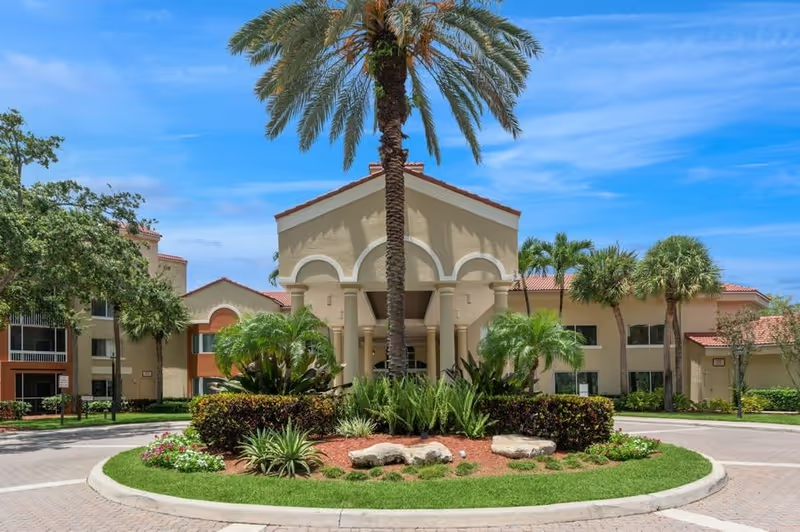
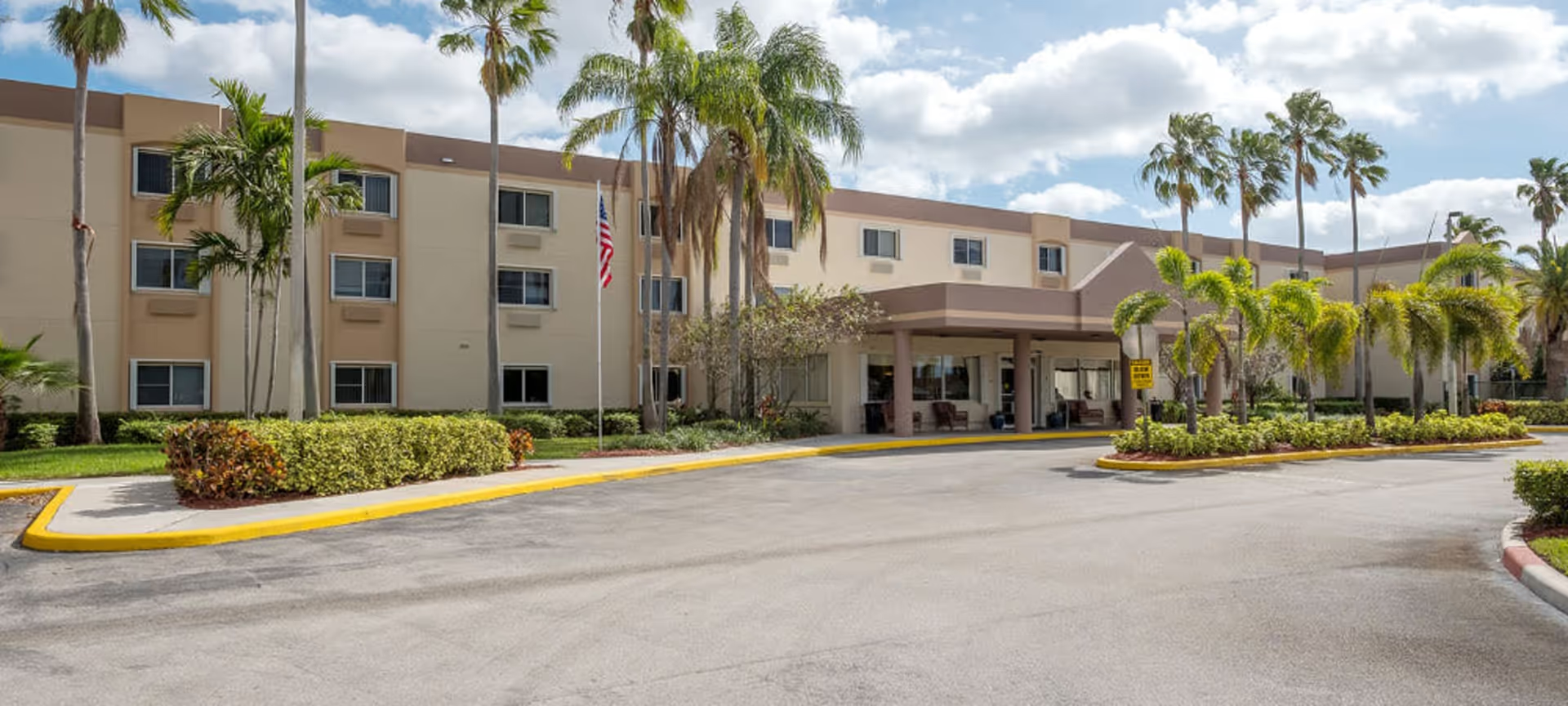
Stratford Court of Boca Pointe presents a mixed but clear profile: it is a large, amenity-rich community with many features that families value, paired with operational inconsistencies that have produced sharply divergent experiences. Strengths are concentrated in the caregiving and social programs: numerous families describe warm, attentive staff, long-tenured employees who know residents by name, and a robust activities calendar that includes fitness classes, lectures, games, outings and social clubs. The community offers strong rehabilitation and therapy services, on-site nursing and physicians, and effective coordination with home-care providers for many transitions. Physically, the property benefits from attractive grounds, renovated common areas, a variety of apartment floor plans (many with full kitchens and in-unit washer/dryers), a pool and fitness spaces, a library and salon, and a generally well-appointed dining room that many residents find enjoyable.
Care quality and clinical operations show a dual pattern. Positive reports cite effective skilled-nursing care, rapid therapy progress, and reliable nursing attention in numerous cases. Conversely, there are recurring operational concerns: inconsistencies in medication administration, variable adherence to clinical-sterilization practices, and breakdowns in communication between levels of care (for example, information not transferring cleanly from assisted living to skilled nursing). These issues have led to delays in treatment or calls for additional supervision in some cases. Memory-care capacity and staffing adequacy are recurring themes; several comments point to limited space and resource constraints in that unit compared with other parts of the campus.
Dining and activities are generally strong selling points, but both show signs of strain when the community is at high occupancy. The kitchen receives frequent praise for menu variety and chef-driven meals, and dietary accommodations are available; at the same time, families cite slow service at peak times, occasional overcrowding in the dining room, and inconsistent meal quality. The activities program is broad and well-attended, supporting social engagement and community life, although some residents note uneven outreach by activity staff to less-engaged individuals.
Facility condition and operations are uneven. Many common areas and some apartments have been renovated and are well maintained, while other portions of the large building show deferred maintenance: intermittent HVAC failures, elevator and corridor issues, and episodes of insufficient apartment cleaning. Sanitation and odor concerns in particular areas and inconsistent housekeeping coverage are noted; these appear concentrated in older sections or during periods of staffing shortfall. Parking logistics and visitor access also create friction for families, and electronic-entry/key-fob systems have caused inconvenience for some visitors.
Management and responsiveness present another polarity. Several reviewers praise specific leaders and front-line staff for smooth transitions and proactive support during move-in and clinical events. At the same time, there are multiple accounts of promises not followed through, delays in maintenance remediation, and perceived gaps between sales/admissions assurances and post-move-in execution. Financial and safety concerns are present in a few accounts, including allegations of unauthorized access and of financial misconduct; those are serious individual claims that families may wish to investigate directly with management and via regulatory channels.
Bottom line: Stratford Court offers many of the amenities, clinical capabilities and social opportunities that prospective residents and families seek — particularly in rehabilitation, dining, and community life — but prospective residents should expect variation in day-to-day execution. Key due-diligence actions before moving in include: meeting the current nursing leadership and therapy teams, asking for recent quality/inspection records and medication-administration protocols, touring the specific unit(s) of interest (including memory care if relevant), confirming housekeeping and maintenance commitments in writing, and clarifying costs tied to renovations and a la carte services. These steps will help families balance the strong programmatic offerings against documented operational weaknesses and arrive at an informed decision.