Reviews of The Atrium at Boca Raton present a mixed but distinct pattern: many families and residents praise the community for warm caregiving, robust social programming, and hotel-like common areas, while other accounts raise operational concerns around staffing, maintenance, and consistency of clinical communication.
Care and staff: Numerous reviewers describe caregivers as compassionate, attentive, and willing to go beyond basic tasks; several named staff and highlighted individualized attention, timely medication administration, and successful therapy outcomes. At the same time, there are repeated concerns about staffing levels (particularly at night), high turnover, and inconsistent skill or supervision among front-line staff. These personnel gaps are associated in some accounts with delays in assistance, variability in clinical follow-through, and uneven family communication. A few reviews reference serious post-event communication concerns following a resident’s hospitalization or death; those comments suggest opportunities to strengthen clinical incident response and family notification protocols.
Dining and activities: Dining receives generally favorable comments when a chef-driven menu and attentive dining staff are present; many residents enjoy the variety, daily treats, and social happy-hour events. However, other reviewers describe inconsistent meal quality, portioning concerns for larger appetites, and limited menu variety at times. Activities are a clear strength for many residents: daily live entertainment, arts and crafts, outings, games, and on-site salon services are consistently noted as factors that improve social engagement and quality of life. Some feedback indicates that programming on the memory unit and during certain shifts could be more robust and better staffed.
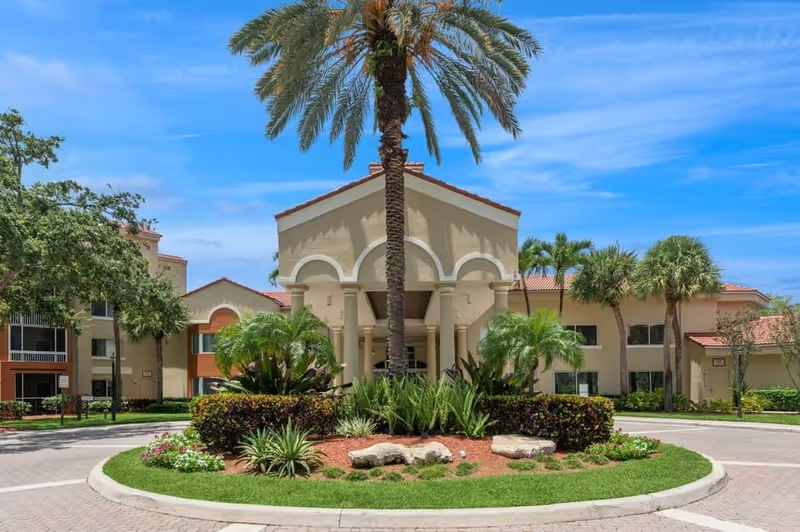
Facilities and operations: The property’s aesthetics—marble, grand pianos, chandeliers, and bright common spaces—are frequently praised, and private apartments with in-suite amenities receive positive remarks. Conversely, multiple reviewers cite maintenance backlogs (broken fixtures, delayed repairs), infrastructure reliability issues (frequent elevator malfunctions), and intermittent sanitation or odor concerns in common areas. Laundry handling and personal-property management are flagged as problem areas by some families, while others report regular housekeeping and good room upkeep. Several comments emphasize that the community is not intended as a skilled nursing facility and that more advanced medical needs will require outside clinical support.
Management and administration: Positive interactions with admissions, business-office personnel, and certain directors are repeatedly highlighted; reviewers mention compassionate, responsive staff in those roles and examples of smooth move-ins. At the same time, there are recurring concerns about management instability, policy or contract changes, increased fees, and uneven follow-through on promises. These administrative inconsistencies compound perceptions of value, particularly among families who emphasize cost relative to the level of operational reliability.
Notable patterns and takeaway: The Atrium appears to excel at creating an engaging, hotel-like environment with a strong social calendar and many staff who form meaningful relationships with residents. Prospective residents and families should weigh those strengths against documented variability in staffing consistency, maintenance responsiveness, and some aspects of clinical communication. For candidates requiring predictable clinical oversight or 24-hour skilled nursing, the facility’s scope may be limited. Visitors touring the community should ask specific questions about night staffing levels, maintenance response times, laundry/property handling procedures, and how the community communicates with families after clinical events. Touring multiple times and speaking with current families on- and off-shift can help clarify whether the community’s strengths align with a prospective resident’s needs and expectations.