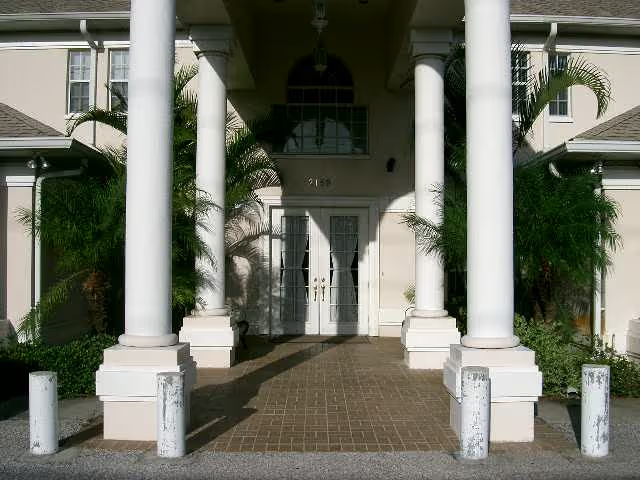
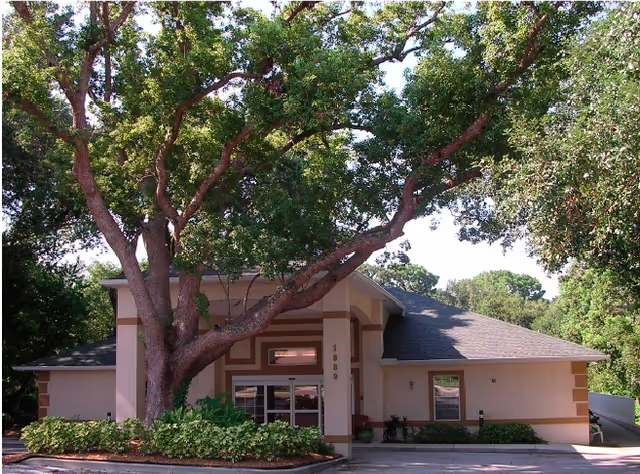
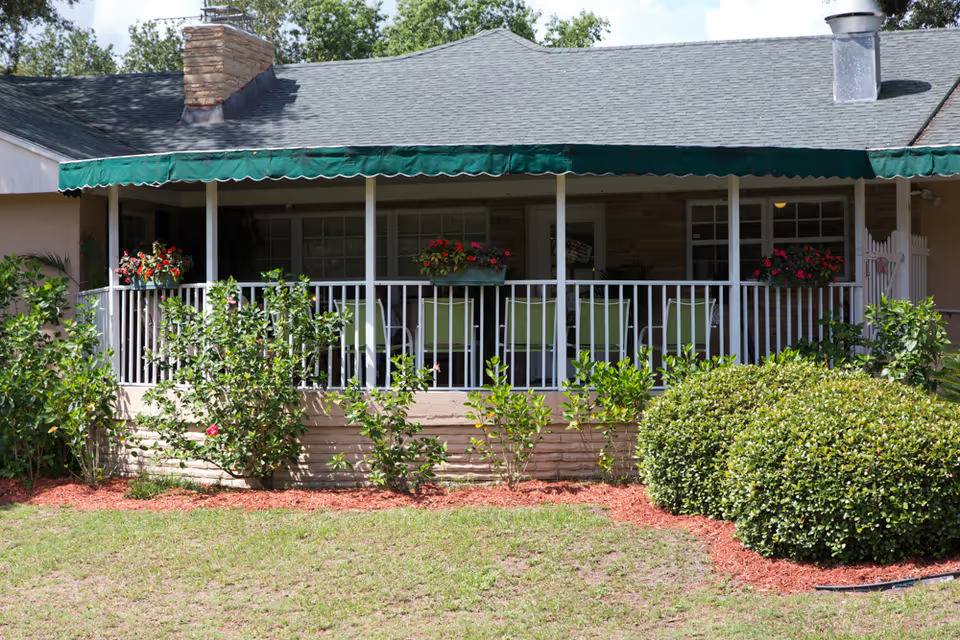
The Preserve at Dunedin presents as an upscale, well-appointed assisted-living community with many families praising its design, grounds and social programming. Positive themes include an active, varied activities calendar (music, speaker series, outings, arts and crafts, pool use), strong community-relations support during move-in, and numerous front-line caregivers who are described as compassionate, relationship-oriented, and attentive. Families commonly cite helpful logistics such as transportation services, medical-appointment coordination, and a generally pleasant dining environment with multiple meal choices.
Clinical and personal-care experiences are mixed. Multiple accounts highlight excellent individualized caregiving and strong memory-care approaches where residents have flourished; however, other accounts point to operational gaps: inconsistent nurse coverage, times when wellness checks and personal-care tasks were delayed or omitted, and instances suggesting weaknesses in medication-administration controls. Together these suggest variability in clinical oversight and reliability of daily personal care depending on shift staffing and personnel on duty.
Staffing, training and management stability emerge as central themes tied to experience differences. Longstanding staff members and certain leaders (several named by families) are widely praised for advocacy, bedside manner, and help with navigation of paperwork and placement. Conversely, reports of elevated turnover, leadership changes, and uneven administrative responsiveness correlate with descriptions of service decline by some families. There are also references to serious organizational events and concerns following abrupt leadership transitions; a small number of reviews raise allegations about financial oversight and management practices that warrant careful follow-up during any prospective tour or due-diligence conversation.
Housekeeping and environmental safety are generally described as strengths in many reviews, with clean, bright interiors and attractive outdoor spaces; nevertheless, a subset of comments describes inconsistent housekeeping, sanitation issues in specific situations, and environmental or safety hazards in specific units that staff later addressed. Prospective residents and families should assess unit-level cleanliness standards and the community’s current housekeeping protocols during a visit.
Dining and social life are frequently noted as highlights, with many residents enjoying meals, social hours, themed events and regular outings. Still, a few families mention variability in meal quality or preferences, so confirming sample menus and meal-service practices is advisable for those with particular dietary needs.
Practical guidance: The Preserve appears to offer a high level of amenities and strong relationship-based care when staffing and leadership are stable. Prospective families should: (1) ask about current nurse-to-resident ratios and weekend/overnight clinical coverage, (2) request specifics on medication administration policies and audit/oversight procedures, (3) tour a memory-care unit and ask about recent safety improvements, (4) review housekeeping schedules and incontinence-care protocols, and (5) discuss fee structures and any recent management changes. Doing so will help gauge whether the present operational realities match the many positive experiences described by families and ensure appropriate alignment with a prospective resident’s clinical and daily-living needs.