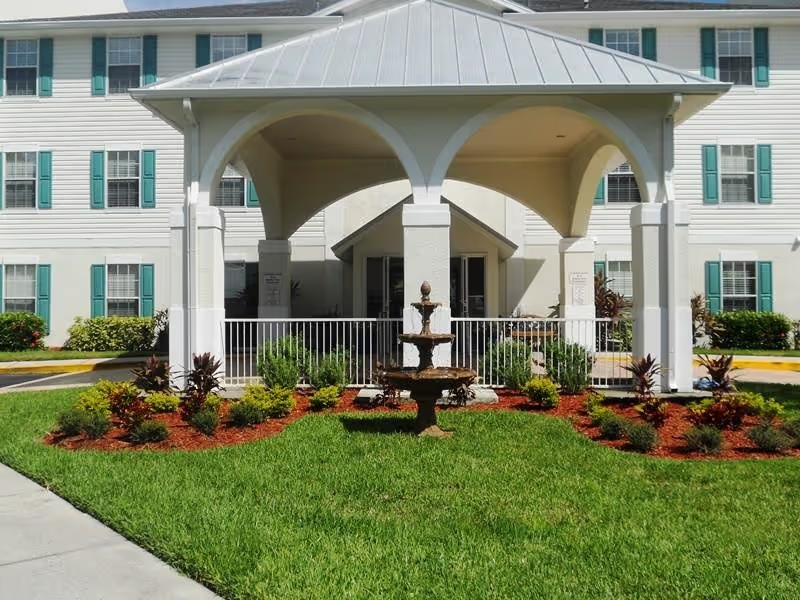
Reviews for Clewiston Nursing and Rehabilitation Center are highly mixed, with families describing both reassuring, high-quality care and serious operational shortfalls. Many reviewers praised the facility’s rehabilitation services, therapy staff, and certain nurses and aides who provided hands‑on, compassionate care. Admissions staff and some members of management were also described as helpful in coordinating transfers and transitions. Several families noted a positive activities program and an engaged activities director, and others mentioned clean rooms, friendly staff interactions, and effective pandemic infection-control practices that provided peace of mind.
At the same time, a number of reviews describe systemic problems that affect day‑to‑day resident experience. The most frequently cited operational issue is inconsistent responsiveness to call buttons and delays in attending to residents; this is tied to concerns about bathing and toileting schedules and other basic care tasks. Communication breakdowns—both among clinical staff and between staff and families—contribute to confusion about resident condition, inconsistent instructions, and frustration during care transitions.
Clinical and documentation weaknesses appear in several areas. Reviewers noted medication‑administration and medical‑record gaps, which created uncertainty about dosing and care plans. There are also reports of property-management failures (missing or lost laundry, issues with locked storage) and questions about kitchen hygiene and dining consistency. While some families praised the food and nutritional interventions, others described variation in meal quality and a perception that nutrition was not always prioritized.
Facility and environmental concerns recur in the reviews: maintenance issues (broken TVs, lights, plumbing), odor concerns, and pest‑control concerns in parts of the building were raised alongside comments that the structure is an older facility that would benefit from updates. Staffing variability was another common theme—several accounts contrast strong evening or therapy teams with less reliable daytime or supervisor-level performance—indicating uneven training, supervision, or staffing levels across shifts. A few reviewers escalated isolated allegations of staff misconduct and serious safety concerns for investigation, underscoring the importance of transparent incident review and timely communication.
Management and accountability are mixed in the accounts: some families praised administrators and clinicians for responsiveness and problem resolution, whereas others described slow follow‑up on complaints, reimbursement disputes, and incomplete incident documentation. Positive experiences often reflect consistent caregivers, attentive nursing at certain times, and robust therapy programs; negative experiences tend to cluster around responsiveness, sanitation, property management, and communication failures.
For prospective residents and families, the pattern suggests that outcomes may depend heavily on unit assignment, shift, and which staff are on duty. If considering this facility, visitors should ask specific questions about staffing levels by shift, call‑system response times, medication-administration and documentation practices, laundry/valuables procedures, pest‑control and sanitation protocols, and how the facility handles incident investigation and family communication. Scheduling multiple visits at different times of day and meeting therapy, nursing, and supervisory staff can help gauge consistency of care before placement.