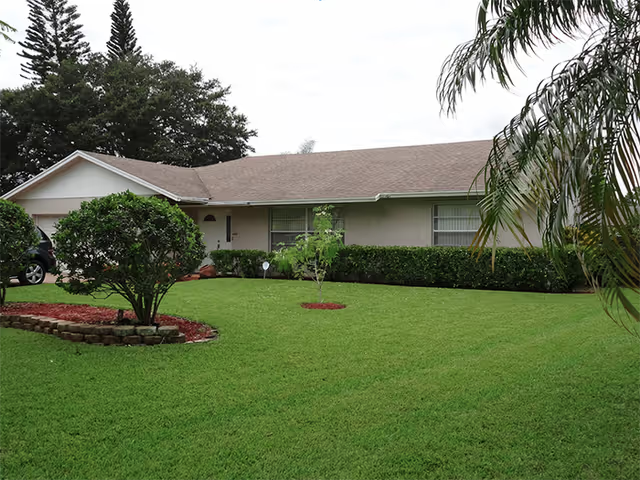
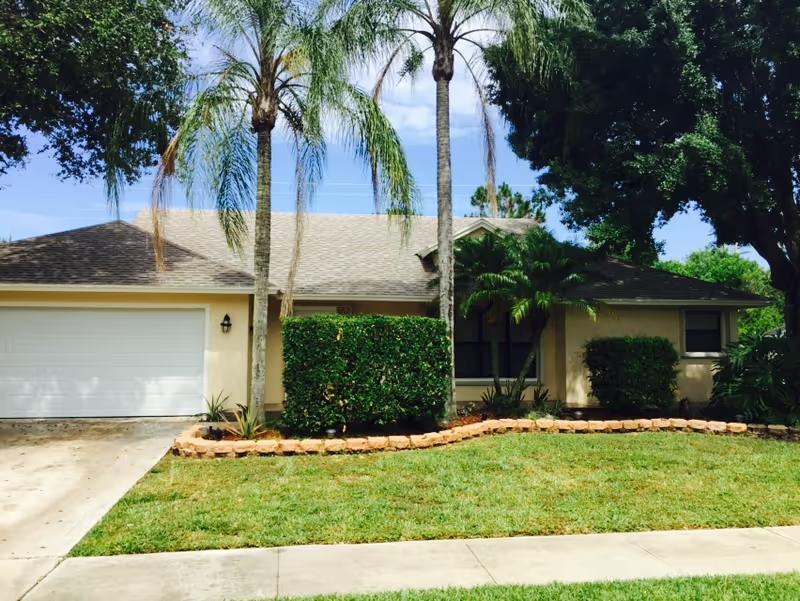
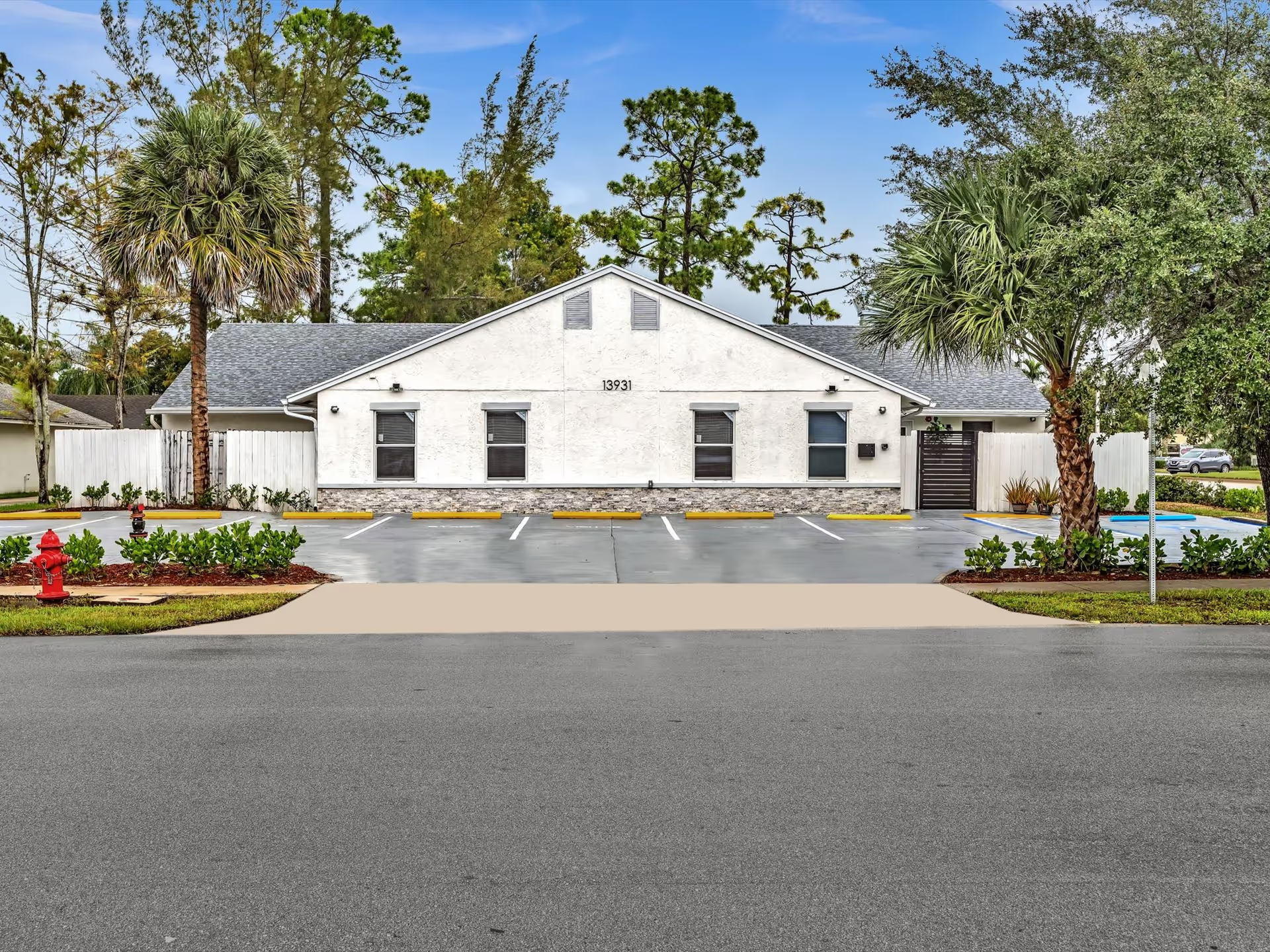
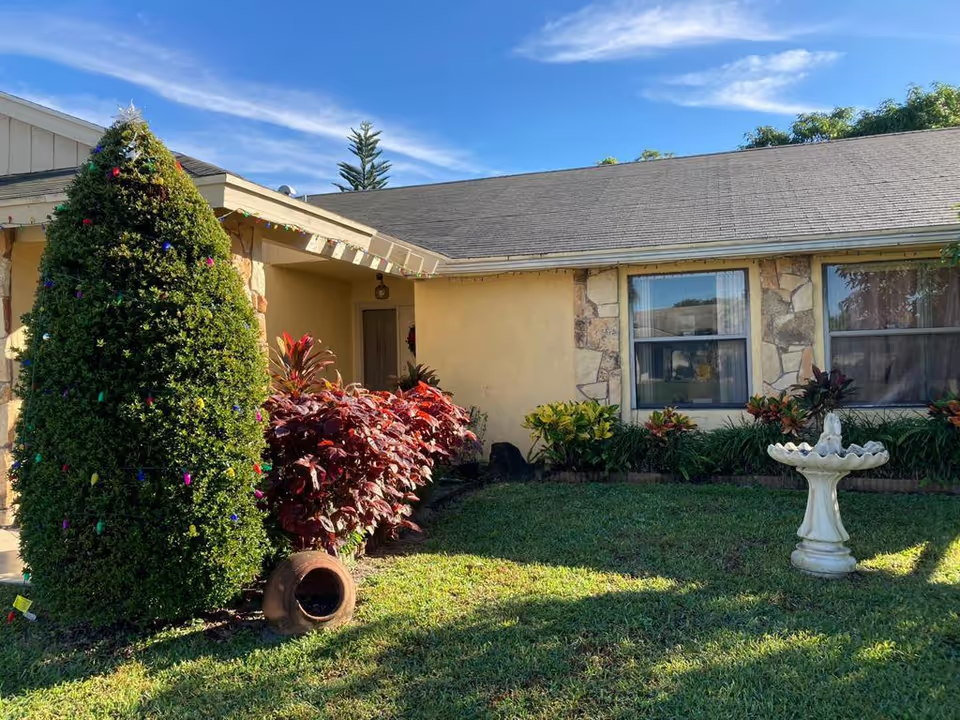
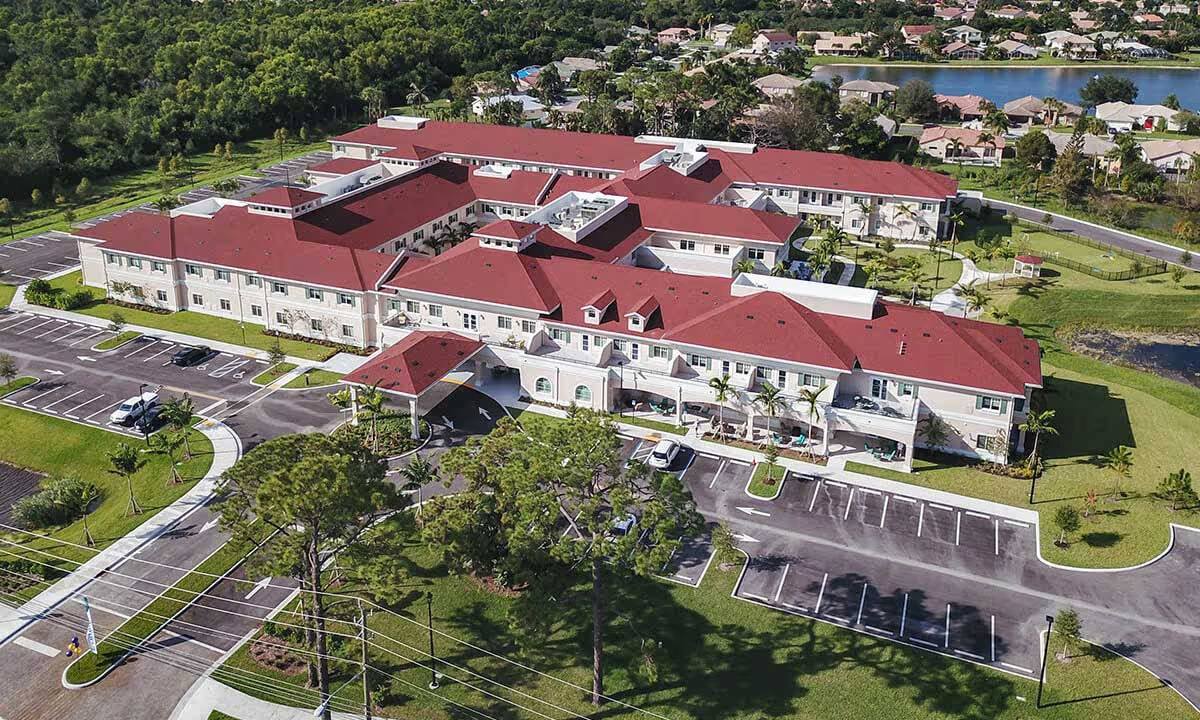
Inspired Living of Royal Palm Beach is frequently praised for its modern, purpose-built environment and hospitality-oriented amenities. Many families describe the property as bright, spacious, and well maintained, with roomy apartments, accessible bathrooms, and attractive outdoor spaces. The community's culinary program and chef receive strong commendations for menu variety, presentation, and all-day dining options. Activities and resident engagement are also a clear strength: the community offers a broad schedule of daily programs, outings, creative and musical memory-care offerings, and several reviewers singled out resident engagement directors and activities staff for above-and-beyond involvement.
Clinical and caregiving strengths coexist with variability. Numerous reviews highlight compassionate nurses, attentive care partners, and leadership who are visible and hands-on. At the same time, there are recurring operational concerns that prospective families should probe. Memory-care programming and resident matching are unevenly implemented; some families report meaningful engagement and improved quality of life, while others cite inadequate activity execution, staffing mismatches by cognitive level, and insufficient clinical oversight. Relatedly, staffing levels—especially during meal periods and in memory care—are described as inconsistent, and several reviewers noted high turnover and uneven staff training that can affect continuity of care and resident interactions.
Communication and clinical-process issues appear as a recurring theme. Reviewers describe gaps in handoffs among nurses, nurse practitioners and outside providers, delays in emergency/personal-alert responses, and inconsistent transparency around care decisions and vaccinations. There are also noted concerns about medication-management practices and monitoring for side effects. Sanitation and hygiene-related issues are mentioned in a subset of accounts, including specific room- and common-area concerns; these suggest variability in housekeeping or incontinence-care consistency that families should evaluate directly.
Dining and programming generally receive strong marks for quality and variety, though operational strain is evident at times: reviewers reported meal-service delays and limited server coverage, and a few suggested alternative service models to reduce wait times. Management and sales experiences are mixed—many families praised proactive, problem-solving directors and supportive move-in assistance, while others described aggressive sales approaches or uneven managerial responsiveness when clinical concerns arose.
Overall, the community offers strong physical assets, an active engagement program, and many staff who are described as compassionate and solution-oriented. However, variability in staffing, memory-care consistency, care-team communication, sanitation practices, and emergency-response reliability are notable patterns. Prospective residents and families would benefit from targeted questions during a visit: current staffing ratios (day/evening/night), memory-care assessment and resident-matching procedures, examples of recent clinical handoffs, emergency-response time metrics, housekeeping and infection-control protocols, and the community’s approach to medication review and family notification. These focused inquiries will help clarify whether the facility’s strengths are present consistently for a given apartment and care level.