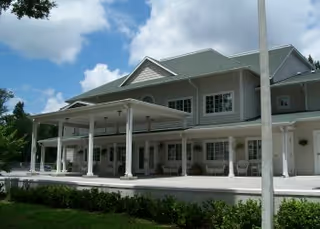
The reviews for Crystal River Health and Rehabilitation Center present a mixed but consistent pattern: many families and former residents praise the staff and rehabilitation services, while a substantial set of concerns centers on operational consistency and administrative reliability.
Care quality and staff: Numerous reviewers described nursing staff, CNAs, and therapists as compassionate, attentive, and skilled—many noted rapid clinical improvement under the facility’s rehabilitation program and praised individual caregivers by name. The facility is also recognized for an encouraging, family-like culture in which staff often learn residents’ names and provide emotional support. Counterbalancing this, a significant number of reviewers described understaffing, rotating personnel, and high workloads that appear to affect continuity of care. These staffing issues are associated with delays in responding to call lights, inconsistent checks on residents, and variability in basic-care tasks.
Dining and nutrition: Opinions on dining were split. Several families reported appetizing meals and praised kitchen staff for good food preparation, while others described inconsistent meal-service timing and complaints about food arriving cold. Pattern-level concerns derive from service continuity and timing rather than menu content: prospective families should confirm meal schedules and temperature-control processes during a visit.
Activities and social programming: The facility offers active programming, including music, dancing, bingo, and visits from spiritual leaders, which reviewers frequently cited as positive contributors to resident quality of life. Memory-care programming and dementia-focused activities were also mentioned favorably, and some staff cited professional growth opportunities in that unit.
Facilities and maintenance: Descriptions of the physical plant vary widely. Some families described attractive, well-decorated common areas and clean hallways; others raised sanitation and maintenance concerns such as mold on units, damaged room fixtures, and inconsistent room conditions. These indicate variable facility upkeep between units or over time—inspect rooms in person, including ventilation and storage areas, before placement.
Management and administration: Positive notes include an organized admissions process and administrators who are calm and engaged in family communications for some cases. However, recurring administrative issues appear as a pattern: billing and insurance confusion, billing errors, delayed administrative follow-up after adverse events, inconsistent communication with families and hospice teams, and property-management problems (lost items, difficulty releasing remains/ashes in at least one account). These patterns suggest variability in administrative rigor and a need for clearer escalation pathways.
Notable operational patterns: Transportation reliability, including late pickups and vehicle condition complaints, was mentioned enough to warrant attention. End-of-life and hospice coordination was inconsistently handled in reviewer accounts; families should clarify hospice protocols and medication-access procedures up front. Finally, visitation policies during infection-control periods and weekend responsiveness were described as restrictive or less responsive in some cases; clarify visiting rules and on-call coverage if flexible visitation is important.
Takeaway: Crystal River demonstrates clear strengths in rehabilitation, compassionate direct care, and social programming. At the same time, families should be alert to variability in staffing, maintenance, medication administration, and administrative processes. Prospective residents and families would benefit from an in-person tour (including a sample room), direct questions about staffing ratios and med-administration practices, review of billing procedures and hospice coordination, and confirmation of transportation and visitation policies before admission.